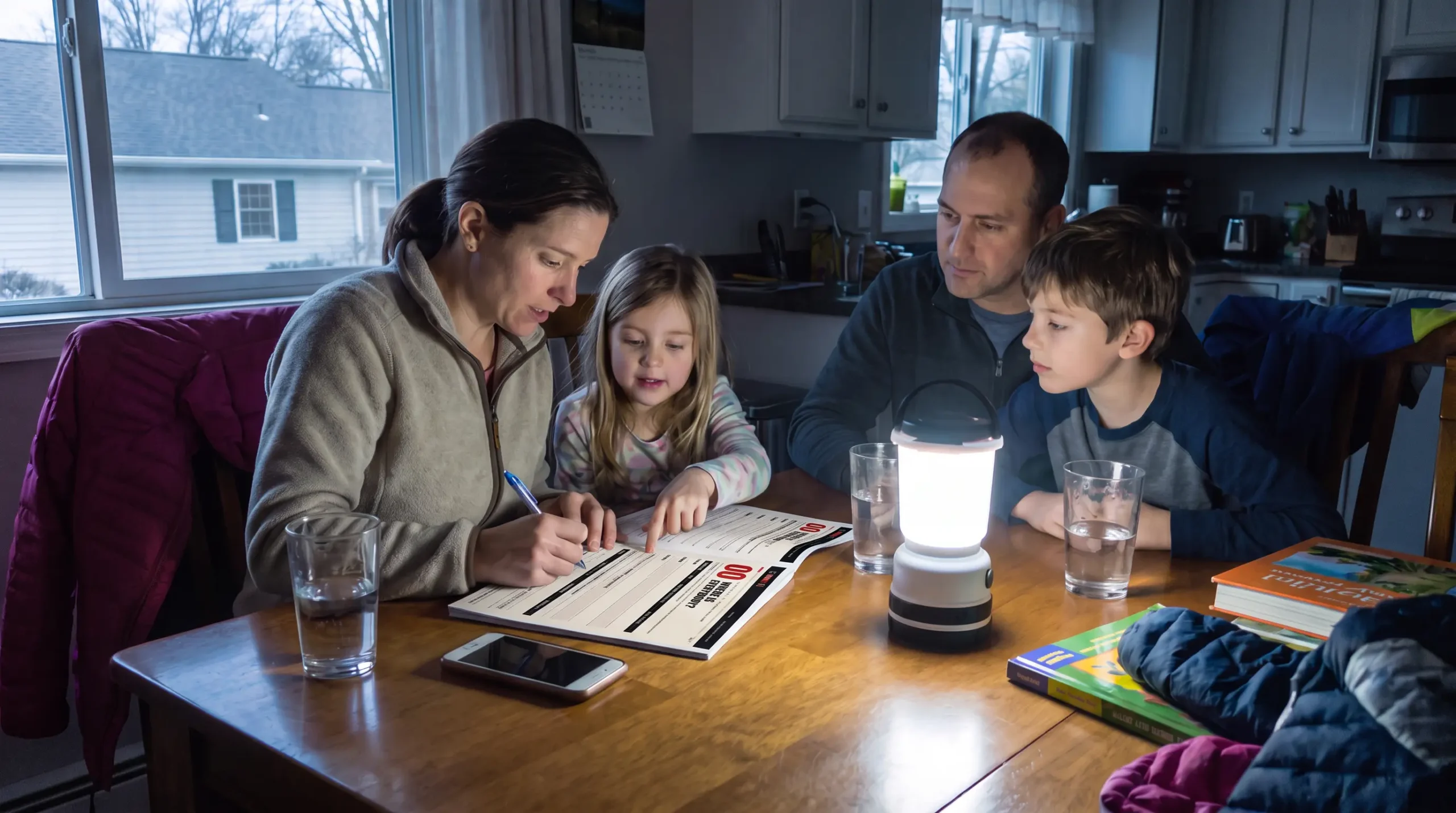

It’s 3:15 on a weekday. The power just went out. Your kids are at school. You’re 30 miles away with one bar on your phone.
What happens in the next few hours depends on decisions your family made before today. Most of us have a drawer full of gear. Very few of us have a 72-hour emergency plan everyone in the house actually knows.
So here’s one you can print. Below, you’ll walk the first 72 hours hour by hour. Section 4 shows which page to fill in first, so you can finish in one evening.
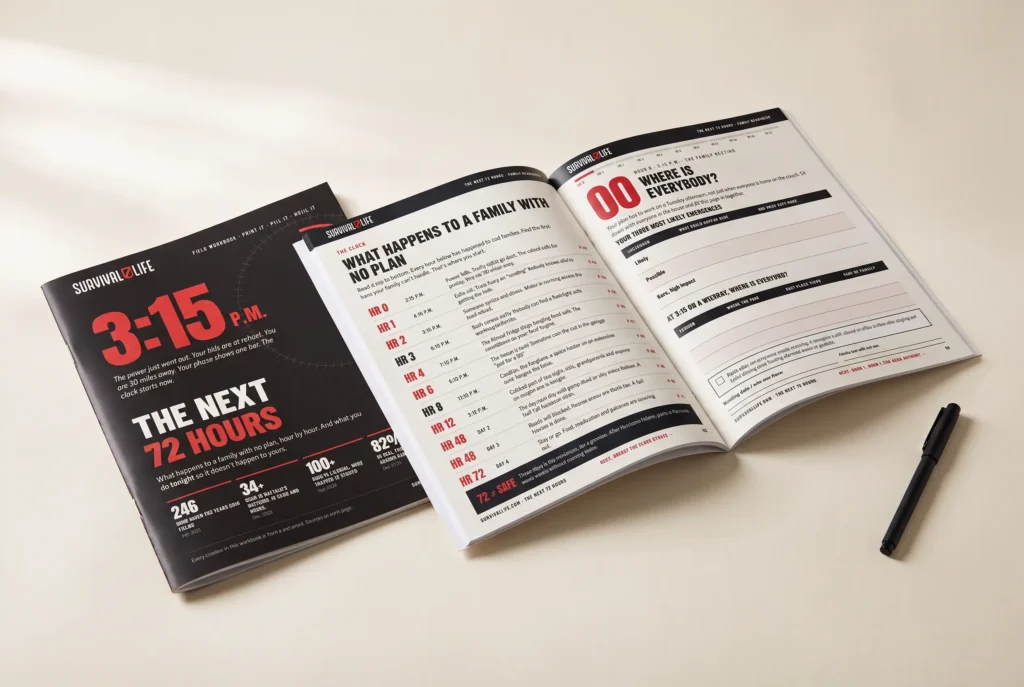
Download the free 72-hour family workbook (PDF) →
It’s 23 pages. The first 16 walk you through what goes wrong and when. The last 7 are worksheets you fill in together and keep on the fridge.
At a Glance: Your 72-Hour Emergency Plan
- What it is: A 72-hour emergency plan means your family can run on its own for 3 days with no power and no outside help.
- Water comes first: Store 1 gallon per person per day. A family of 4 needs at least 12 gallons.
- The food clock: A closed fridge keeps food safe for about 4 hours. A full freezer lasts about 48.
- The big dangers at home: Cold and carbon monoxide. Both have fixes you can set up tonight.
1. What goes wrong in the first 6 hours
The phones fail first. Then someone gets in the car.
That order matters, because both problems get solved before the lights go out, not after.
Hour 1: Nobody can reach anybody
You call the school. Busy. You text your spouse, “Who’s getting the kids?” It sits on “Sending.”
This isn’t rare. After a major hurricane hit the North Carolina mountains in 2024, about 82% of the cell towers around Asheville were offline the day after the storm.
Here’s the fix:
- Pick 1 out-of-state contact. Everyone in the family checks in with that one person.
- Put a backup adult on every school pickup list. Schools can only release your child to someone who’s listed. Then decide who gets the kids if the 2 of you can’t connect.
Hour 2: Someone decides to drive
Still no word from the school. You grab the keys. Two miles from home, brown water is running across the road. It looks shallow.
That’s the moment that kills people. One analysis of flood deaths since 2011 found 61% of victims died in vehicles, often after driving around barriers. About 12 inches of moving water can carry off a car, and 2 feet can pick up most pickups and SUVs.
Make it a family rule. Water over the road means turn around. No exceptions.
And remember this. Not everyone needs rescuing. A child in a safe school or a spouse in a solid office building is better off staying put than driving into flooding or downed trees.
Hours 3 to 6: Dark, then the food clock starts
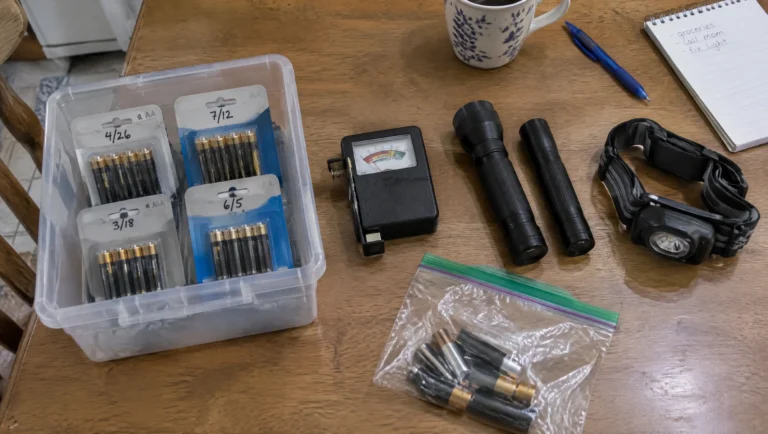
It gets dark early. Nobody can find a flashlight with working batteries.
Meanwhile, the fridge is losing cold. A fridge keeps food safe for up to 4 hours with the door shut. A full freezer holds about 48 hours. A half-full one holds about 24.
Every time someone opens the door “just to check,” that clock speeds up. Write down the time the power failed. Put a thermometer in the fridge. Perishables that sat above 40°F for more than 2 hours go in the trash. Never taste food to test it. Our power outage readiness checklist goes room by room.
That covers the first evening. The night is where the real danger starts.
2. Why the first night and Day 2 are the most dangerous
By 9 p.m. the house is cold and the baby won’t stop crying. This is when good people make bad calls.
The car in the garage
Somebody says, “Just run the car in the garage for a while. Crack the door.”
During the weeklong Texas blackout in 2021, more than 1,400 people went to the ER or urgent care for carbon monoxide poisoning, and at least 11 died. Carbon monoxide has no smell. The first sign can be passing out.
Set these rules tonight:
- Engines and flames stay outside. Generators, grills, camp stoves and cars never run in the garage, even with the door open.
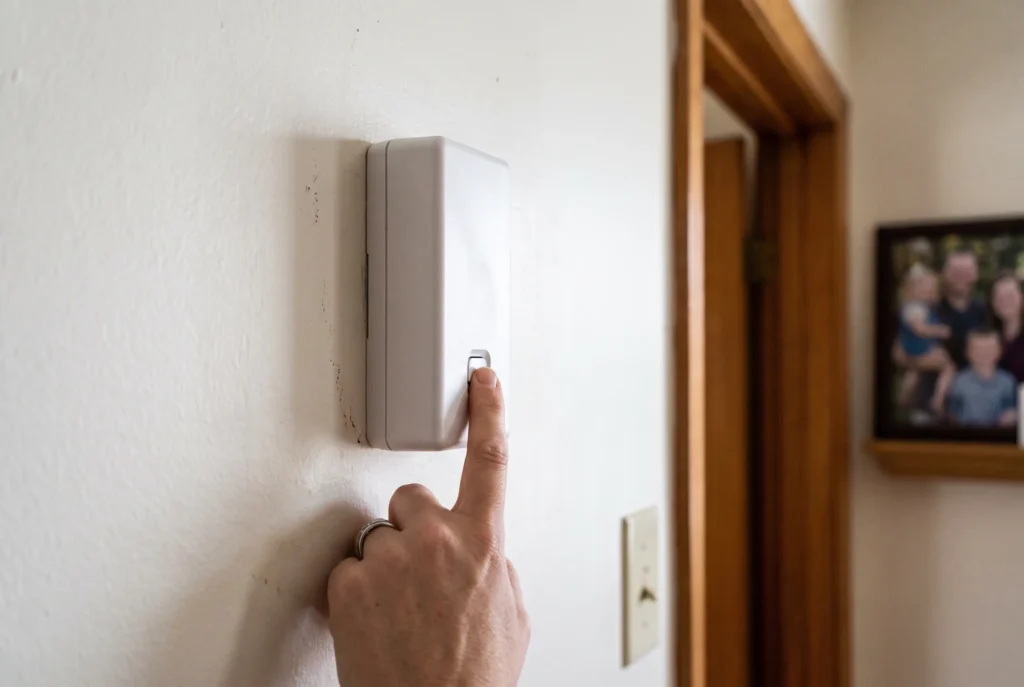
- Battery power for alarms and light. Put a battery carbon monoxide alarm on every floor and test it tonight. Use battery lanterns, not candles.
3 a.m. is the coldest hour
The thermostat reads 41°F. Grandma says she’s fine. The kids have gone quiet under the blankets.
Cold is the quiet killer here. That same Texas storm was tied to 246 deaths, and close to two-thirds were from hypothermia. Victims ranged from under 1 year old to 102.
Pick 1 warm room now. Small, with few windows. Everyone sleeps there. Pack a sleeping bag and a set of warm layers for each person in a single bin.
If anyone in your home uses oxygen, a CPAP, dialysis or another powered medical device, that needs its own plan. Call the doctor or the equipment supplier this week and ask what to do when the power is out for 3 days. Write down where you’d go.
Day 2: The tap runs dry
A well pump needs power. City pipes can break. Either way, you wake up on Day 2 with half a case of water, 4 people, a dog and a toilet that won’t flush.
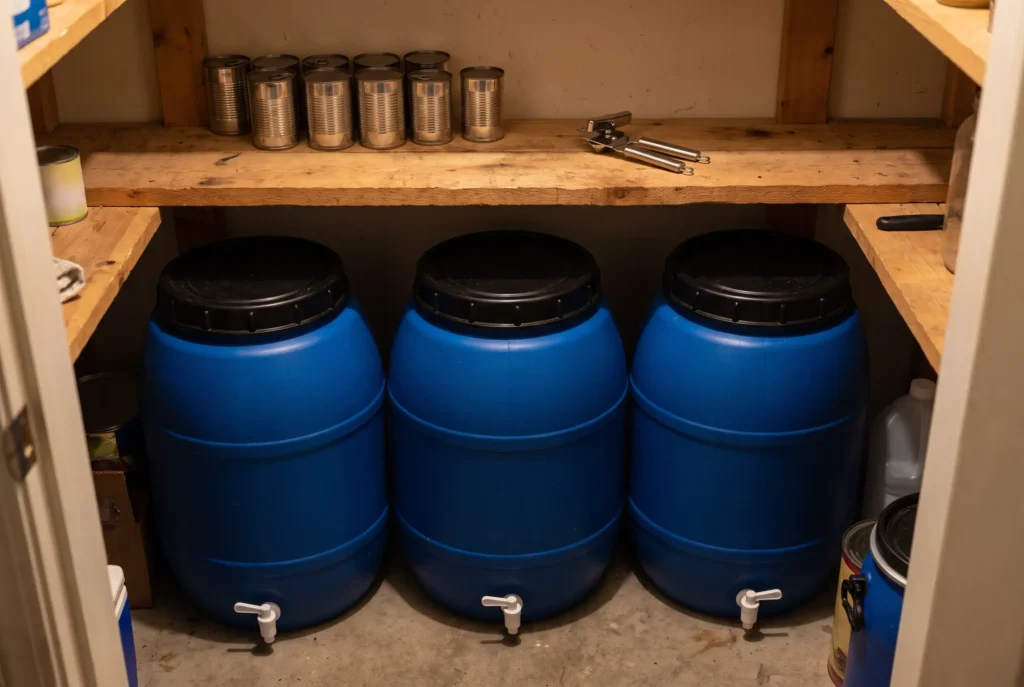
Do the math now. 1 gallon per person per day, for 3 days, at minimum. Four people need 12 gallons. Add more for pets, babies, hot weather and medical needs.
Plan for the toilet, too. A bucket lined with a heavy trash bag will get you through. Kitty litter helps with the smell.
And know the difference between notices. A boil notice means boiling for a full minute kills germs. A do-not-use notice is different. Boiling won’t destroy heavy metals or most chemicals, so follow that notice exactly and use your stored water.
Day 3 and beyond: Plan to be your own help
In a big storm, crews get stuck too. Roads stay blocked. Help may not reach your street for days.
Make a short neighbor list. Who’s elderly or living alone? Who takes medication? Somebody should knock on those doors.
If it’s snowing, keep the furnace, dryer and generator vents clear. And treat 72 hours as the floor, not a promise. Some towns have gone weeks without running water after a major storm.
3. How to build a 72-hour emergency plan your family can actually run
A plan works when everyone knows their part without being told. If you’re starting from zero, you can also build a family emergency plan step by step.
Give every job a leader and a backup
Panic makes people freeze, or all grab the same job. Assign every job before stress takes over:
- Watches alerts and makes the call
- Picks up the kids
- Handles pets, carriers and pet food
- Grabs bags, papers and medication
- Handles the car, routes and fuel
- Does the final headcount
Every job gets a backup. Then answer one more question in writing: if the main decision-maker is hurt or can’t be reached, who takes over?
Bring the kids in without scaring them
Choices made ahead of time hold up under stress. Choices you haven’t made yet don’t.
That’s why kids need practice, not a speech. Older kids should know the trusted adults and the meeting point. Every child who can talk should be able to call 911 and say their address. Little ones need a comfort item and a few quiet, no-screen activities packed and ready.
Count before you buy
Start with what’s already in your house. Then fill the gaps in order.
Water comes first. No new radio, no new gadget, until the water math is done. For food, buy what your family already eats, a little at a time each week. Pick no-cook meals for at least 1 full day, and keep a manual can opener where you can find it in the dark.
Write your stay-or-go triggers now
Staying home is the right call most of the time. But write down what would make you leave, like an official order or water reaching a line you pick.
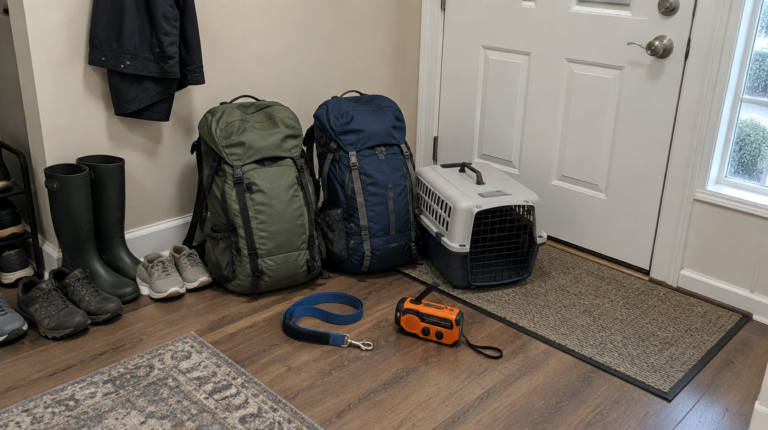
Map 2 ways out of your neighborhood and drive both this month. Keep a go-bag by the door with medications, papers, water, chargers and the pet leash. Our evacuation plan tips for families cover the drive itself.
4. How to use the free workbook in one evening
Start at the back. Worksheet 07 is the scorecard, and it tells you where your family would get into trouble first.
Here’s the order that works:
- Read pages 2 to 16 out loud together. Each page is one hour of the timeline, with the real event behind it.
- Fill in Worksheet 01 as a family. Where is everyone at 3:15 on a weekday? Who stays put?
- Score yourself on Worksheet 07. Circle READY or MISSING for each hour. Your first MISSING is your weakest hour. Fix that one this week.
- Run the 20-minute drill this weekend. Lights off. Everyone finds a flashlight, shoes, printed contacts and the go-bag. One child makes a pretend 911 call with your address. Time the headcount at the meeting point.
- Cut out the fridge card and wallet cards on page 16. Fill one in for every person.
The point isn’t to scare anyone. It’s to find the broken parts of the plan while you still have time to fix them.
Get the free workbook and start with Worksheet 07 →
Review it twice a year. Redo it any time you add a baby, a pet, a new school, a new job or a new medical need.
Common mistakes that break a family plan
- Buying gear before writing the plan. A drawer full of gear isn’t a plan. The paper plan is free and does more in the first hour than anything you can buy.
- Counting on phones. When towers go down, calls fail and texts hang. Your out-of-state contact and meeting point have to be decided before then.
- Driving into water you can’t see through. You can’t tell if the road under it is still there. Turn around.
- Running an engine indoors “just for a bit.” Garages, even with the door open, aren’t outside. Carbon monoxide doesn’t give warnings you can smell.
- Writing the plan and never running it. Reading about it isn’t practice. Until your family has run it once in the dark, you don’t know what breaks.
Frequently asked questions
A 72-hour emergency plan covers how your family reaches each other when phones fail, who picks up the kids, how much water and food you have for 3 days, where everyone sleeps if the heat goes out, and what would make you leave home. Every job should have a leader and a backup.
Store at least 1 gallon per person per day, so 3 gallons per person for 72 hours. A family of 4 needs at least 12 gallons. Add more for pets, babies, hot weather and medical needs.
Not always. If the school is safe and the roads are flooded or blocked, your child may be safer staying put. Put a backup adult on the pickup list ahead of time and agree on who goes if parents can’t reach each other.
A closed fridge keeps food safe for about 4 hours. A full freezer lasts about 48 hours, and a half-full one about 24, if the doors stay shut. Throw out perishables that sat above 40°F for more than 2 hours.
No. Generators, grills, camp stoves and cars must run outside, never in a garage, even with the door open. Carbon monoxide has no smell, so put battery carbon monoxide alarms on every floor of your home.
Do one thing today
Tonight, print the workbook and fill in Worksheet 07 with everyone in the room. Circle your first MISSING and put a name and a date next to the fix. That’s the first real step in your family’s 72-hour emergency plan.
Download the free 72-hour family workbook →
Quick poll: The power’s out and your child is at a safe school 30 miles away. Do you go get them?
Going means you’re together, but you could be driving into flooding or downed lines. Waiting keeps you off the road, but you’re apart until it’s clear.
Tell us below what would change your answer.