
Heating oil just jumped again, and you’re the one who has to make the call. Fill the tank at a record price, or wait and hope it drops before the first hard freeze.
You don’t have to guess. A few cheap moves this week protect your budget and keep the house warm either way.
At a Glance: Heating Oil This Winter
- The bill: Homes that heat with oil are forecast to pay about 21% more this winter, around $2,115 for the season.
- The tank rule: Never let your tank drop below 1/4 full. A low tank pulls sludge into the fuel line and can shut your burner down.
- Lock or wait: If your dealer offers a capped price, take it over a fixed lock. You still get the drop if prices fall.
- The free fix: Turn your thermostat down 7–10°F for 8 hours a day to cut heating costs by up to 10%.
- The help: Dial 2-1-1 this week to apply for heating aid. Don’t wait until the tank is dry.
Affiliate disclosure: Survival Life may earn a commission if you buy through links in this article, at no extra cost to you.
How much will heating oil cost this winter?
Heating oil is forecast to average about $5.26 a gallon this winter. That’s 34% more than last winter, and the typical season bill lands near $2,115. The bill rises less than the price because a milder winter should trim how much oil people burn.
The Northeast has it worse. Heating oil sits near $6 a gallon across much of the region, up from the mid-$3 range just months earlier.
A national group of state energy-aid directors expects oil heat there to cost about 50% more. That’s roughly $878 extra per household. Vermont and Maine could see jumps as high as 76%.
Why so high? Heating oil and diesel are nearly the same fuel, and the world is short on both. Refineries are turning out less of it, and fighting overseas has slowed tanker traffic on a major shipping route.
The math on your tank
A standard 275-gallon tank at 1/4 full takes about 200 gallons to top off. At $5.26 a gallon, that’s about $1,050. At $6, it’s about $1,200.
Now the savings side. Cut 10% off a $2,115 season and you keep about $210. That’s 1/5 of a fill-up, for free.
Your own numbers move with your price, your tank size and how cold it gets. Setbacks also save less in very cold places and on slow steam or radiant systems.
Should you lock in a heating oil price or buy as you go?
People who’ve heated with oil for decades split hard on this. One camp says fill the tank now, the way you’d stock a pantry, and quit betting on the market. The other says never wreck your monthly budget or borrow money for oil you won’t burn until February.
Both camps have been burned. About a decade ago in Vermont, prices fell so far that homeowners who locked in early paid well over the going rate all winter. This year, the people who waited are the ones paying more.
So skip the prediction. Let your tank gauge and your bank account decide:
- Tank under 1/4: Order now, even if it’s only your dealer’s minimum delivery. Running low can clog the line and stick you with a service call on top of the oil bill.
- Tank between 1/4 and 1/2, money tight: Buy a partial fill and apply for heating aid this week.
- Cash set aside, and your dealer offers a capped price: Take the cap. You pay the market price or the cap, whichever is lower, plus an extra charge per gallon for that protection.
- Thinking about a fixed pre-buy: Sign only if you can pay without borrowing and you’ll burn every gallon. If prices fall, you still pay the locked rate.
Some dealers aren’t offering pre-buy deals at all this season. Ask anyway, and get quotes from 2 other dealers. Regional heating oil buying co-ops can also lower your price per gallon.
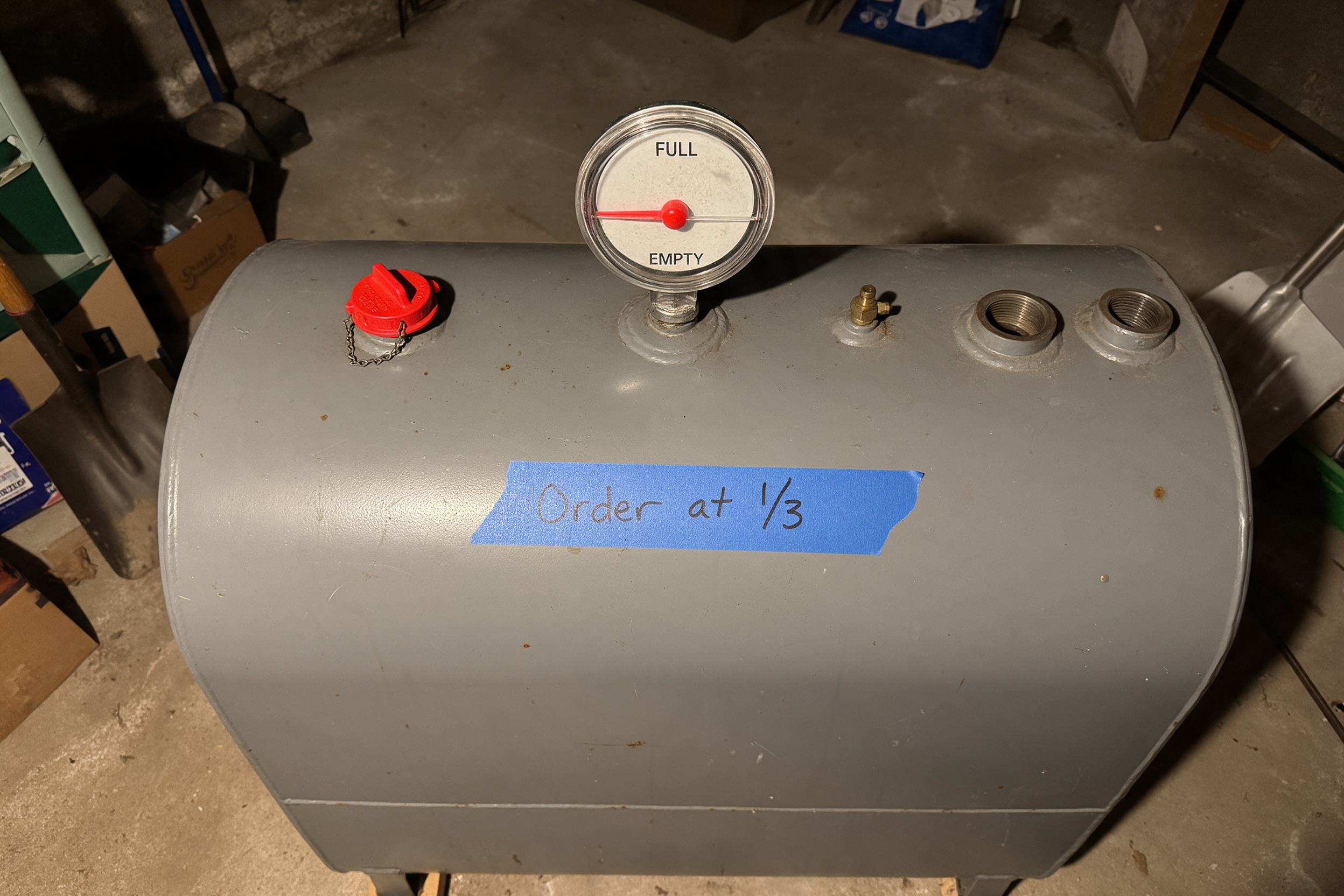
Then make the decision once. Write your trigger on a strip of tape on the tank: “Order at 1/3.” A choice you make calmly in October beats a panicked one in January.
Survival Life isn’t a financial advisor. Read any fuel contract before you sign, especially the part about unused gallons.
How can you cut your heating oil bill this week?
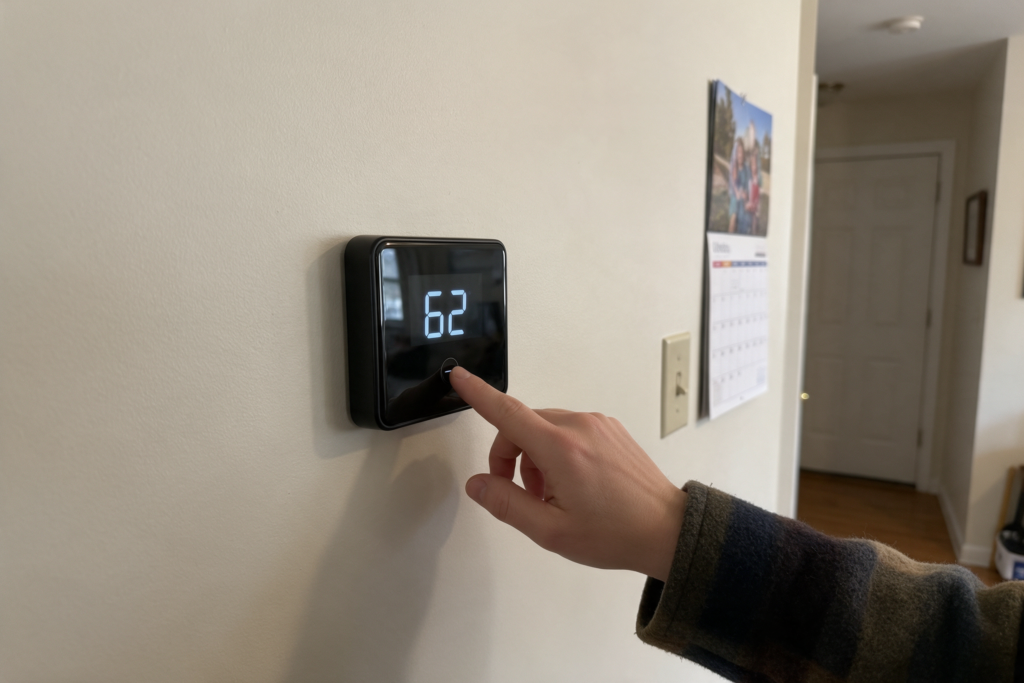
Set the thermostat back. Every degree you drop it for 8 hours saves about 1%. Lower it while you’re out and again overnight.
Don’t go below 55°F, or pipes in outside walls can freeze. A programmable thermostat does the work for you.
Get the burner tuned before the cold. A dirty nozzle or clogged filter wastes oil. It can also quit on the coldest night of the year, when every service tech is booked solid.
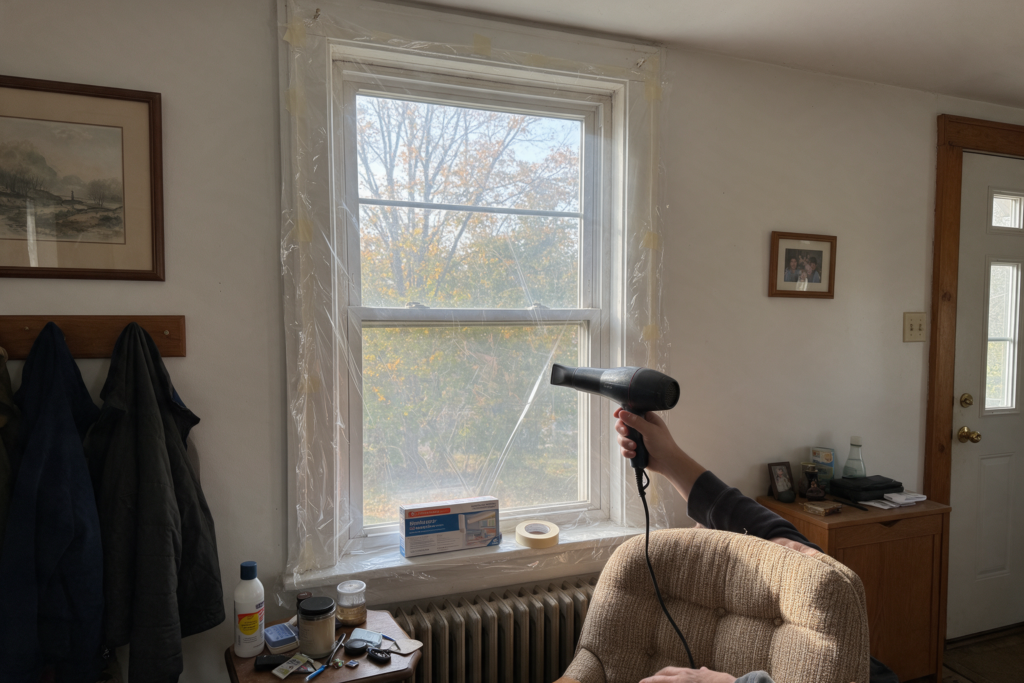
Seal the drafts. Window insulation film and door draft stoppers cost a few dollars each (paid links). Foam gaskets behind the outlet covers on outside walls cost even less.
Start with the windows you can feel cold air coming off. A shrink-film kit like this one covers 5 windows up to 3 by 5 feet, and you tighten the film with a hair dryer. It only lasts one season, so you’ll peel it off in spring and put up new film next fall.
As an Amazon Associate, Survival Life earns from qualifying purchases.

- Saves energy and reduces heating costs
- Reduces condensation and prevents frost buildup
Last update on 2026-10-13 / Affiliate links / Images from Amazon Product Advertising API
The door strip is the small add. Stick it to the bottom of the door that faces outside and the cold air across your feet stops. It’s small enough to toss in with the film kit.
Bigger jobs like insulation and air sealing can be free if you qualify for your state’s Weatherization Assistance Program. Ask about it when you apply for heating aid.
Heat the people first. Close doors to rooms nobody uses. Put on wool socks and a second layer, and add a heavier blanket to the bed.
While you’re walking the house, check the attic hatch (an uninsulated hatch lets heat pour straight up, and foam board glued to the back fixes it in 10 minutes).
Babies, older adults and anyone with a health condition handle cold worse than the rest of us. If that’s your house, ask their doctor how cool their room can safely get before you turn things down.
How do you get help paying for heating oil?
Start with the federal heating-bill help program, LIHEAP. Each state runs its own version, with its own income limits and its own name.
The fastest way in is to dial 2-1-1 or call your local community action agency. Either one can point you to your state’s program. Many states also have emergency help for homes about to run out.
Apply early. With prices this high, every aid dollar buys less oil, and money can run short late in the winter.
Don’t assume you earn too much. Massachusetts declared an energy emergency that boosted help for 156,000 lower-income households and opened it to 50,000 middle-income families.
While you’re on the phone with your dealer, ask about a budget plan. Many dealers split the season’s cost into steady monthly payments, so one brutal bill becomes several small ones.
What’s a safe backup if your oil heat fails?
Most oil furnaces and boilers need electricity to run. Lose power and you lose heat, even with a full tank.
So build a simple 4-step backup plan called PACE: Primary, Alternate, Contingency and Emergency.
- Primary: Your oil system, tuned, with the tank above 1/4.
- Alternate: An electric heater for the 1 room you’re in. It only saves money when the whole-house thermostat goes down.
- Contingency: An indoor-rated propane heater with a low-oxygen shutoff, for power outages, and only where it’s legal. Massachusetts bans portable propane and kerosene heaters for home use, and other states and towns set their own rules.
- Emergency: A warm room and a place to go. If the house gets dangerously cold, go to a relative’s home or a local warming center.
For the electric heater, pick one with tip-over and overheat shutoff and a UL or ETL safety label. Plug it straight into a wall outlet, never a power strip or extension cord. Keep it 3 feet from anything that can burn, and shut it off when you sleep or leave the room.
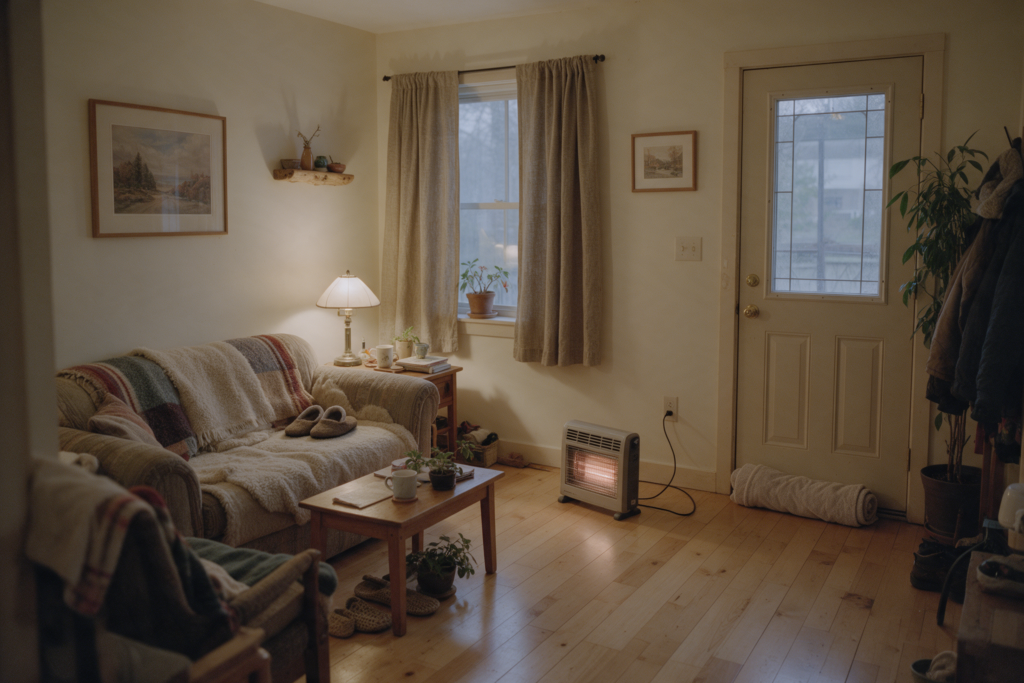
If you’re buying one for your warm room, this infrared heater has tip-over protection, overheat protection and a thermostat you can set from 50 to 85°F. It weighs 19 pounds and draws 12.5 amps, so it stays put in one room and should be the only big thing running on that outlet’s circuit. (paid link)
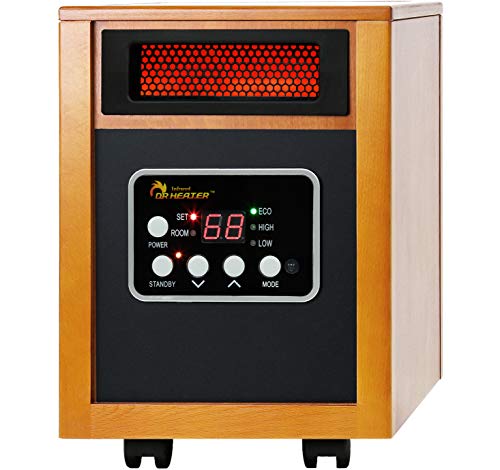
- Can heat up a large room with Auto Energy Saving Model With High and Low Feature. Tip-over protection and Overheat...
- Dual Heating Systems featuring infrared quartz tube + PTC with 12-Hour automatic shut-off timer. Amperage: 12.5 Amps
Last update on 2026-10-13 / Affiliate links / Images from Amazon Product Advertising API
For the propane heater, run a battery-powered carbon monoxide alarm in the same room and crack a window. Never run it while anyone sleeps.
If propane heaters are legal where you live, this small radiant heater is built for indoor use, with a low-oxygen shutoff and a tip-over shutoff. One 1-pound cylinder runs it about 5.4 hours on low, so stock spare cylinders if you’re counting on it for a long outage. Skip it entirely in Massachusetts. (paid link)
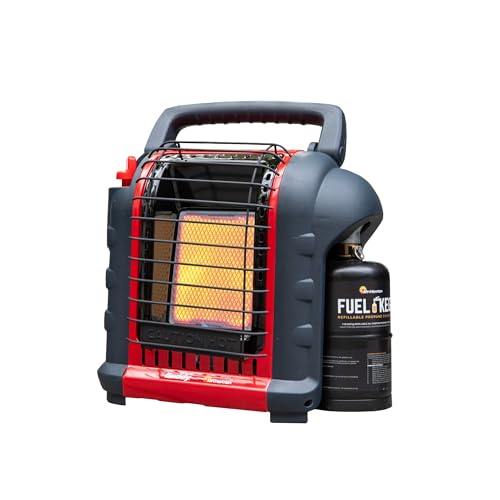
- Emits 4,000 or 9,000 BTU/hr radiant heat
- Designed and approved for indoor and outdoor use
Last update on 2026-10-13 / Affiliate links / Images from Amazon Product Advertising API
If you want the furnace itself to run during an outage, have a licensed electrician install a transfer switch and size the generator to your burner. Never plug a generator into a house outlet. Keep it outside, at least 20 feet from the house, with the exhaust pointed away.
Never heat your home with an oven or a grill. Carbon monoxide has no smell, and headache, dizziness and nausea can be the first signs. If an alarm sounds or anyone feels sick, get everyone outside and call 911.
Then test the plan once. Pick an evening, shut the thermostat off and run your warm room for 2 hours. You’ll find the dead flashlight and the drafty door while it’s still October.
What to buy, by budget
Start with Good and stop when your house is covered. Every tier also needs a battery carbon monoxide alarm. Prices below are live from Amazon (paid links).
Good
$17.16
Seal it up
The window film kit, plus a few dollars more for door draft stoppers. This pays off in any winter, whatever oil costs. Most homes can stop here.
Where most land
Better
$104.99
Warm-room setup
The electric heater above for the room you live in, plus everything in Good.
Best
$89.97 + fuel
Outage-ready
The propane heater above for power outages, plus everything in Better. Only where it’s legal.
Common mistakes
- Running the tank near empty to wait out prices. A low tank pulls sludge into the line. One clogged nozzle and a service call can cost more than the oil you tried to save.
- Signing a fixed pre-buy you can’t really afford. If prices drop, you’re stuck at the higher rate. If you borrowed to pay for it, you’re paying interest too.
- Running a space heater with the thermostat still up. That’s paying for 2 heat sources at once. A space heater only saves money when the furnace works less.
- Heating with the oven, a grill or a generator indoors. This is how carbon monoxide poisoning happens. There’s no safe shortcut.
- Waiting to apply for aid until the tank is dry. Applications take time, and money can run short as winter goes on.
- Turning the heat down too far. Below 55°F, pipes in outside walls can freeze. A burst pipe costs more than a winter of oil.
Frequently asked questions
About $5.26 a gallon on average, 34% more than last winter. The typical season bill is around $2,115, and much of the Northeast is already near $6 a gallon.
Let your cash and your tank decide. If your dealer offers a capped price and you can pay without borrowing, take the cap, because it limits how much you pay and still lets you pay less if prices fall. If money is tight, buy partial fills and keep the tank above 1/4.
Dial 2-1-1 or call your local community action agency to apply for LIHEAP, the federal heating-bill help program your state runs. Some states, like Massachusetts, have opened help to middle-income families this year.
Keep it at 1/4 full or higher. Below that, sludge from the bottom of the tank can clog your filter and nozzle and shut the burner down, which can mean a paid service call.
For most homes, an electric heater with tip-over and overheat shutoff, used in the 1 room you’re in. Indoor-rated propane heaters work during power outages, but only where they’re legal and with a carbon monoxide alarm running. Never run a generator or grill inside.
Do one thing today
Walk to your tank and write today’s gauge reading on a strip of tape. Then call your dealer and ask whether they offer a capped price.
Heating oil is near record highs. How are you buying oil this winter?
What price per gallon would change your answer? Tell us in the comments.
Follow Survival Life on Facebook for more budget-first checklists that get your home through the season.
Keep reading: how heating with propane compares on cost, the pros and cons of indoor propane heaters, and a household checklist for when storms knock out power.