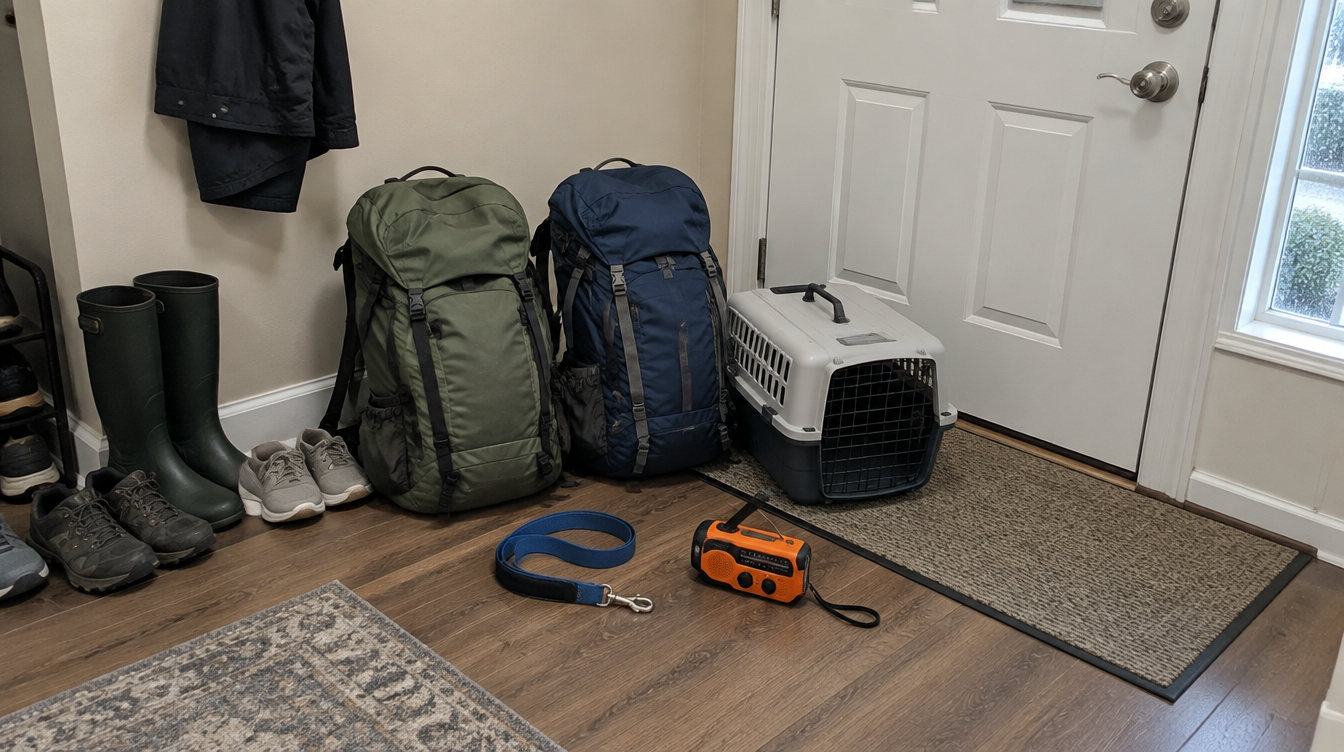

A flood safety plan comes down to four things: a weather alert radio that works without power, a paper contact list, a clear rule for when to leave, and a packed kit for every person and pet. You can set all four up this weekend for under $200.
Most families have the rough idea already. “We’d grab the dog and go.” That idea falls apart fast when the power’s out, the phones are jammed and the water is over the end of the driveway.
And if you weren’t home when it happened, would your family know what to do?
At a Glance: Your Flood Safety Plan
- Water depth: 6 inches of fast-moving water can knock an adult down. A foot of it can carry off a small car. Never walk or drive through it.
- When to go: A Flood Watch means get ready. A Flood Warning means act now. If you live low, leave on the warning.
- Hearing it: A weather alert radio with battery backup keeps warnings coming when the power and cell service go down.
- Reaching each other: Put every key phone number on paper. Pick one out-of-area contact, and text instead of calling.
- Pets: Pack each pet 3 to 7 days of food, 7 days of water and 2 weeks of any medicine, plus a carrier or leash.
As an Amazon Associate, Survival Life earns from qualifying purchases. That doesn’t change what we recommend, and it costs you nothing extra.
How little water it takes
Less than you’d guess. Fast-moving water just 6 inches deep can knock over an adult. A foot of rushing water can carry away a small car, and 2 feet can sweep away most vehicles.
More than half of flood drownings happen when someone drives into flooded water. So the number one job of your flood safety plan is simple. Keep your family out of moving water, on foot and behind the wheel.
You can’t judge the water by looking at it, either. The road under it might be gone. It might be hiding a downed power line.
Treat all floodwater as dirty. It can carry sewage, fuel and chemicals.
Kids and pets don’t wade in it, play in it or drink it, and any food it touched goes in the trash. No exceptions.
On a private well? Don’t drink from it after a flood until the water’s been tested. And if your town issues a boil notice, use our boil water advisory checklist.
Your flood kit shopping list
Flood kit
Seven things. Each one has one job.
| Item | Its job | Our pick |
|---|---|---|
| Alert radio | Wakes you when a warning hits, even at 3 a.m. | Raynic weather radio. Sounds off on its own. |
| Crank radio | Rides in the go-bag. Runs on crank, sun or AAA batteries. | FosPower A1. No auto alert, so switch it on. |
| Power bank | Keeps phones alive. | Anker Zolo 20,000 mAh. Up to 4 iPhone 15 charges, per Anker. |
| AAA batteries | Backup power for both radios. | Any fresh pack. How to test them |
| CO alarm | Warns you about generator fumes you can’t smell. | Any battery model, one per floor. |
| Carrier or leash | Gets a scared animal out the door with you. | One per pet, plus folding bowls. |
| Waterproof pouches | Keeps cards, IDs and pet records dry. | Clear 3-pack. |
Product details come from each maker’s listing.
Want to start with one buy?
Start with the radio. It covers alerts, light and a way to hear the news, which is most of what a family needs in the first hours.
Good
$30–$40
Crank radio for the go-bag
The FosPower A1. You get weather broadcasts, a flashlight and three ways to power it. You have to switch it on to hear a warning.
Better
$40–$50
A radio that wakes you up
The Raynic. It scans for weather alerts on standby and sounds off on its own, so it can sit on the nightstand and ride in the bag.
Best
$90–$110
Radio, phone power and dry papers
The Raynic, plus the Anker Zolo 20,000 mAh power bank and a 3-pack of waterproof pouches for your cards and records.
Prices move, so treat these as budget ranges. Every tier is under $200. If money’s tight, the Good tier plus a paper contact list covers the two things that matter most: hearing the warning and finding each other.
As an Amazon Associate, Survival Life earns from qualifying purchases.

- AUTOMATIC NOAA WEATHER ALERT RADIO - This weather alert radio may save your life! Especially important at night while you are...
- LARGE HD LCD DISPLAY - A must weather radio with a large HD LCD display screen and digital tuning, you can see the battery...
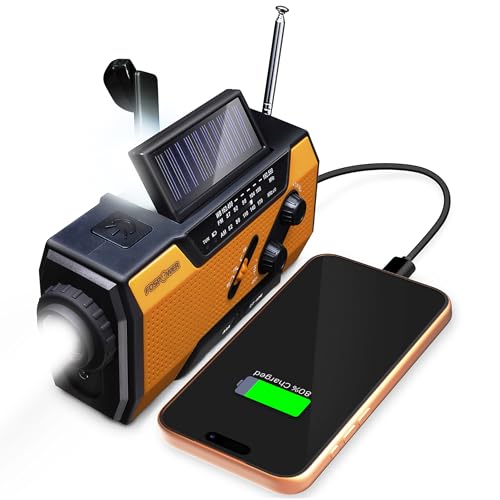
- [7400mWh (2000mAh) POWER BANK WILL KEEP DEVICES POWERED] The FosPower FOSPWB-2376 emergency radio incorporates a 7400mWh...
- [3 POWER SOURCES POWER WHEN YOU NEED IT] Use the emergency weather radio's 3 power sources when you need a boost of power or...
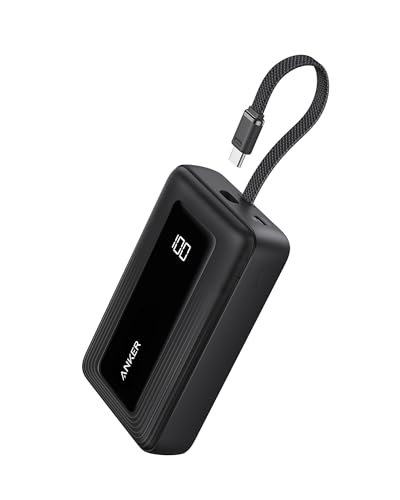
- Go Beyond with 20,000mAh: Carry the power you need to charge your iPhone 15 up to 4 times or your Samsung S24 3.79 times...
- 30W Two-Way Fast Charging: Charge quickly with 30W output and recharge just as fast with 20W input, keeping your devices...
Last update on 2026-10-23 / Affiliate links / Images from Amazon Product Advertising API
Hearing the warning when the power goes out
Your phone is a great alert tool right up until the battery dies or the towers jam. An alert radio doesn’t need either one. It picks up the official weather broadcasts that run around the clock and can sound an alarm when a warning goes out.
Learn the two words that matter.
A Flood Watch means conditions are right for flooding. A Flood Warning means it’s about to happen or already is. A Flash Flood Warning means get to high ground now if you’re in a low spot.
When a Watch goes out, charge everything. Phones, power banks, the radio. Do it then, while you still have power.
If you run a generator
Run it outside, at least 20 feet from the house, with the exhaust pointed away. Never on a porch, in a carport or in the garage. Opening windows won’t clear the fumes. That’s what the CO alarms are for.
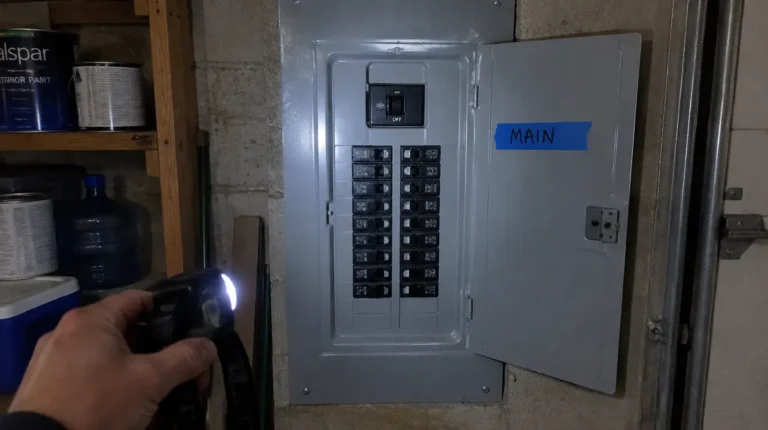
Water and electricity don’t mix. If water is rising toward outlets and you can reach the main breaker while standing somewhere dry, shut it off. If you’d have to stand in water to reach it, leave it and get out.
Don’t touch anything wet that’s still plugged in. And anything that sat underwater, like wiring, breakers or gas valves, needs a pro to check it before you turn it back on.
A contact list that works without a phone
Quick test. How many phone numbers do you know by heart? For most of us it’s two or three, tops.
If a phone dies or gets soaked, every other number goes with it.
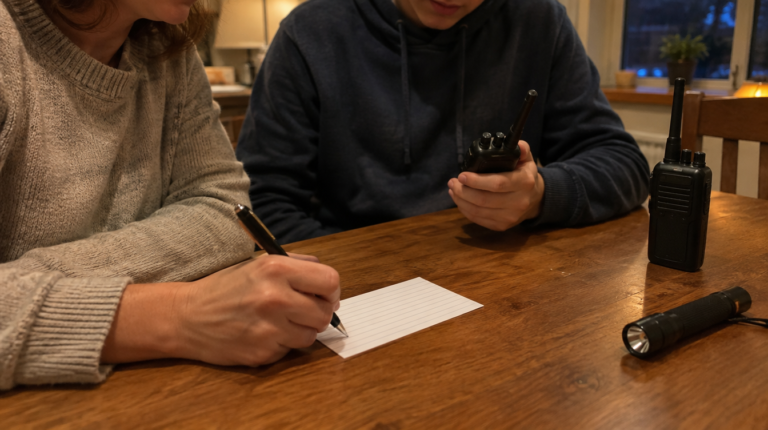
So put them on paper. The American Red Cross says to carry emergency contacts in writing and saved on your phone, plus one out-of-area contact. A cousin two states away is easier to reach when local lines are jammed.
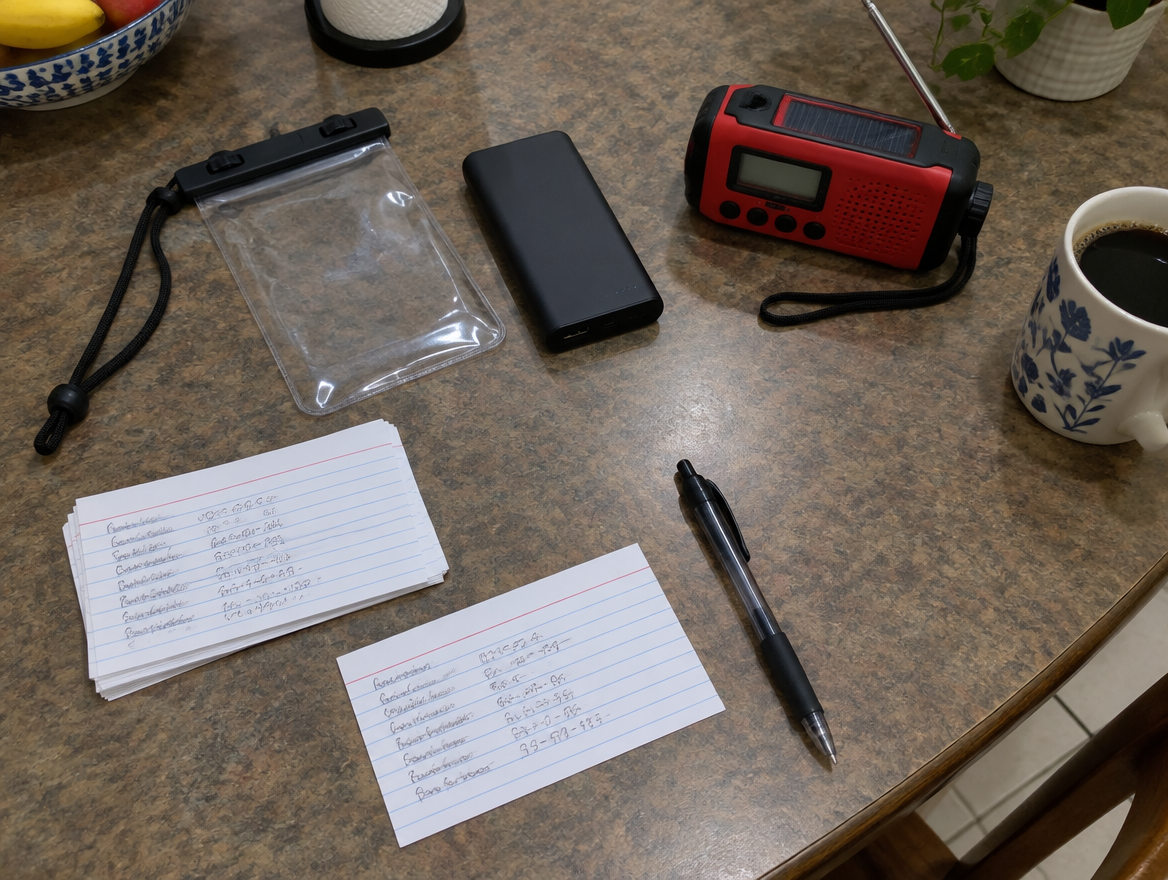
Make a wallet card for each person in your home with:
- Each parent’s cell number
- The out-of-area contact
- A nearby friend or neighbor
- Your vet and the kids’ school
- Both meeting places
Pick 2 meeting places. One is right outside, like the mailbox. The other is outside your neighborhood and on higher ground, like a relative’s house up the hill.
Text first. Call second. A text can slip through when a call won’t.
Agree on one short message everyone sends the out-of-area contact: “Safe. At spot 2.”
Our printable family disaster plan template has blanks for all of it.
When to leave and how to get everyone out
Here’s where people split. Some say leave the second a warning hits. Others say stay put unless you’re told to go, because a crowded road in the dark can be worse than a second floor.
Both can be right. It depends on where you live:
- You’re told to evacuate: Go now. Don’t wait to see how bad it gets.
- Flood Warning, and you live low or near a creek: Leave early, while the roads are still dry.
- Flood Watch only, and you live on high ground: Stay. Pack the car and charge everything.
- Water is already over the roads: Don’t drive. Go to the highest floor, somewhere with a window or a way out.
Plan 2 ways out of your neighborhood before any of this happens. Drive both once. Note the dips and low bridges that flood first.
Give everyone a job
If you’re the only one who knows the plan, your family doesn’t really have one. Let each person pick a job they can handle:
- One adult gets the kids and any older relatives.
- One adult grabs the go-bags and the pets.
- An older kid carries the radio and the contact cards.
Every adult should be able to walk 3 miles carrying their own bag.
Can’t? Then the bag’s too heavy. Take something out.
Got someone at home who can’t walk far, or who depends on powered medical equipment? Talk to their doctor now about a backup plan. Then call your power company and ask if it keeps a medical priority list.
Getting your pets out
If it isn’t safe for you to stay, it isn’t safe for your pets. Take them.
Colorado State University’s vet hospital recommends 3 to 7 days of food, 7 days of water and a 2-week supply of any medicine for each pet. Pack these too:
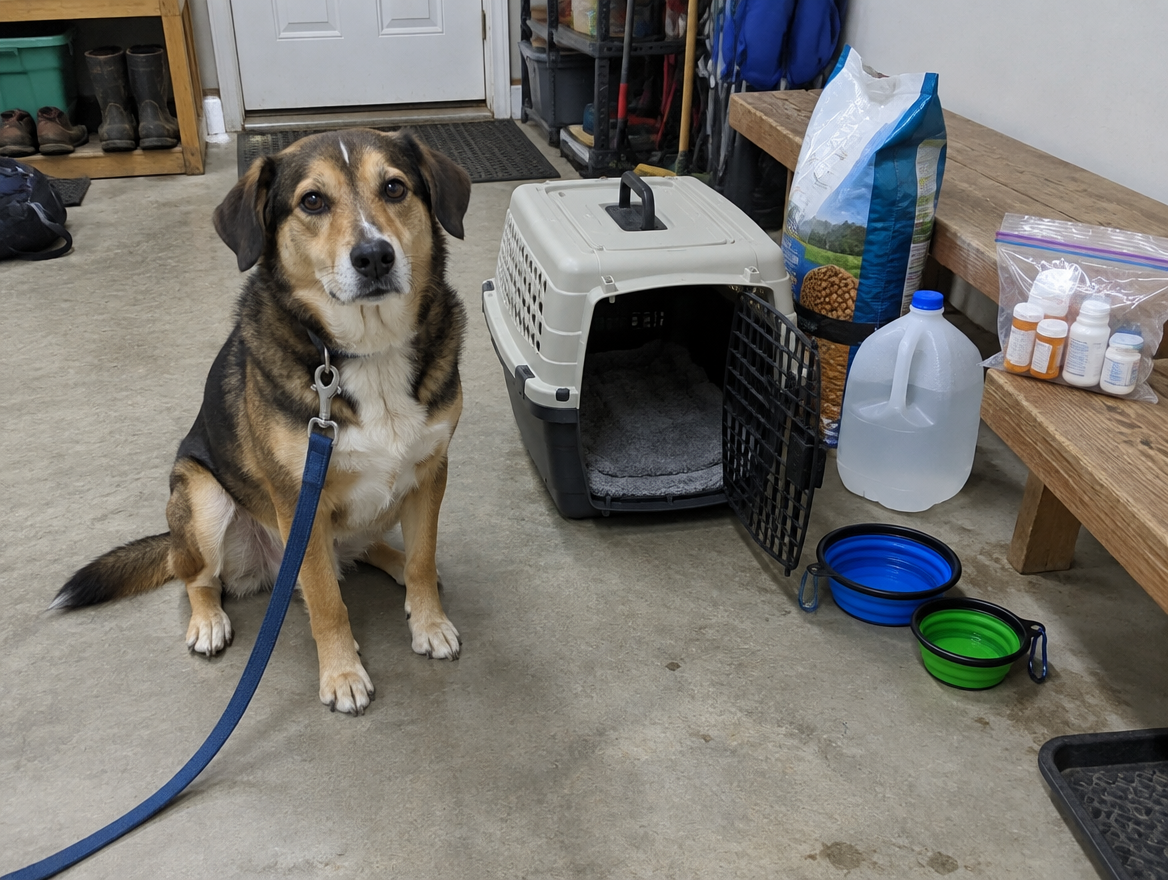
- Vaccine records, the rabies certificate and the microchip number, on paper and on your phone
- A photo of you with each pet, to prove they’re yours
- Waste bags or a small litter box
Make sure the microchip lists your current phone number. Check that the tags are easy to read.
Don’t count on a shelter taking your pet. Call ahead, and keep a short list of pet-friendly hotels and friends outside the flood area.
Cats and nervous dogs hide when a storm rolls in. You’ve seen it, right?
Set the carriers out the minute a Flood Watch goes out, not when it’s time to leave.
The math: why water rides in the car
The rule is 1 gallon of water per person per day. A family of 4 needs 12 gallons for 3 days.
A gallon weighs about 8.3 pounds. That makes 12 gallons roughly 100 pounds, before the dog gets a drop.
Nobody’s carrying that. So the go-bag holds a day’s water and a filter bottle, and the rest rides in the car.
Practice your flood safety plan once
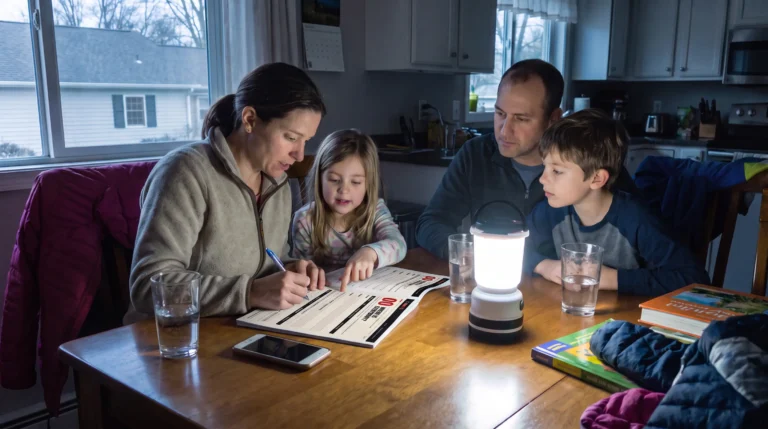
People freeze on choices they’ve never made before, and stress makes it worse. A practice run turns those choices into habits, so nobody has to think in the moment.
Try a 15-minute drill this month. Set a timer. Everyone grabs their bag, loads the pets and meets at spot 1.
Then watch what breaks. Maybe the cat bolts under the bed, a leash has gone missing and the car’s sitting on a quarter tank.
Fix those, and run it again in 6 months. Our blackout weekend drill covers the power side next.
Common mistakes
- Driving through “just a little” water. You can’t see the road or the current. Turn around, even if other cars keep going.
- Waiting to see water before you leave. By then the roads may be closed. If you live low, leave on the warning.
- Counting on your phone for everything. Dead batteries and jammed networks are normal in a flood. Paper and a radio keep working.
- Leaving the pets for last. A carrier in a flooded garage and a cat under the bed can cost you 20 minutes you don’t have.
- Keeping the plan in one head. Write it down and walk the whole family through it.
- Turning the power back on too soon. Anything that sat underwater needs a pro to check it first.
Frequently asked questions
A day of water per person, a filter bottle and 3 days of easy food. Add medicines, copies of key documents, phone chargers, a flashlight, a weather radio and your contact cards. Keep each bag light enough to carry 3 miles.
Sometimes, but not always. Call ahead or check with your local emergency office. Keep a backup list of pet-friendly hotels and friends outside the flood area.
A watch means flooding could happen, so get ready. A warning means it’s about to happen or already is, so act now.
No. Six inches of moving water can knock an adult down. The water can also hide open drains, debris and live wires, and it’s often full of sewage.
Charge every phone and power bank when a Flood Watch goes out. Keep a 20,000 mAh power bank in the go-bag, turn your screen brightness down and close apps you don’t need.
Do one thing today
Tonight, start your flood safety plan with a wallet card for everyone in your home. Five numbers and both meeting places. Then text your out-of-area contact and ask them to be the family’s check-in point.
Should people who ignore an evacuation order pay for their own rescue?
Why’d you vote that way? Tell us in the comments below, and share your family’s plan on our social channels.