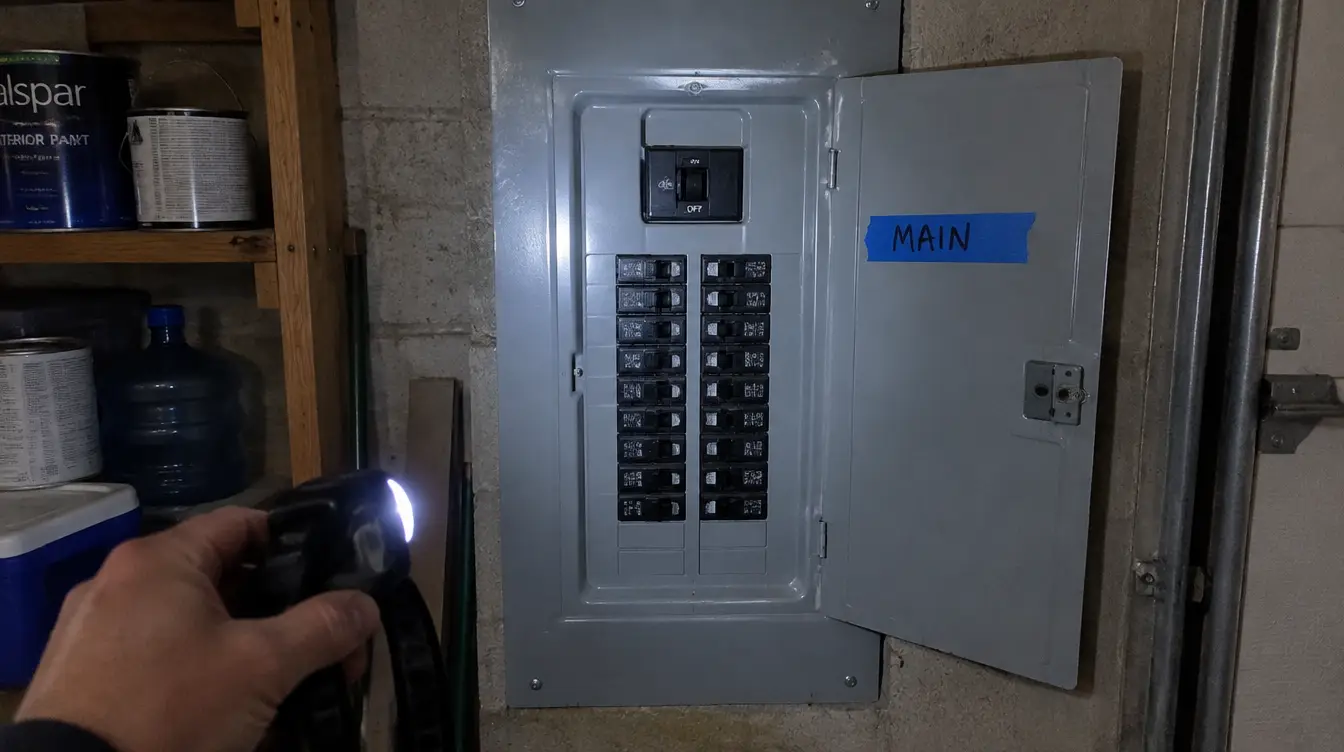

The lights cut out at 7 p.m. on a Tuesday. You grab your phone for a flashlight, and it’s at 18%.
The flashlight in the junk drawer? Dead batteries. The fridge has gone quiet, and you’re already doing math on the chicken inside.
That’s how most of us find out what we’re missing. In the dark, with no warning.
A power outage drill flips that around. You shut off your main breaker and your main water line on a Friday night, on purpose, and you write down everything you wish you had until Sunday.
It costs nothing. And the list you end up with is built from your house, not somebody’s generic checklist.
At a Glance: The Power Outage Drill
- The drill: Turn off your power and water for a weekend on purpose. Write down everything you miss.
- Start easy: 24 hours with the fridge and freezer still on. Then try 48 hours with everything off.
- Food clock: Fridge food stays safe about 4 hours with no power. A full freezer lasts about 48 hours if you keep it shut.
- Free fixes: Learn where your shutoffs are and how to open the garage door by hand.
- Fix order: Water, then light and power, then food, then medicine.
Survival Life earns a commission if you buy through the Amazon links on this page, at no extra cost to you. It doesn’t change what we recommend, and the cheapest option gets the same attention as the most expensive.
Why a power outage drill beats another checklist
A checklist tells you what to own. A drill shows you what your family actually does when the lights go out.
Big difference.
When things get stressful, people don’t rise to the plan on paper. They fall back on whatever they’ve done before. So a family that’s already spent one dark Saturday together knows where the flashlights are and who fills the water jugs, and somebody has already figured out how to flush a toilet with a bucket.
That’s the whole point.
Call it “camping at home,” not a disaster drill. Kids take it better. Partners are more willing. And the notes you get back are more honest.
Let each person pick a job: water, light, cooking or the journal.
Before Friday: what to leave on and when to wait
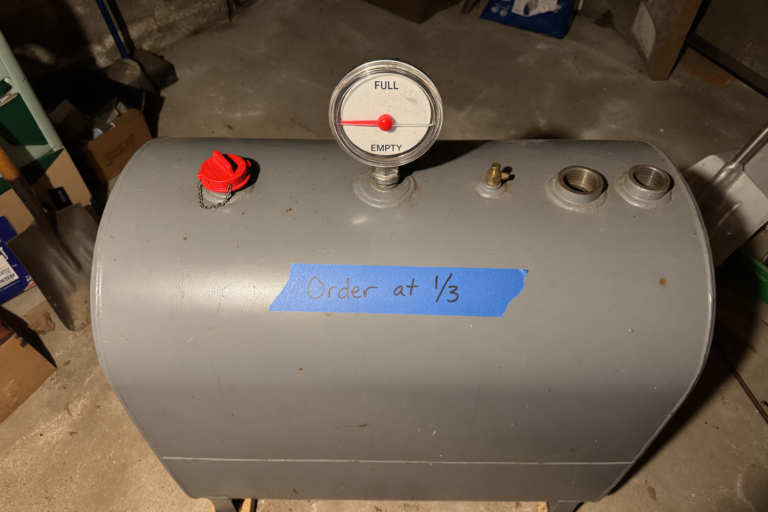
Find your two shutoffs first. The main breaker is the big switch at the top of your electrical panel. The main water valve sits where the water line comes into the house, most often in a basement, crawlspace, garage or utility closet.
Label both. Painter’s tape and a marker are plenty.
If the water valve is stiff or rusty, don’t force it. Old valves crack, or they start leaking the second you turn them. That’s not a failed drill. It’s your first finding, and it’s a plumber call you’d much rather make on a calm Tuesday than in the middle of a burst pipe.
Leave these running, every time:
- Powered medical equipment. Oxygen machines, CPAP machines and medicine that needs a fridge stay on. This drill doesn’t test backup power for medical gear. That needs its own plan, made with the equipment supplier and the doctor.
- A sump pump, if there’s any rain in the forecast.
- Heat or cooling, if the weather is extreme. Skip the drill in freezing weather (pipes can burst) or a heat wave, especially with older adults or babies at home. Spring and fall weekends are the sweet spot.
If you have a gas water heater, set it to its vacation setting before you shut off the water. An electric water heater turns off with the power anyway.
Two power outage drills: how real should you make it?
Experienced preppers split on this. One side says flip the main and go all in, because a half test finds half the gaps. The other side says you don’t burn a freezer full of food on a practice run.
Both are right. So do it in two rounds.
Drill 1: the safe version (24 hours). Leave the main breaker on. Switch off every circuit except the fridge and freezer, or unplug everything else.
Tape the fridge shut with a note: off-limits except for planned meals. The water stays on, but everyone drinks and washes from the jugs you’ve set aside.
Drill 2: the full version (up to 48 hours). Main breaker off. Water valve off. This is where people lose money, and it’s almost always the freezer. So plan around the food-safety clock:
- Fridge: food stays safe only about 4 hours without power. Eat it down the week before, or move what’s left into coolers with ice and a thermometer. Throw out perishables that sit above 40°F for more than 2 hours.
- Freezer: a full freezer stays safe for about 48 hours if the door stays closed. A half-full one lasts about 24.
- So: a full freezer can ride out 48 hours. Half full? Stop at 24, or leave just the freezer circuit on. No practice weekend is worth a freezer full of meat you just stocked up on.
The gap journal: what to write down
Put one notebook on the kitchen counter. Every time someone reaches for something that isn’t there or doesn’t work, it goes in the book, with the time.
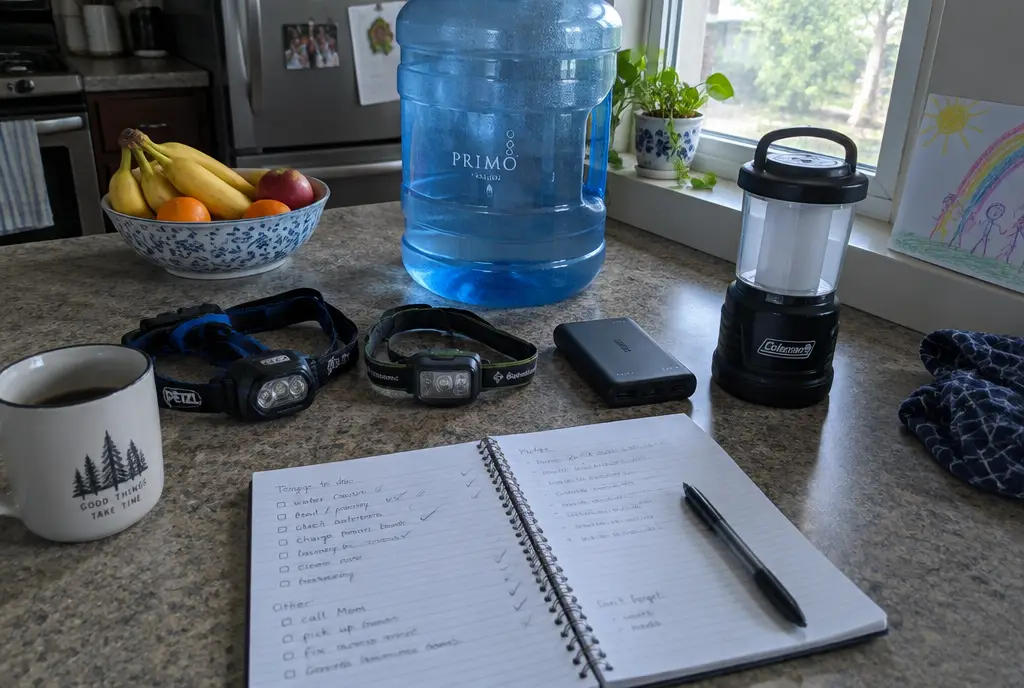
Don’t fix anything mid-drill unless it’s a safety issue. You want the list, not the fix.
Questions that turn up the most gaps:
- First hour of dark: Where are the lights? Do the batteries work? Can you find the flashlight without a flashlight?
- First morning: Coffee. Breakfast without a stove or microwave. Hot water for a shower.
- Bathroom: How much water does a flush really take? Where do you pour it from?
- Phones: How much charge is left at bedtime? How will you get news or storm updates?
- Cooking: What can you make without power, safely, and with what fuel?
- Comfort: Can everyone sleep? Think heat, cold, noise and darkness.
- Kids: What keeps them busy after the tablet dies?
- Doors and locks: Can you open the garage door by hand? Does the smart lock still work?
The water math most families get wrong
Drinking water isn’t what runs out first. Flushing is.
Water math
A family of four, 48 hours, water off.
| Use | The math | Water needed |
|---|---|---|
| Drinking and cooking | 1 gallon per person per day × 4 people × 2 days | 8 gallons |
| Toilet flushing | 1.6 gallons per flush × 12 flushes a day × 2 days | About 38 gallons |
| Total | The toilet uses more than 80% of it | About 46 gallons |
12 flushes a day is a guess for four people. Your journal will give you the real number. An older toilet uses more per flush, a bigger family uses more, and a “flush only when needed” rule cuts the total a lot.
Source for flush volume: Kohler toilet specification, 1.6 gallons per flush.
Two seven-gallon jugs cover the drinking water. For flushing, fill a bathtub or a tub liner before a storm and you’re set for the weekend.
(Side note if you’re on a well: the pump quits the second the power does, drill or no drill. So your numbers here are exactly what a real outage looks like.)
Turning the journal into a fix list
On Sunday night, sort every entry into one of three piles.
Pile 1: free fixes. Skills and habits, nothing to buy. Learn the garage door’s manual release, label the shutoffs, keep flashlights in one drawer and charge the power banks every Sunday.
You’ll be surprised how much of the journal lands here.
Pile 2: things to buy, in order. Water first, then light and power, then food, then medical. A power station won’t do much for you if there’s no water in the house. Skip ahead and you’ll spend money in the wrong place.
Pile 3: the budget. You don’t have to buy Pile 2 in one trip. Add about $10 a week to the grocery run and you’ll have about $130 in three months, which is roughly the Better kit below.
Then run the drill again. Round two tells you which fixes actually worked.
How to turn everything back on safely:
- Switch off big appliances and heating or cooling at their own switches or breakers.
- Turn the water main back on slowly. Check under sinks for leaks.
- Open a hot water tap near the water heater. Let it run until the water flows steady. An electric heater’s element can burn out if the tank isn’t full when the power comes back.
- Flip the main breaker on. Then turn circuits back on one at a time.
- Check the fridge and freezer thermometers before you eat anything.
What to buy first: Good, Better, Best
Each kit builds on the one before it, in the same order as Pile 2.
Affiliate disclosure: Survival Life may earn a commission if you buy through the links below, at no extra cost to you.
Good
About $62
Lights and phone power
Four Foxelli headlamps (about $10 each) and one Anker 10,000mAh power bank (about $22). For flushing, refill clean juice or soda bottles with tap water. That part costs $0.
Better
About $132
Add water storage and news
Everything in Good, plus a waterBOB bathtub liner that holds up to 100 gallons (about $37) and a FosPower hand-crank weather radio (about $33).
Best
About $391
Add a small power station
Everything in Better, plus a Jackery Explorer 300 (292Wh, about $259) for phones, lights and a Wi-Fi router. For a bigger setup, have a pro confirm the size for your home.
Prices are Amazon’s when we checked, and they move around. These are examples, not tested picks. For bigger backup power, see our portable power stations for home backup guide.
Don’t write off the Good kit. Headlamps, a power bank and refilled bottles cover the basics of a 48-hour drill for about $62.
As an Amazon Associate, Survival Life earns from qualifying purchases.

- SUPER BRIGHT LED TECHNOLOGY (165 ft beam) – wide variety of white & red modes, all controlled by one glove-friendly button...
- WATERPROOF AND DURABLE – why equip yourself with anything but the best and most reliable headlamp? MX20 is built to last...
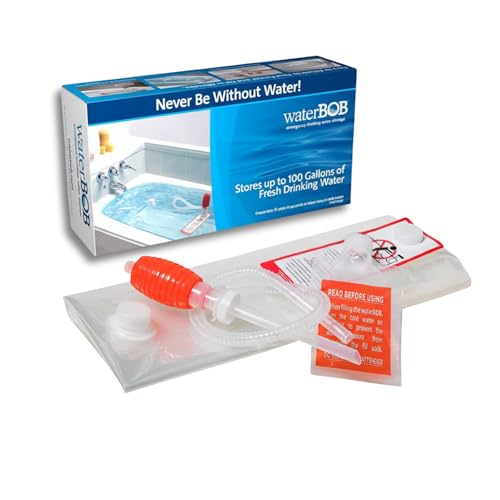
- Space-Saving Up To 100-Gallon Emergency Water Storage: Transform your existing bathtub into a clean, safe water storage...
- Sealed Food-Grade Liner Keeps Water Fresh Up to 16 Weeks: Heavy-duty, BPA-free plastic liner meeting USFDA food-grade...
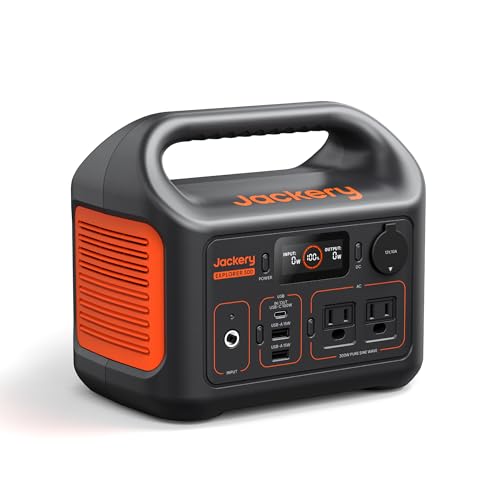
- Ultra-Lightweight: At only 7.5 lbs, the Explorer 300 delivers a robust 292Wh capacity while remaining 17% lighter than the...
- Versatile Power for 6 Devices: Equipped with 2 AC outlets, a 100W USB-C PD port, 2 USB-A ports, and a 120W car port. With a...
Last update on 2026-10-17 / Affiliate links / Images from Amazon Product Advertising API
Common mistakes
- Going all the way dark on round one. Main breaker off plus a half-full freezer is how a free drill turns into a freezer full of wasted food. Run the safe version first.
- Forcing an old water valve. A valve that hasn’t moved in years can snap. Stiff means stop. Call a plumber.
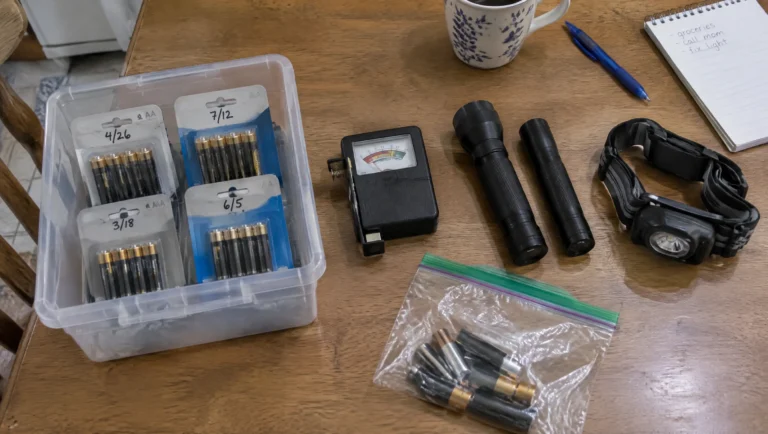
- Assuming the flashlights work. Batteries die and leak in drawers, and you won’t find out until you need them. Test them before Friday. Keep spares in the same spot.
- Using candles as your main light. Candles, kids and a dark house are a bad mix. LED headlamps and lanterns cost less than one insurance claim.
- Bringing the grill or camp stove inside. Never use a charcoal or gas grill indoors or near a window. Never run a generator in a garage or on an attached porch. Carbon monoxide has no smell, so a CO alarm with a battery is part of the drill.
- Writing a shopping list instead of a journal. If every entry ends in “buy,” you’ve skipped the free fixes. Ask “could we do this without buying anything?” first.
Frequently asked questions
Start with 24 hours, then work up to 48. One evening only tests your lights. A full weekend shows you mornings, meals, bathrooms and sleep, which is where most gaps hide.
Usually, yes. If the valve is stiff, rusty or leaking, don’t force it. Call a plumber. Set a gas water heater to vacation mode first, and refill the tank before the power comes back on.
Fridge food is only safe for about 4 hours without power. Eat it down or move it into coolers with ice before the full drill. A full, closed freezer stays safe for about 48 hours, and a half-full one for about 24.
Water first. Then fill the water heater by running a hot tap until it flows steady. Then the main breaker, then one circuit at a time. Keep big appliances off until the house is back up.
Keep that equipment powered and leave it out of the drill. Backup power for medical gear needs its own plan, made with the equipment supplier and the doctor.
Do one thing today
Find your main breaker and main water valve, label both, and put a notebook on the kitchen counter. Then pick the Friday.
Be honest: if you flipped the main breaker this Friday, would your household make it to Sunday?
Why’d you vote that way? Tell us in the comments below, and share your biggest surprise on our social channels.
For more, see our power outage checklist, ways to keep food cold without power and the family disaster plan template.