
In a monsoon power outage, do three things in the first hour: cool the people, keep the fridge and freezer doors shut, and switch every phone to low-power mode. In desert heat the body comes first and food comes second. A closed fridge keeps food safe for about 4 hours and a full freezer for about 48. Everything else below builds on those three moves.
At a Glance
- Cool people before you save food. In 100-degree heat, a person can get into trouble in hours. Groceries can wait.
- Fridge: 4 hours. Full freezer: 48 hours. Half-full freezer: 24. That only holds if the doors stay shut.
- Throw out perishables that sat above 40°F for more than 2 hours. Use a thermometer, not your nose.
- Charge first, buy later. Power banks and a fully charged phone carry most families through a monsoon outage.
- Measure your fridge’s real power draw before you buy a power station. The number on the box won’t tell you if it can carry your fridge.
Survival Life earns a commission if you buy through the Amazon links on this page, at no extra cost to you. It doesn’t change what we recommend or the order we recommend it in, and the cheapest option gets the same attention as the most expensive.
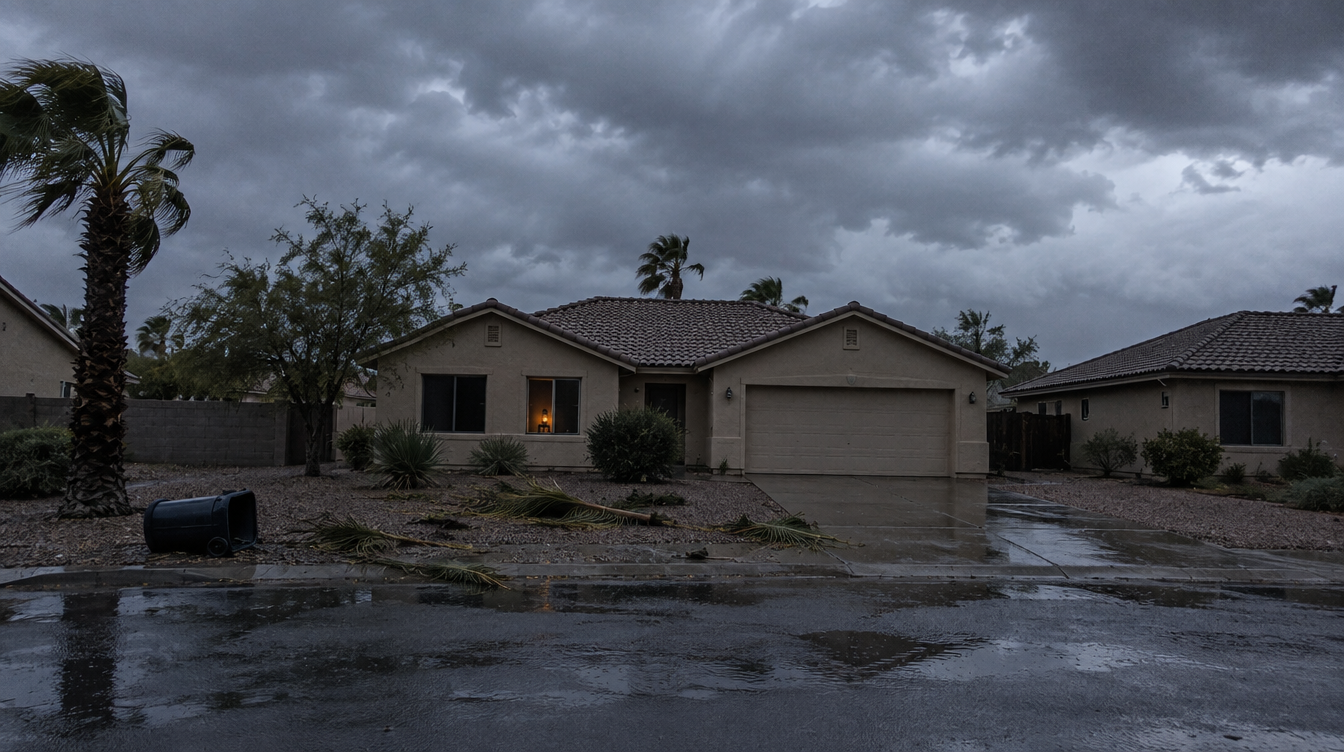
This week showed how fast it happens. A storm cut power to nearly 16,000 Tucson Electric Power customers. Two days later, several thousand Salt River Project and APS customers across Scottsdale, Cave Creek, Anthem and the East Valley went dark as some areas took more than 2 inches of rain in a few hours. Monsoon season runs through September 30, and triple-digit afternoons don’t wait for the rain to stop.
What should you do first in a monsoon power outage?
Experts genuinely split on where the first dollar and the first hour should go. One camp says a desert outage is a body-temperature problem before it’s anything else, and no battery cools a person. The other camp says power is the lever: a properly sized battery keeps the fan, the fridge and the phones running, and that solves most of the problem at once. Both are right, depending on your house. Here’s how to decide:
- The indoor temperature is heading past 90°F, or someone at home is over 65, very young, pregnant, or on heat-sensitive medication. Body temperature comes first. Move everyone to the coolest room, usually the lowest floor on the side away from the afternoon sun. If the house keeps climbing, go to a cooling center or a relative’s house that has power. Food comes second.
- Someone depends on a powered or refrigerated medical device. That device gets your battery power first, ahead of the fridge.
- The house is tolerable and the outage looks short. Keep the fridge shut and change nothing else. Most monsoon outages are measured in hours.
- The outage passes the 4-hour mark with a full fridge. A power station sized to the fridge’s real load earns its cost here. Without one, move the must-keep items into a cooler packed with frozen water jugs.
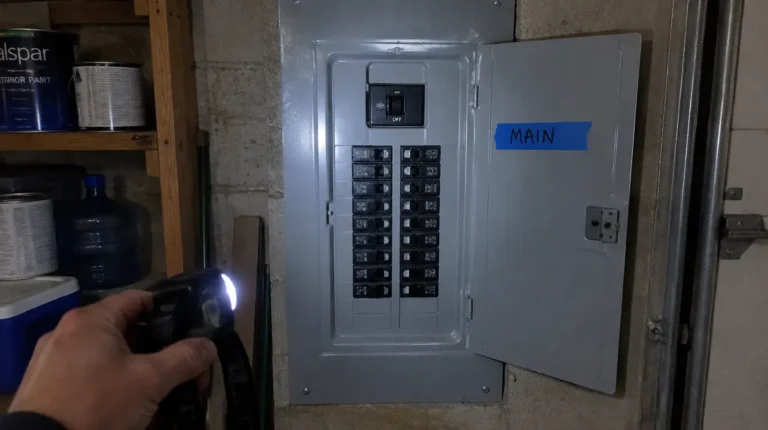
Turn the AC off at the thermostat while the power is out. When service comes back, thousands of units starting at once can cause surges. Turn it back on a few minutes later, and keep TVs and computers on surge strips.
How do you keep people cool when the AC quits?
Fans help, but in real heat they won’t prevent heat illness on their own. Cooling means getting water on skin and moving air over it. Wet a cloth and drape it over the back of the neck. Take cool (not ice-cold) showers or baths while you still have water pressure. Close the blinds on the sun side of the house before the afternoon. More low-power ideas are in our guide to cooling your house during a blackout.
Drink water on a schedule, not when you feel thirsty. Plan on at least one gallon per person per day, and more in desert heat. Whatever amount you think you need, store double.
Know the danger signs. Confusion, fainting, hot skin, a racing pulse, or someone who stops making sense in the heat is a medical emergency. Call 911 and start cooling them while help is on the way. The CDC’s list of heat-illness signs is worth reading once before the season starts. Decide now, while the lights are on, who in your house is most vulnerable and where they’ll go if the house gets too hot.
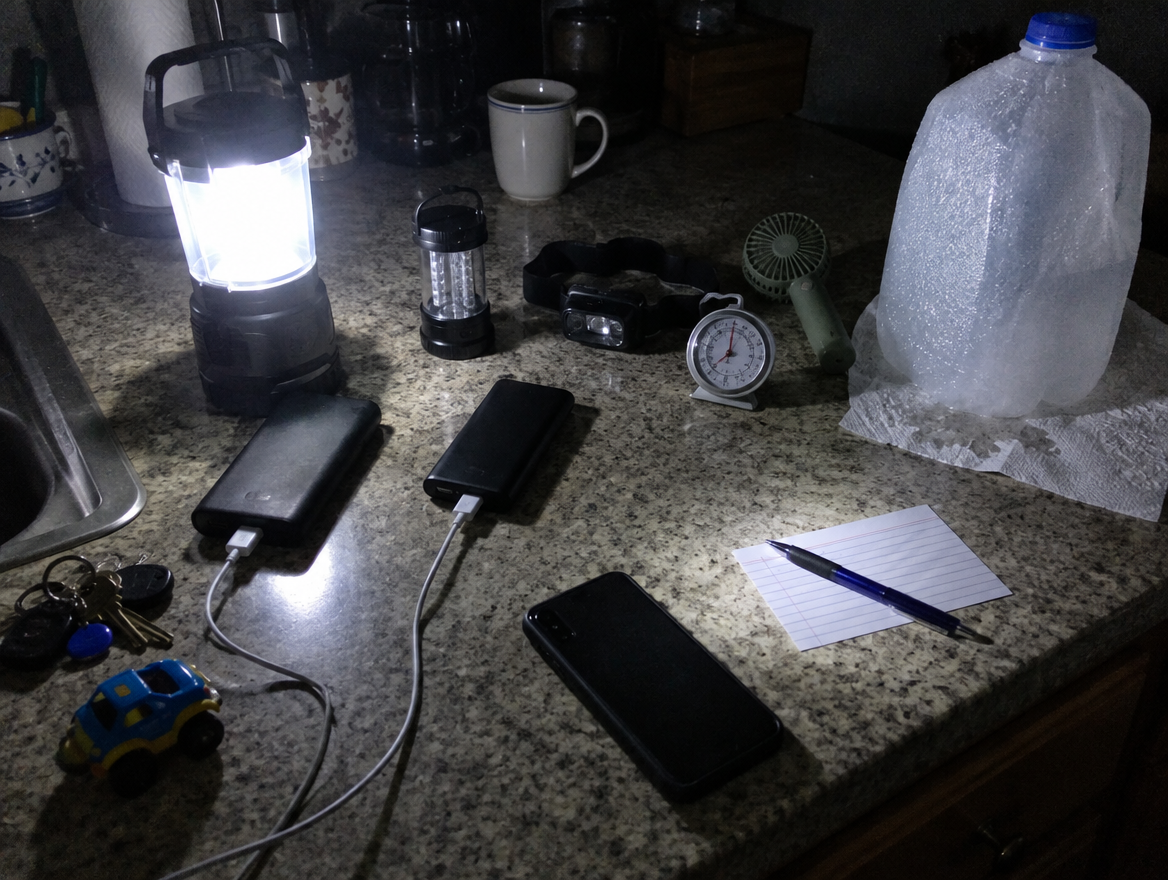
How long does food stay safe when the fridge stops running?
Keep the doors closed. Every opening dumps cold air. A closed fridge holds safe temperatures for about 4 hours, a full freezer for about 48, and a half-full freezer for about 24.
A cheap appliance thermometer in each compartment settles the family argument over what to keep. When power comes back, check it. Throw out meat, poultry, fish, eggs, dairy, cut fruit and leftovers that sat above 40°F for more than 2 hours, which is the line FoodSafety.gov draws item by item. Hard cheese, butter, condiments, bread, and whole fruits and vegetables usually survive. Never smell or taste food to decide. If you’re unsure, throw it out.
Two free upgrades buy you margin before the next storm. Keep a few jugs of water frozen in the freezer, because a full freezer holds cold longer and the jugs become ice packs for a cooler. When a storm warning goes out, turn the fridge and freezer to their coldest settings for a few hours of extra buffer. For longer outages, see our non-electric refrigeration options.
Refrigerated medication is its own category. Many medicines need to be discarded after a day or more without refrigeration unless the label says otherwise. Call your pharmacist before the next monsoon season, ask how long yours lasts, and write the answer on the plan.
How do you keep phones, lights and medical devices running?
A dead phone is how a short outage turns into a scary one. A family on day five of a storm outage this August listed their lesson plainly: “Mistake #2 was not having a backup for cell/data service.” When towers are overloaded, texts often get through when calls won’t.
- Phones: switch to low-power mode the minute the lights go out. Charge from power banks, or from the car while you’re driving it.
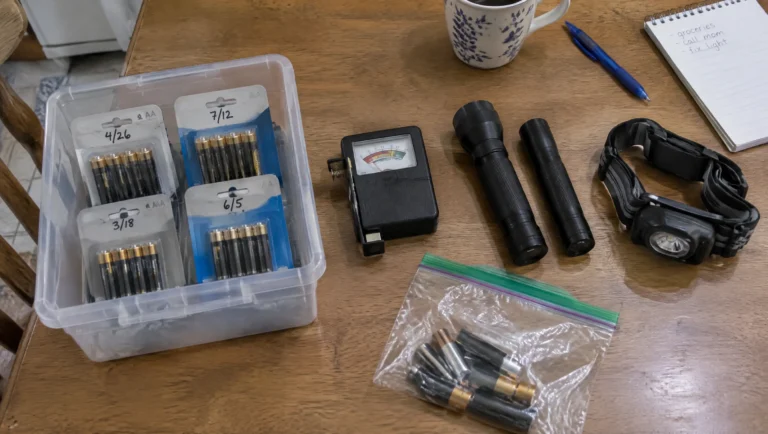
- Light: use battery or USB lanterns for rooms and a headlamp for tasks. Flashlights are fine for a hallway, but they don’t light a kitchen. Skip candles. Fire risk climbs in a dark house full of kids and pets.
- Medical devices: if anyone uses a CPAP, oxygen concentrator or another powered device, talk to their provider about an outage plan and ask your utility about its medical-device notification program.
About cars: a car is a charger and an air-conditioned refuge, but only outdoors. Never run a car or a generator in a garage, even with the door open. The Consumer Product Safety Commission puts the number at 20 feet from any window, door or vent, with the exhaust pointed away from the house and a battery-powered CO alarm inside. Never plug a generator into a wall outlet or the dryer circuit. That “backfeeding” can kill a lineworker or a neighbor. A licensed electrician should install any connection to your home’s wiring.
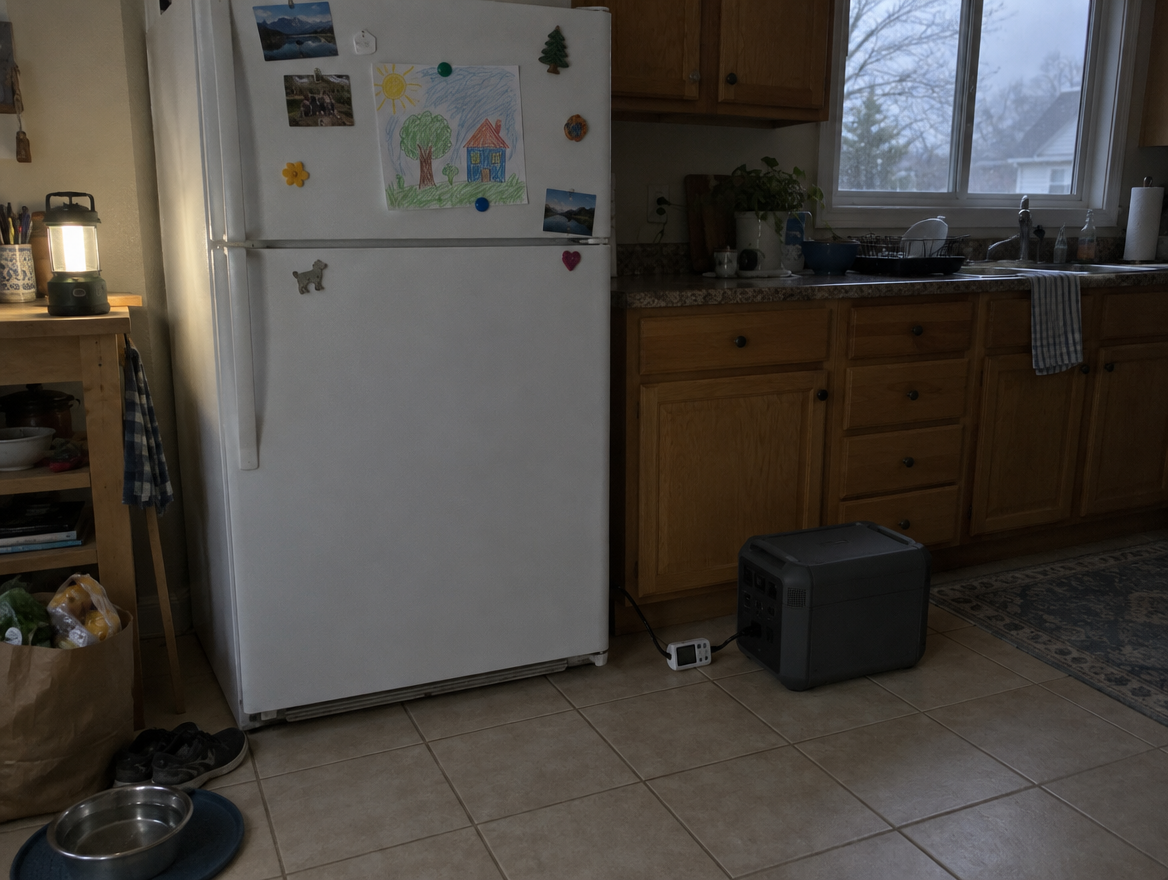
Can a power station carry your fridge through the night?
Assumptions: A full-size fridge measured on a plug-in meter uses about 1,200 watt-hours (Wh) a day. Yours could be anywhere from about 1,000 to 2,000 Wh, which is why you measure it. The station is rated at 1,000 Wh, and after the inverter’s conversion loss it delivers roughly 85% of that.
The math: 1,000 Wh × 0.85 = about 850 usable Wh. 850 ÷ 1,200 = 0.71 of a day, or roughly 17 hours of fridge. Four phones at about 15 Wh per full charge take another 60 Wh, which costs you about one hour of fridge time.
What breaks it: a fridge in a hot garage runs longer and draws more. So does every door opening. A compressor also pulls a short surge when it starts, well above its running watts, so an inverter without enough surge rating will shut off. Check the station’s surge spec against the fridge’s startup draw. And measure. A plug-in energy meter left on the fridge for 24 hours tells you more than any sales page.
What should you buy before the next monsoon power outage?
Water and light come before any big battery. Start with what you can afford this month and add a tier when the budget allows.
Good
Under $100
Two 10,000–20,000 mAh power banks, a battery lantern, a headlamp, fridge and freezer thermometers, and a plug-in energy meter. Covers phones, light and food decisions for a typical monsoon outage.
Better · where most land
$200–$400
A 300–500 Wh lithium iron phosphate (LiFePO4) power station. Runs phones, lights, a fan and many CPAP machines overnight. Most won’t carry a full-size fridge all day.
Best
$600–$1,000+
A 1,000–2,000 Wh station whose surge rating covers your fridge’s startup draw. A folding solar panel is optional for outages that run past a day.
Here’s where to start on Amazon, one pick per job. A 20,000 mAh bank covers the phones. A fan with a built-in battery earns its spot in desert heat. For the battery tiers, a small LiFePO4 station handles the overnight load, and a 1,000 Wh class station is the size the fridge math above calls for.
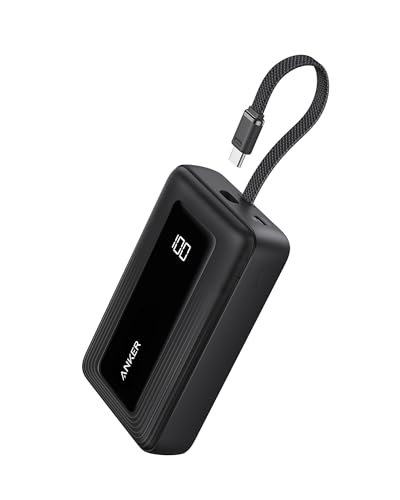
- Go Beyond with 20,000mAh: Carry the power you need to charge your iPhone 15 up to 4 times or your Samsung S24 3.79 times...
- 30W Two-Way Fast Charging: Charge quickly with 30W output and recharge just as fast with 20W input, keeping your devices...

- Small In Size, Big On Function: Featuring a Fan, Flashlight, and Backup Power Bank, the JISULIFE pocket bear fan is your...
- 12-19 Hours Cooling Time: With up to 19 hours of cooling time on a single charge(Charging time 2–3 hours with 5V/1A...

- PORTABLE POWER STATION 350W: This portable power station can run air pumps, recharge phones and laptops, and power the Goal...
- FAST CHARGING PORTABLE POWER STATION: High-speed charging mode takes this portable power station from 0% to 100% in about...
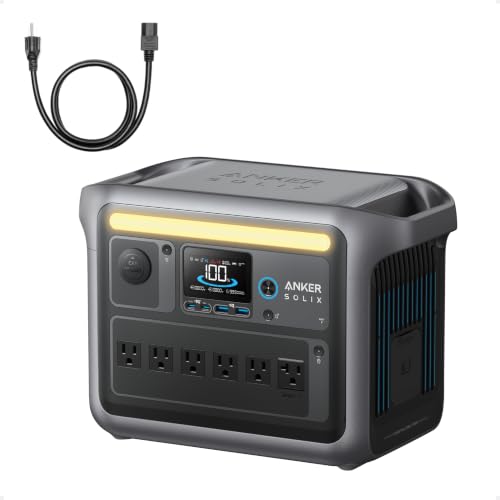
- Charge Up in a Flash: Achieve 80% battery capacity in just 43 minutes with the Anker SOLIX C1000's UltraFast recharging...
- A Decade of Power: Trust in a decade-long journey with the Anker SOLIX C1000 Portable Power Station, featuring exceptional...
Last update on 2026-10-09 / Affiliate links / Images from Amazon Product Advertising API
As an Amazon Associate, Survival Life earns from qualifying purchases.
What none of these do. None of them cools a house. A handheld fan moves air across damp skin; it doesn’t lower the room temperature. The smaller station won’t carry a full-size fridge through a day, and the listing capacity on any station is the rated number, not what reaches your outlet. Check the surge rating against your fridge before you buy. A battery you’ve never run is equipment. It isn’t a plan. Our portable power station comparison goes deeper on the bigger units.
How do you turn this into a household plan?
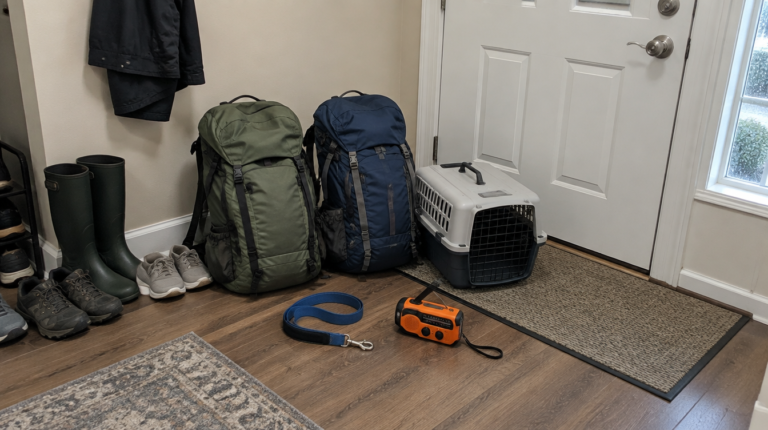
Write one page and tape it inside a kitchen cabinet. It should say where the lanterns and power banks live, the fridge rule (4 hours, 40°F), who the most heat-vulnerable person is and where they go, your utility’s outage number, and who checks on the elderly neighbor.
Let each person pick their job. A plan everyone helped write is one they’ll remember at 3 p.m. on a Tuesday when you’re at work. If you don’t have the wider plan yet, build the family emergency plan first.
Neighbors are an asset in an outage like this. The house down the street with a generator, or the neighbor who works from home, can be part of the plan if you talk before the storm.
Common Mistakes
- Opening the fridge “just to check.” Every opening shortens the 4-hour window. Check the thermometer after power returns instead. Costs nothing to fix.
- Trusting a fan in 110-degree heat. Fans move hot air. Cooling needs water on skin, shade, or a cooler place.
- Buying a power station by the number on the box. Without measuring your fridge’s real draw, you’re guessing whether it runs for 6 hours or 16.
- Running a generator or car in the garage. Carbon monoxide is odorless, and an open garage door is not enough ventilation.
- Forgetting refrigerated medicine. Ask the pharmacist now, not during the outage.
- Leaving the AC switched on. The surge when power returns can damage equipment and slow restoration for everyone.
Frequently asked questions
About 4 hours if the door stays closed. A full freezer holds for about 48 hours and a half-full one for about 24. After that, check the thermometer. Perishables above 40°F for more than 2 hours should go.
Stay inside and at least 20 feet from downed lines, and treat every line as live. Report the outage to your utility (Tucson Electric Power: 520-623-7711; SRP and APS customers can report through their apps or outage maps). Switch off the AC, keep the fridge closed, and move people to the coolest room.
Turn on low-power mode right away, text instead of calling, and charge from power banks. A car charger works too, but only with the car running outdoors, never in a garage.
Only outdoors, at least 20 feet from windows, doors and vents, protected from rain, and with a battery CO alarm inside the house. Never plug it into a wall outlet.
If the fridge went past 4 hours without power, throw out meat, poultry, fish, eggs, dairy, cut fruit and leftovers that warmed above 40°F. Frozen food that still has ice crystals or reads 40°F or below can be refrozen.
Do one thing today
Tonight, plug in every phone and power bank in the house, and fill two empty jugs with water and put them in the freezer. Then take ten minutes and write the one-page plan: where the light is, who’s most vulnerable to the heat, and where they go. Everything else on this page can wait until you’ve measured your fridge.
Related: What to do in a power outage · Summer blackout preparedness guide · Boil water advisory checklist
If you had $300 before the next monsoon outage, where would it go?
Why’d you vote that way? Tell us in the comments below.