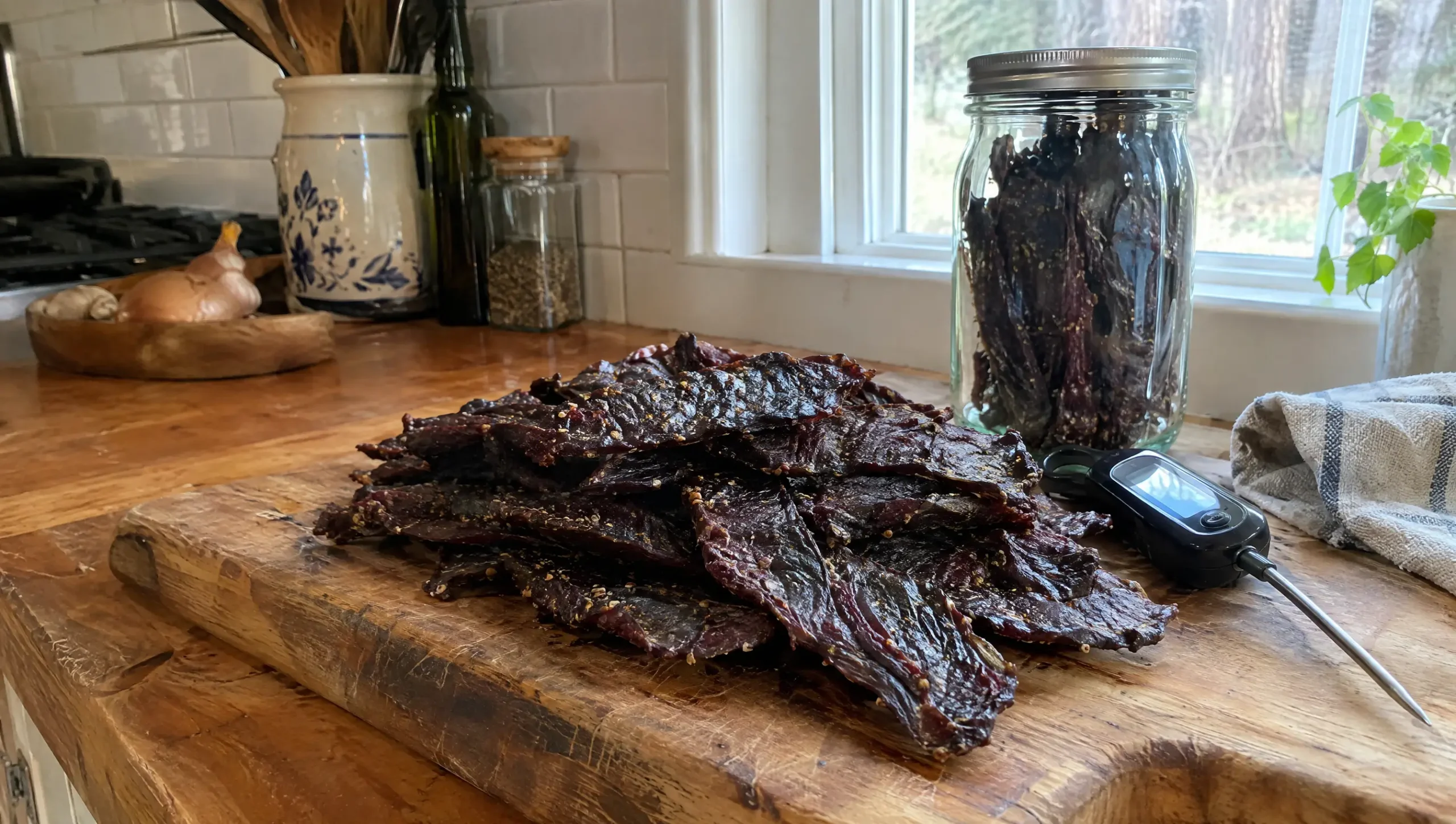

Somebody in your family used to know how to do this. They could age a deer, smoke a ham and make jerky that lasted all winter. But almost none of that meat preservation know-how got written down. Some of it was smart. Some of it made people sick. Here are four old-timer rules you’ll hear this hunting season, each checked with a simple number.
At a Glance: Old-Timer Meat Preservation
- The short version: Some old meat tips still work. Some can make you sick.
- Jerky: Cook the meat to 160°F first. Then dry it.
- Bear and other wild game: Freezing won’t make it safe. Cook it to 160°F.
- Hanging a deer: Keep it at 38°F or colder, for 2 to 3 days.
- Smoked meat: It still spoils. Eat it or freeze it within 3 to 4 days.
Featured digital guide
The Forgotten Frontier Journal
The old-timers’ know-how, written down and graded, so you know which ways are worth passing on.
904-page PDF
124 chapters
7-day refund
- Clear grades: proven, plausible (maybe) or avoid.
- Lots of skills: curing, smoking, drying, hunting, hides, foraging, gardening, tools and more.
- Sent by email: you get a PDF. There’s no printed book.
The four verdicts below are ours. We checked them against university meat-safety testing and seasoned wild-game cooks. We cover the book’s weak spots further down.
Affiliate disclosure: Survival Life may earn a commission if you buy through this link, at no extra cost to you.
$37Price when we checked
Most of this advice gets defended the same way: “We always did it like this, and nobody got sick.” Fair enough. But you don’t have to take anyone’s word for it, not even ours. Each rule below comes down to a number. You can check it yourself with a cheap kitchen thermometer.
The goal isn’t to worship the old ways or toss them out. It’s to be the one your family counts on to know which ways still work. Then you pass the good ones on.
Why isn’t “it worked for Grandpa” proof?
The old ways got passed down by the families they worked for. You don’t hear much from the families they hurt. That’s called survivor bias. The stories that last are the ones with happy endings.
When the old ways fail, they fail quietly. You can’t see the tiny worms that cause trichinosis in meat. Germs can grow before meat looks or smells bad. So the only fair test is a number you can measure. Each rule below gets one of three grades: keep it, keep it with a fix, or retire it.
Which old-timer meat preservation rules still hold up?
1. “Dry your jerky low and slow”: retire it
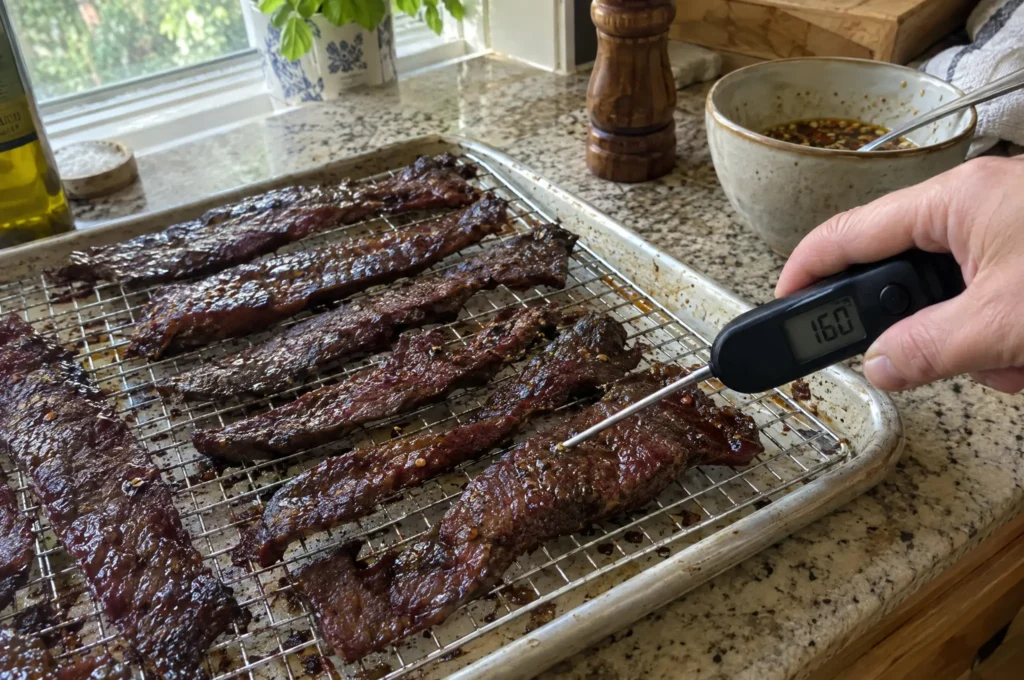
The belief: Hang thin strips in warm air, or leave them in a low oven, until they get tough and leathery. Then they’ll keep.
What really happens: Warm air dries the meat before it gets hot enough to kill the germs on it. Penn State Extension’s jerky guide warns that a food dryer alone can leave germs alive. They just wait for a chance to grow again.
The number: Heat the inside of the meat to 160°F before you dry it. Then dry it at a steady 140°F.
The fix: Heat the strips to 160°F. Check with an instant-read thermometer. Then dry them at 140°F in a food dryer, oven or smoker.
2. “Freeze bear meat and the worms die”: retire it
The belief: A few weeks in the freezer makes bear meat safe from trichinosis. That’s a sickness from tiny worms in meat that isn’t cooked enough.
What really happens: The freezer trick was made for the worm found in farm pork. Bears carry other kinds. Wild-game cook Hank Shaw notes that the two kinds most tied to bears can live through freezing. University food-safety experts agree. They say freezing may not be enough for bear meat, even though it seems to work for pork.
Rare bear is how people get sick. Shaw writes about a 2008 party in California. Of the 38 people who ate undercooked black bear, 30 got trichinosis.
The number: The freezer rule most people know is 20 days at 5°F. The clock starts once the center of the meat hits 5°F. It was meant for pork, not bear or wild hog.
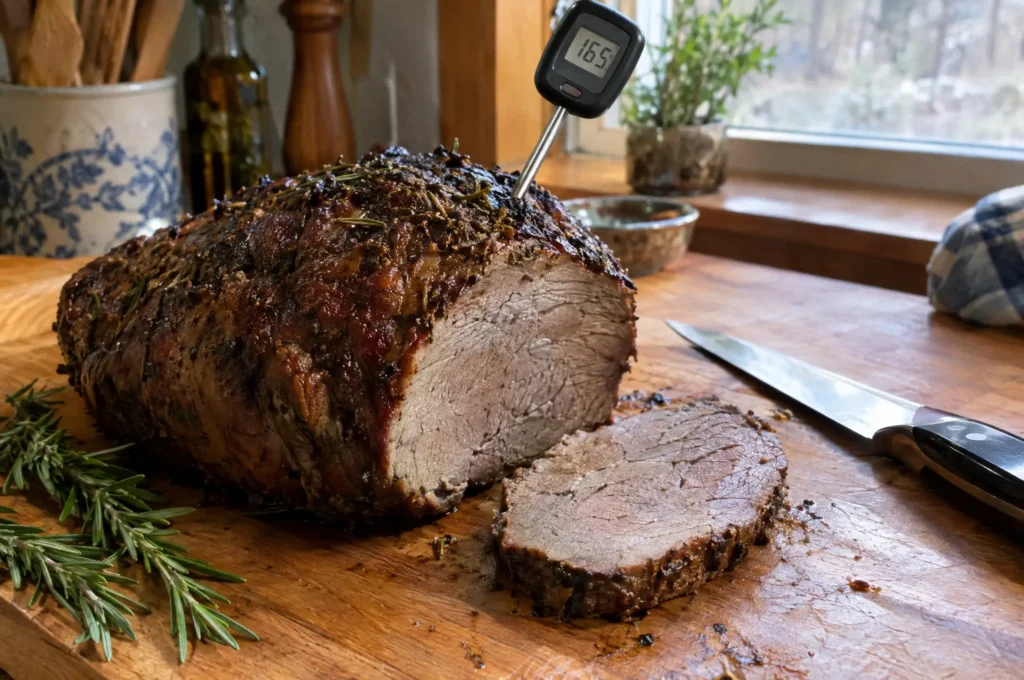
The fix: Cook it. The worm dies at 137°F. Cook bear and wild hog to 160°F on a thermometer. That gives you plenty of room for error. The freezer is for storing meat, not for making it safe.
3. “Hang your deer a few days before you butcher it”: keep it, with a number
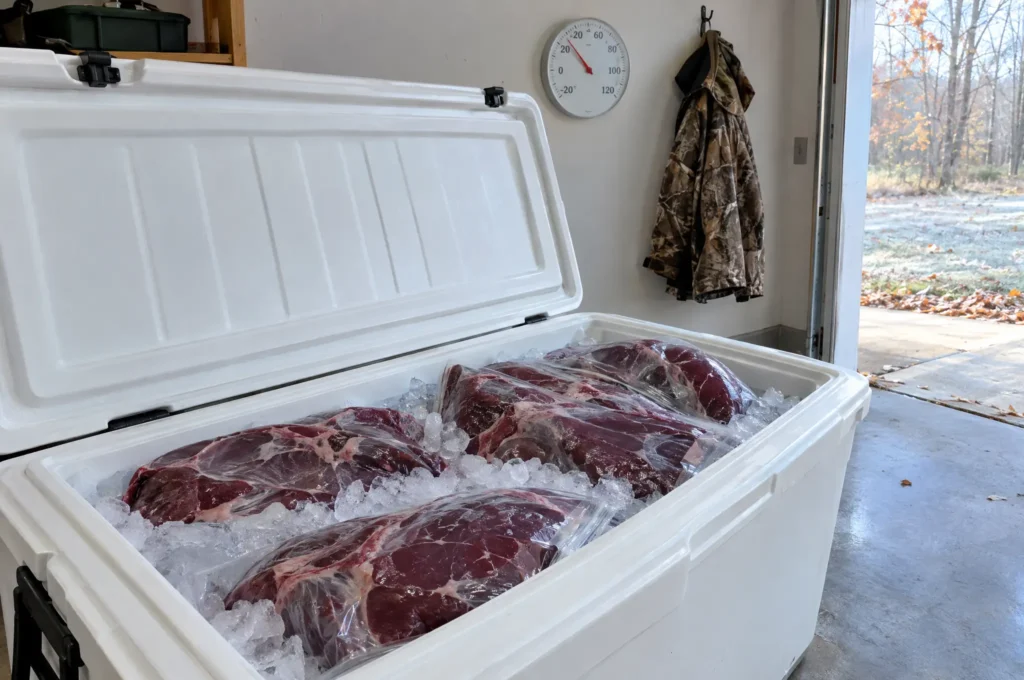
The belief: Letting a deer hang makes the meat more tender.
What really happens: Hunters don’t agree on this one. Some hang it one night and butcher the next day. Others swear by a week. One hunter put it this way in a BackYardChickens forum thread on processing deer: “We typically hang our deer for 5-7 days to allow moisture content to dry up a bit.” Both can work. The temperature decides it.
The number: Penn State Extension’s wild-game guide says to age a deer at 32 to 38°F for 2 to 3 days. If the air is warmer than 40°F, it says to cool the deer fast. Put bags of ice or snow inside the body.
The fix: Let the thermometer decide.
- Air stays between 32 and 38°F: hang it for 2 to 3 days.
- Want to hang it for a week? Only where you can keep it that cold day and night, like a walk-in cooler. Not a barn that warms up by noon.
- Air above 40°F, even for one afternoon: don’t hang it. Pack the inside with bagged ice or snow. Or cut the deer into quarters and get it into a cooler or fridge.
4. “Smoke it and it’ll keep”: keep it for flavor, not for storing
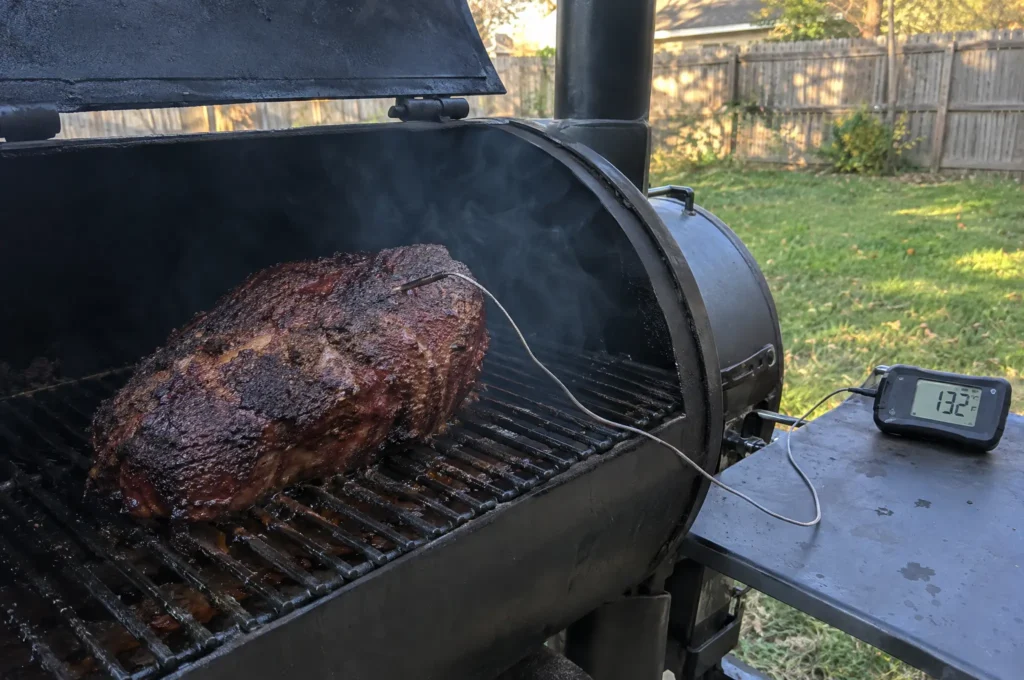
The belief: Smoked meat can hang in the smokehouse for months and stay good.
What really happens: Smoke adds flavor and dries the outside. It doesn’t keep meat safe by itself. Cold smoke doesn’t cook meat at all. The smoked hams and salami that do keep for a long time rely on salt, measured carefully. Wild-game cooks like Shaw use at least 2 percent salt by weight of the meat and fat.
The number: Once it comes off the smoker, it’s cooked meat. Nebraska Extension’s food-safety team says cooked leftovers go in the fridge within 2 hours. They keep for 3 to 4 days.
The fix: Treat smoked meat like any cooked meat. Put a thermometer in the meat, not just in the smoker. Get it in the fridge within 2 hours. Eat it within 3 to 4 days, or freeze it.
How did the four old rules score?
Two retired, two kept with a number. You’ll see that a lot with old-time advice. The gut feeling was often right. What was missing was the number.
If these four answers were all you needed, you can stop here. The rest of this page is about a book that grades old-time methods the same way, on many more topics. We’ll tell you what it does and doesn’t do.
What does The Forgotten Frontier Journal add?
These four rules cover one small part of meat preservation: game and jerky in the fall. The Forgotten Frontier Journal promises to do the same across 124 chapters. The sales page says it shows “where they were right, where they were flat wrong, and gives you the number either way.”
The grades are the point. A pile of old methods with no grades is just a pile. Grade them, and you have something you can use this season. Later, you can hand it to your kids.
This time of year
The parts of the book that fit fall hunting and meat work.
| Section | Chapters |
|---|---|
| Salt, smoke and cure | 6 |
| Drying | 5 |
| Hunting and the trapline | 6 |
| Hide, horn and bone | 5 |
How to use it: hold the book to the same test as the rules above. Its numbers should match tested university guides. If one doesn’t, go with the tested number.
Source: chapter counts from the publisher’s table of contents.
We checked the four rules above ourselves. The rest of the book gets judged the same way. Here are three ways to get there.
Affiliate disclosure: Survival Life may earn a commission if you buy through the link below, at no extra cost to you.
Good
A thermometer
Free guides plus one tool
A food thermometer, plus the free university guides linked above. This works if you’re willing to look up each method one at a time.
One place to start
Better
$37
The Forgotten Frontier Journal
124 graded chapters in one place, so you don’t have to hunt for each answer. Price when we checked.
Best
$37 + a class
The book plus hands-on practice
Add a hands-on class, like a meat-processing workshop from your county extension office. Class fees vary by county.
How is it different from other old-ways books?
If you’ve already bought one of these, that’s a fair question. Lots of books sell “lost knowledge.” Our own list of forgotten skills your grandparents knew covers some of the same ground. Here’s what’s different about this one.
- It grades the old ways. Most old-ways books assume the old way was better. This one tells you which methods to drop.
- It covers things few others do. Five chapters on hides, horn and bone, including tanning. Four on reading land. Thirteen on the history of Old West guns.
- It admits what it can’t do. The book has chapters called “What This Book Will Not Do” and “What I Still Cannot Do.”
“$37 for a PDF?” That’s about 30 cents a chapter. If it’s not what you expected, the 7-day refund covers you.
What are the book’s main weak spots?
- It’s digital only. There’s no printed book. You get a PDF and print what you need.
- 904 pages is a lot. Use it like a reference book. Look things up when you need them. Don’t try to read it cover to cover.
- The family story is the author’s own. The book is built around a grandfather’s journal, the author says. We can’t prove that. None of our four rules depend on it. Judge the book on its numbers.
- The price changes. It was $37 when we checked. Another site listed it at $27 in August. Check the price when you buy.
- It doesn’t replace a tested recipe. Check anything you’ll eat against a tested recipe, like the ones from your county extension office. That goes for any book.
Common mistakes
- Judging meat by how it looks. Dry, dark and tough doesn’t mean safe. Only a thermometer tells you how hot the meat got.
- Using the pork freezer rule on wild game. Twenty days at 5°F was meant for farm pork. The worms most common in bears can live through freezing.
- Hanging a deer on a warm day. A 45°F afternoon counts as warm. If the air is above 40°F, ice the deer or butcher it.
- Treating a smoked roast like a cured ham. Smoked meat is cooked meat. It goes in the fridge within 2 hours. Eat it within 3 to 4 days.
- Trusting anyone just because they sound sure. That goes for old-timers, books and us. Check anything you’ll eat with a thermometer and a tested number.
Frequently asked questions
Yes, if you heat the meat to 160°F before you dry it, then dry it at a steady 140°F. A food dryer alone can leave germs alive.
Not every time. The worms most common in bears can live through freezing. Cook bear and other wild game to 160°F, and check it with a thermometer.
Hang it for 2 to 3 days at 32 to 38°F. If the air is above 40°F, pack the inside with bagged ice or butcher the deer right away.
Put it in the fridge within 2 hours of taking it off the smoker. Eat it within 3 to 4 days, or freeze it.
It’s a 904-page PDF with 124 chapters that grades old-time methods as proven, plausible (maybe) or avoid. It was $37 when we checked, with a 7-day refund.
Do one thing today
Ask the oldest hunter or cook in your family how they made jerky or aged a deer. Write down exactly what they say. Then check it against the numbers above. Keep what passes. Fix what doesn’t. You’ve just started the family record nobody wrote down for you.
For more on storing food, see our survival food guide. If you’d rather start with the rest already written down and graded, from curing and drying to foraging and old remedies, the book is the answer key.
Affiliate disclosure: Survival Life may earn a commission if you buy through the link below, at no extra cost to you.