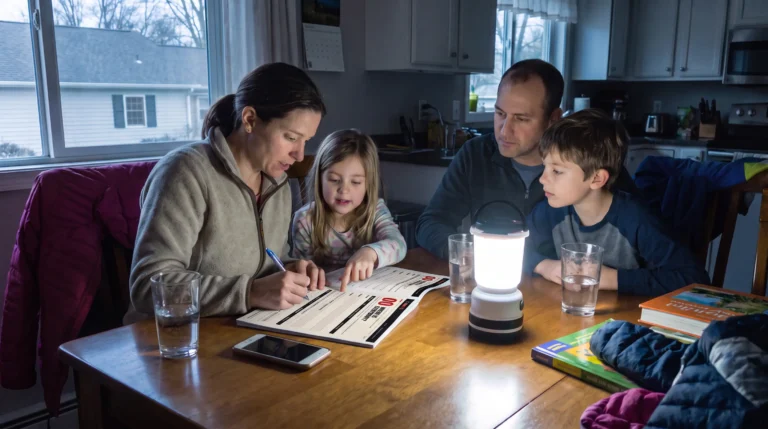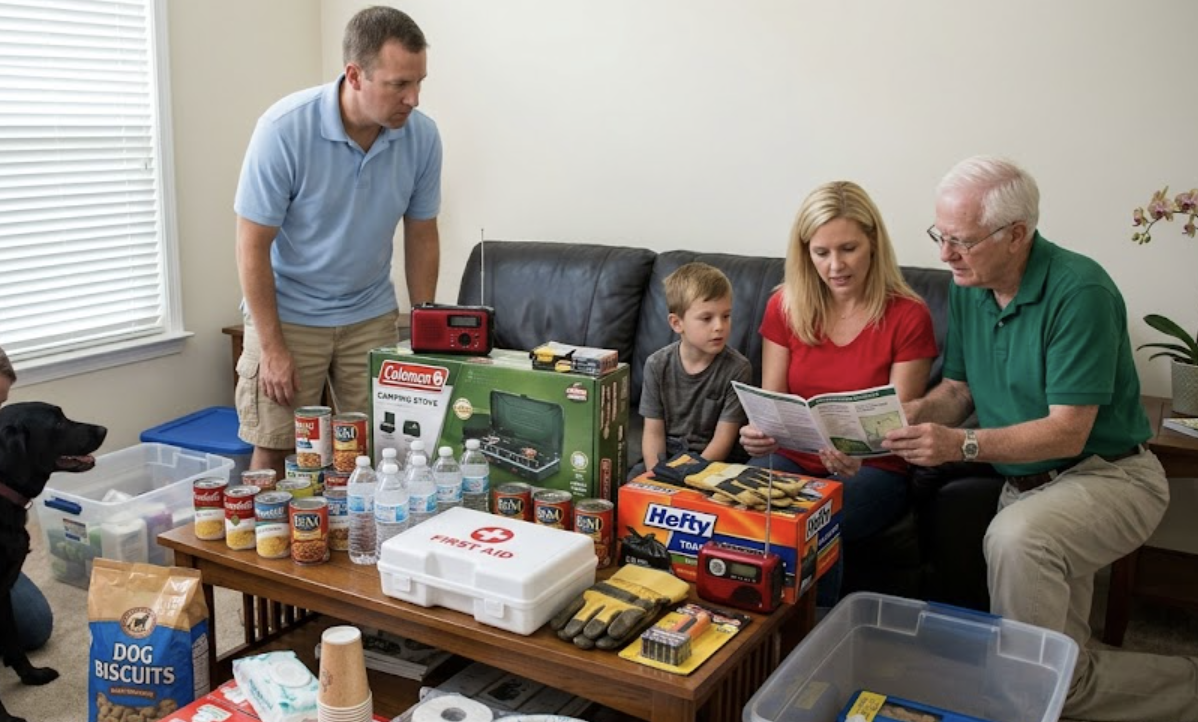

When you’re a parent or the head of a household and when a tropical storm warning strikes, tracking wind speeds on a map isn’t enough. You have to make sure you’re protecting the people sleeping under your roof. The 2026 Atlantic hurricane season is already proving to be incredibly unpredictable, with meteorologists pointing to record-breaking ocean temperatures and La Niña conditions that are supercharging storms faster than normal. On average, a single major hurricane strike leaves local families without power for over a week and causes billions of dollars in structural damage.
How Early Should Families Start Hurricane Preparedness Planning?
The best time to prepare for a hurricane is before the season even starts. If you wait until a watch or warning is active, you’ll face long lines, empty shelves, and inflated prices.
Many people feel overwhelmed by the cost of getting ready. As one homeowner recently put it, “I can’t afford to buy two weeks of food in one go.”
The smartest approach is to build your stash incrementally. Every time you go to the grocery store, grab two extra gallons of water, a couple of extra cans of tuna, and a fresh pack of batteries. By spreading the cost over several weeks, you can build a massive, reliable emergency reserve without breaking your monthly budget.
The 72-Hour Family Hurricane Plan
When a storm is 72 hours away from potential landfall, it is time to move from general readiness to active deployment. This 3-day window is your most critical asset.
- 72 Hours Out: Review your family plan. Check your supplies and top off your propane tanks or charcoal for cooking. Secure your physical cash.
- 48 Hours Out: Clear your yard of any loose items like patio furniture, trampolines, or trash cans that could become flying projectiles. Fill up all vehicle gas tanks.
- 24 Hours Out: Board up your windows or close your storm shutters. Finalize your decision to either leave or stay put.
There is a major tactical debate when a storm approaches: Do you hit the road early, or do you board up and ride it out?
Leaving early ensures your physical safety from the storm itself, but it runs the risk of leaving you trapped in massive traffic jams on the highway when the weather hits. Sheltering in place keeps you out of traffic, but it exposes your family to structural damage and long-term utility failures.
To resolve this, use a strict rule: If you live in a mandatory evacuation zone or a low-lying storm surge area, you leave. Period. If you live in a structurally sound home outside the flood zones, you fortify your position and prepare for long-term self-sufficiency.
Hurricane Preparedness Checklist by Category
To keep your preparations organized, break your supplies down into these five critical categories.
Water, Food, and Cooking Supplies
Clean water is your absolute highest priority. You need a minimum of 1 gallon of water per person per day, plus extra for your pets.
- Water Supply: Aim for a 7-day buffer. For a family of 4, that means having at least 28 gallons of clean drinking water stored safely.
- Food Cache: Stock up on non-perishable foods that require zero refrigeration and no cooking. Think canned meats, peanut butter, protein bars, and dried fruit. Do not rely on food that needs a freezer to remain viable.
- Off-Grid Cooking: Keep a small camp stove, a backpacking stove, or a charcoal grill ready outside. Never use these devices indoors due to carbon monoxide risks.
First Aid, Medication, and Medical Documents
If the roads flood, emergency services will not be able to reach your house. You must be your own first responder.
- Prescriptions: Secure at least a 30-day supply of all critical family medications well before landfall.
- Trauma Supplies: Keep a fully stocked first aid kit packed with tourniquets, pressure bandages, antiseptic wipes, and splints.
- Medical Info: Write down a hard copy of your family’s medical histories, blood types, and doctor contact info.
Flashlights, Radios, Batteries, and Backup Power
When the lights go out, a reliable power setup keeps your family safe and informed.
- Lighting: Hand out a dedicated flashlight or headlamp to every family member. Avoid using candles, as they pose a massive fire hazard during high winds.
- Batteries: Store a wide variety of fresh batteries (AA, AAA, D) in airtight bags.
- Backup Power: Invest in a reliable portable power station. Having alternative power sources means you can keep small devices running and maintain emergency communications without relying on the main grid.
Baby, Senior, and Pet Supplies
The most vulnerable members of your home require specific, dedicated resources.
- Infant Care: Pack a two-week supply of diapers, wipes, and ready-to-feed baby formula (avoid powder variants that require clean water to mix).
- Elderly Care: Ensure you have spare mobility aids, extra batteries for hearing aids, and copies of insurance or Medicare cards.
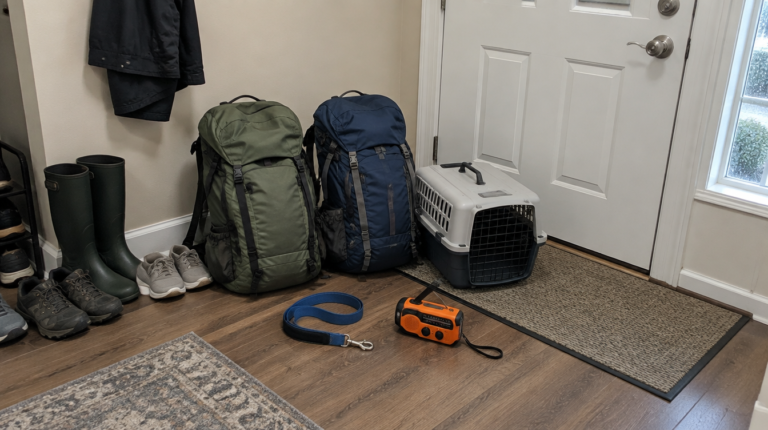
- Pet Readiness: Pack a dedicated pet bag. As experienced owners warn, “Don’t forget to-go bags for your pets in case you have to evacuate.” Include a leash, a crate, pet food, and vaccination records, which many emergency shelters require.
Cash, IDs, Insurance, and Important Documents
The financial fallout after a hurricane can be just as difficult as the storm itself.
- Hard Cash: ATMs will not work if the power grid goes down, and stores will not be able to process credit cards. Keep small bills ($1, $5, $10, and $20) hidden safely in your kit.
- Digital Proof: Walk through your home with a phone or camera and take photos of every single room, electronics setup, and major asset. Having timestamped photos before the storm hits is your single best weapon against insurance delays later.
- Physical Records: Keep your deeds, birth certificates, and insurance policies packed together in one easy-to-grab place.
What Should Be in a Hurricane Emergency Kit?
Your emergency kit often called a “go-bag” needs to be fully packed and kept by the front door or in the trunk of your car. If you are forced to leave your home in a hurry, you will not have time to search through closets.
RELATED: The 2026 Hurricane Go-Bag Essential Items
The 72-Hour Hurricane Checklist (Evacuation)
When a major storm is barreling down and sudden evacuation orders are called, you won’t have time to scramble for supplies. This 72-hour “grab-and-go” kit is designed to sustain you and your family for three days on the road or at a temporary shelter. Keep these crucial survival items packed in a durable, easy-to-carry bag so you can get out the door the moment it becomes necessary.
The 14-Day Hurricane Season Checklist (Shelter-in-Place)
For catastrophic hurricanes that completely knock out the power grid, running water, and local supply chains, you need to be prepared to hunker down for the long haul. This 14-day checklist is built specifically for sheltering in place when emergency services and grocery stores are entirely inaccessible. Stock up on these extended-survival items well before hurricane season begins to ensure your household stays safe, fed, and resilient until infrastructure is fully restored.
⚠️ Important Note: This is an Expansion Checklist
The 14-day shelter-in-place kit is designed to build upon your baseline 72-hour emergency go-bag, not replace it. To be fully prepared for two weeks off the grid, make sure you have all your standard survival basics covered first (like flashlights, weather radios, basic hygiene items, and clothing), and then scale up your readiness with the bulk items and extended supplies listed below.
Best Hurricane Preparedness Gear for Families
When you are investing in safety gear, focus on durability and simplicity. Avoid cheap gimmicks and prioritize tools that perform multiple functions when the grid goes down.
Best NOAA Weather Radio for Hurricane Alerts
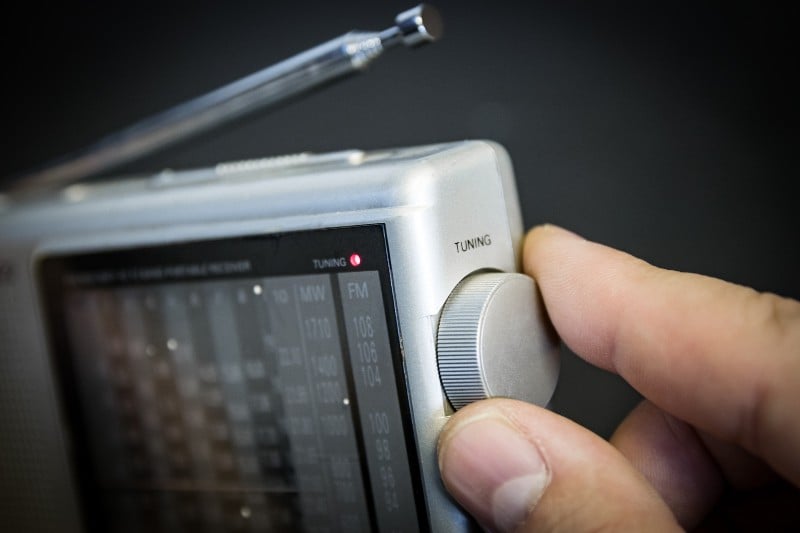
Look for a radio that offers multiple power options, such as a hand-crank mechanism, a small built-in solar panel, and a standard battery compartment. The best models include an automatic alert setting that loudly wakes you up in the middle of the night if a sudden tornado warning or evacuation order is issued for your exact coordinates.
- Product Recommendation: FosPower Emergency NOAA Weather Radio (Model FOSPWB-2376)
- Specs: 2000mAh power bank, 3 power sources (hand-crank, solar panel, AAA battery compartment), 4 LED reading lights, 1W flashlight, NOAA emergency weather alerts.
- Pros: Highly affordable budget pick; multiple redundant charging options; compact footprint fits easily inside small emergency pouches.
- Cons: The 2000mAh internal battery capacity is relatively low and will only provide a partial charge to modern, large-screen smartphones; solar panel is strictly for slow trickle-charging.
Best Water Filter for Storm Outages
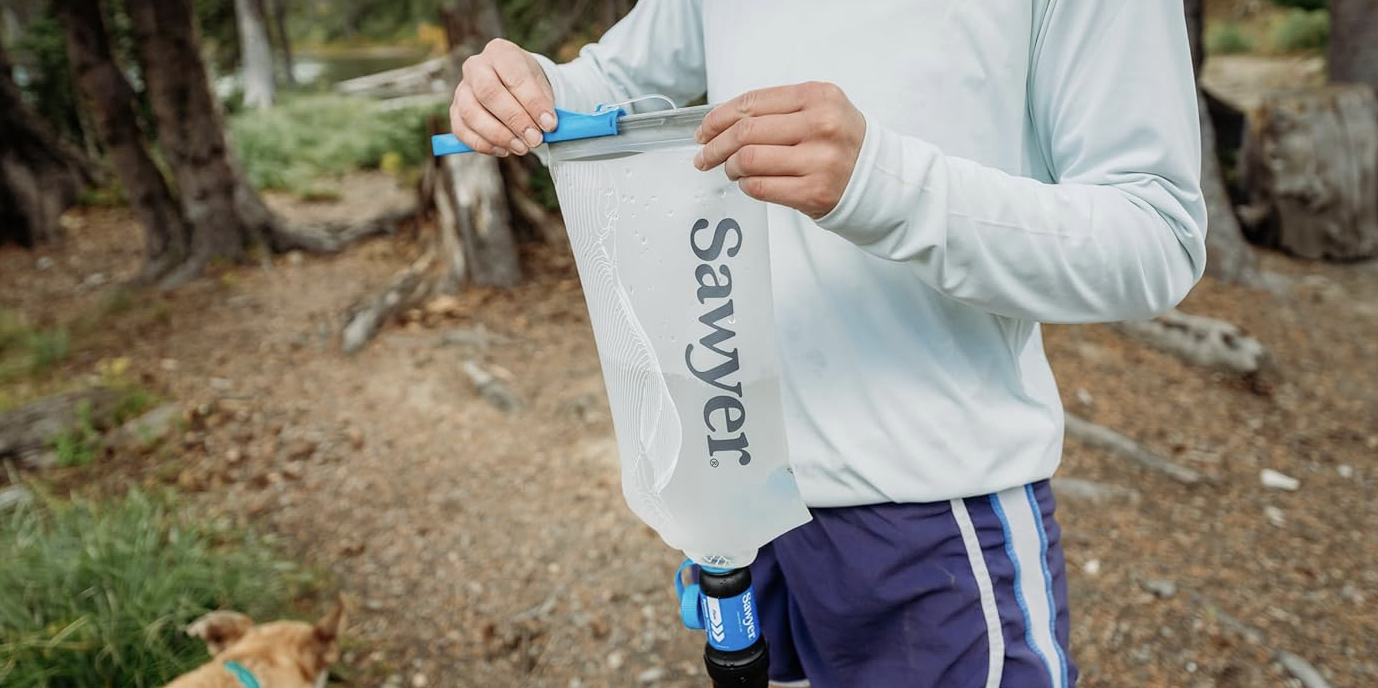
Do not rely entirely on plastic single-use water bottles. A heavy-duty gravity water filter or a reliable multi-stage purification system allows you to transform questionable tap water or collected rainwater into perfectly safe drinking water if your city’s treatment plants fail.
- Product Recommendation: Sawyer Products 1-Gallon Gravity Water Filtration System (SP160)
- Specs: 0.1-micron absolute hollow fiber membrane filter, 1-gallon durable bladder, includes dual-threaded Mini filter, cleaning plunger, and gravity hose.
- Pros: Requires zero manual pumping or physical labor to filter high volumes of water; removes 99.99999% of bacteria and protozoa; filter can be back-flushed and reused almost indefinitely.
- Cons: Does not remove heavy metals, chemicals, or microscopic viruses; the lightweight plastic bladder closure mechanism can be finicky to seal properly when completely full.
Best First Aid Kit for Evacuation

Choose a medical kit that is housed in a rugged, water-resistant case. The interior should feature clear, organized compartments so you can locate chest seals, gauze, or tournament wraps immediately during a high-stress situation.
- Product Recommendation: Surviveware Small First Aid Kit for Backpacking and Emergencies
- Specs: 600D waterproof polyester zippered case, 100 basic medical supplies, interior labeled compartments, MOLLE-compatible straps.
- Pros: Exceptional interior organization with clearly labeled mesh pockets; rugged outer shell resists tears and water spray; compact layout takes up minimal room in a go-bag.
- Cons: Lacks advanced severe trauma gear like dedicated chest seals, clotting gauze, or a high-end windlass tourniquet out of the box (requires user addition).
Best Power Bank or Solar Generator for Families
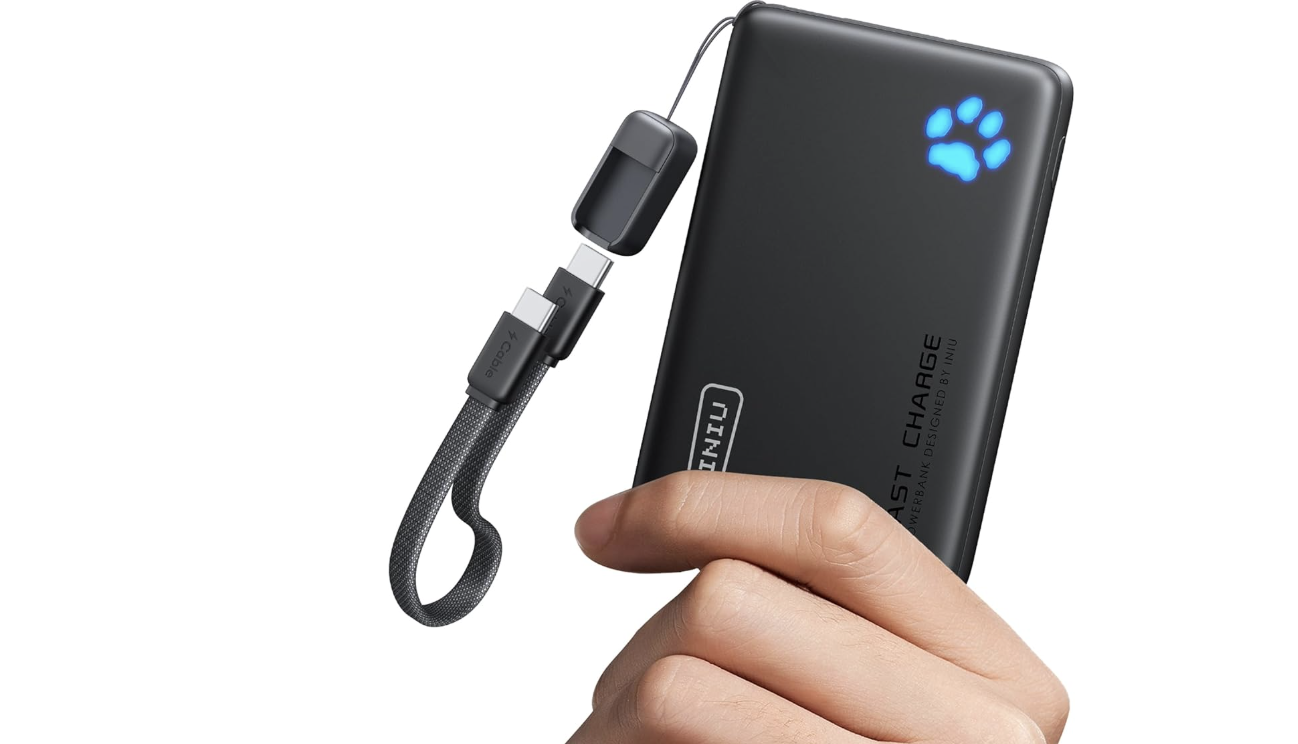
A high-capacity portable power station combined with a folding solar panel provides clean, quiet power that is perfectly safe to run inside your living room. Look for a unit that can handle a high continuous wattage load so you can keep a small emergency refrigerator or vital medical equipment running throughout a prolonged blackout.
- Product Recommendation: Jackery Portable Power Station Explorer 240
- Specs: 240Wh lithium-ion battery capacity, 200W continuous output (400W surge), 1 pure sine wave AC outlet, 2 USB-A ports, 1 12V DC car port. Weight: 6.6 lbs.
- Pros: Extremely lightweight and reliable entry-level power station; pure sine wave inverter protects sensitive smartphones and laptops; operates completely silently with zero indoor emissions.
- Cons: Cannot power high-wattage heating or cooling appliances like full-sized refrigerators, microwaves, or coffee makers; solar panels must be purchased separately.
Best Waterproof Document Bag

Your insurance policies and birth certificates are useless if they get soaked by floodwaters or a leaking roof. Invest in a fireproof, airtight, floating document pouch with heavy-duty zipper tracks to keep your critical paperwork pristine.
- Product Recommendation: Engpow Fireproof Waterproof Document Bag (14.2 x 10.2 Inches)
- Specs: Double-layered liquid silicone fiberglass construction, non-itchy protective coating, zipper and hook-and-loop double closure system.
- Pros: Effectively repels heavy water spray and resists direct heat damage; easily holds standard legal-sized documents and passports; low-profile layout slides easily under vehicle seats.
- Cons: The bag is highly water-resistant but not completely hermetically sealed; it should not be left fully submerged under deep floodwaters for an extended period of time.
Where Should Family Members Meet During an Evacuation?
In a major disaster, local cell phone towers frequently get overloaded or knocked down, making it impossible to call or text your loved ones. You need to establish three explicit meeting points before the weather turns bad:
- The Immediate Spot: A location right outside your front door (like a specific neighbor’s driveway) if you have to exit the house quickly due to a fire or immediate danger.
- The Local Spot: A building or landmark right outside your immediate neighborhood in case you cannot access your street.
- The Regional Spot: A specific town, hotel, or relative’s home completely outside your coastal evacuation zone where everyone agrees to head if a mandatory evacuation order separates your family during the workday.
How to Build a Family Communication Plan
When local cellular networks jam up, a long-distance text message can often slip through when a local phone call cannot.
Designate one relative or close friend who lives completely out-of-state to serve as your family’s central communication hub. Teach everyone in your household to send a quick text message to this specific person to report their location and safety status if you become separated. This keeps your local lines open and gives everyone a single, reliable point of contact to check in with.
Should You Evacuate or Shelter in Place?
Making this decision requires analyzing your local terrain and your home’s structural integrity. Use this simple trigger tree to determine your family’s best course of action:
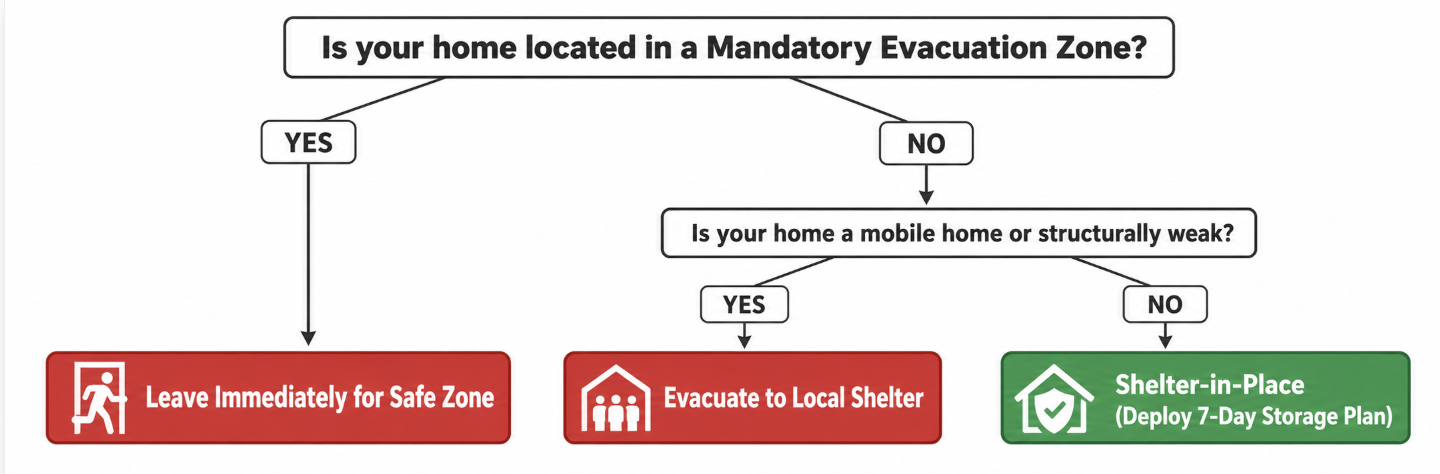
If you choose to shelter in place, pick an interior room on the lowest floor of your home that does not have any windows such as a hallway, bathroom, or large closet. This creates a protective barrier between your family and potential flying debris or falling trees.
Hurricane Prep for Kids, Seniors, and Pets
High winds, loud noises, and dark rooms can be incredibly terrifying for children and pets, while seniors may face significant physical challenges during disruptions.
- For Kids: Pack a dedicated “comfort pack” containing favorite non-electronic toys, coloring books, card games, and familiar snacks to keep them distracted and calm.
- For Seniors: Keep all mobility devices, spare glasses, and detailed medical records grouped directly next to their designated seating area. Ensure any backup power supplies for oxygen concentrators or medical devices are fully charged and ready to deploy.
- For Pets: Keep crates easily accessible. If you have to move fast, a frightened animal will hide under furniture, wasting precious minutes. Having them crated or leashed early keeps them secure and ready to travel.
After the Storm: What to Do Before Going Home
The dangers do not disappear once the eye of the hurricane passes. The period immediately following a storm is when many injuries occur.
- Avoid Standing Water: Never walk or drive through flooded roadways. Standing water can conceal missing pavement, sharp debris, raw sewage, or live, downed power lines that can easily cause electrocution.
- Check for Gas Leaks: If you return to your property and smell gas or hear a hissing sound, leave the area immediately and contact your utility provider.
- Inspect Structure: Check your roof, walls, and foundations for visible cracks or sagging before you let your family step back inside the house.
FAQs
How early should I start hurricane preparedness planning?
You should start planning well before hurricane season begins on June 1st. Building your food, water, and gear supply over several months avoids empty shelves and high prices during a storm warning.
What are the top items for a hurricane emergency kit?
Your kit must include at least 3 days of water and non-perishable food, a hand-crank NOAA weather radio, flashlights with extra batteries, a comprehensive first aid kit, hard cash, and copies of important family documents in a waterproof bag.
How much water does a family need before a hurricane?
You need a minimum of 1 gallon of water per person per day for drinking and basic sanitation. A family of 4 needs at least 28 gallons to safely navigate a 7-day utility disruption.
Where should family members meet during hurricane evacuation?
Establish three distinct spots: right outside your house for fires, outside your immediate neighborhood if your street is blocked, and entirely outside your county’s evacuation zone if you get separated during a major evacuation.
What documents should I pack before a hurricane?
Pack physical copies of your birth certificates, social security cards, property deeds, insurance policies, and medical records. Store them in a floating, waterproof pouch.
Should I buy a generator in preparation for a hurricane?
Yes, if you can afford it and know how to operate it safely outside. If a fuel-powered generator is out of your budget or you live in an apartment, a high-capacity portable solar generator is a much safer, quieter option for indoor use.
What should I put in a kid-friendly hurricane go-bag?
Include familiar comfort items like a favorite stuffed animal, simple card games, coloring books, a flashlight just for them, and plenty of their favorite non-perishable snacks.
How do I prepare pets for a hurricane evacuation?
Keep crates and leashes near your exit. Pack a dedicated pet bag containing a 7-day supply of food, clean water, bowls, waste bags, and updated vaccination records, which are required by most public shelters.
What should I do 48 hours before a hurricane?
Fill your clean bathtubs with water for sanitation, clear your yard of all loose items, fill your car’s gas tank completely, and lock your storm shutters or plywood boards into place.
What should I avoid buying at the last minute?
Avoid panic-buying overpriced, generic emergency kits or bulky, specialized tools you do not know how to use. Focus your resources on securing core survival assets: clean water, stable food, and reliable emergency lighting.