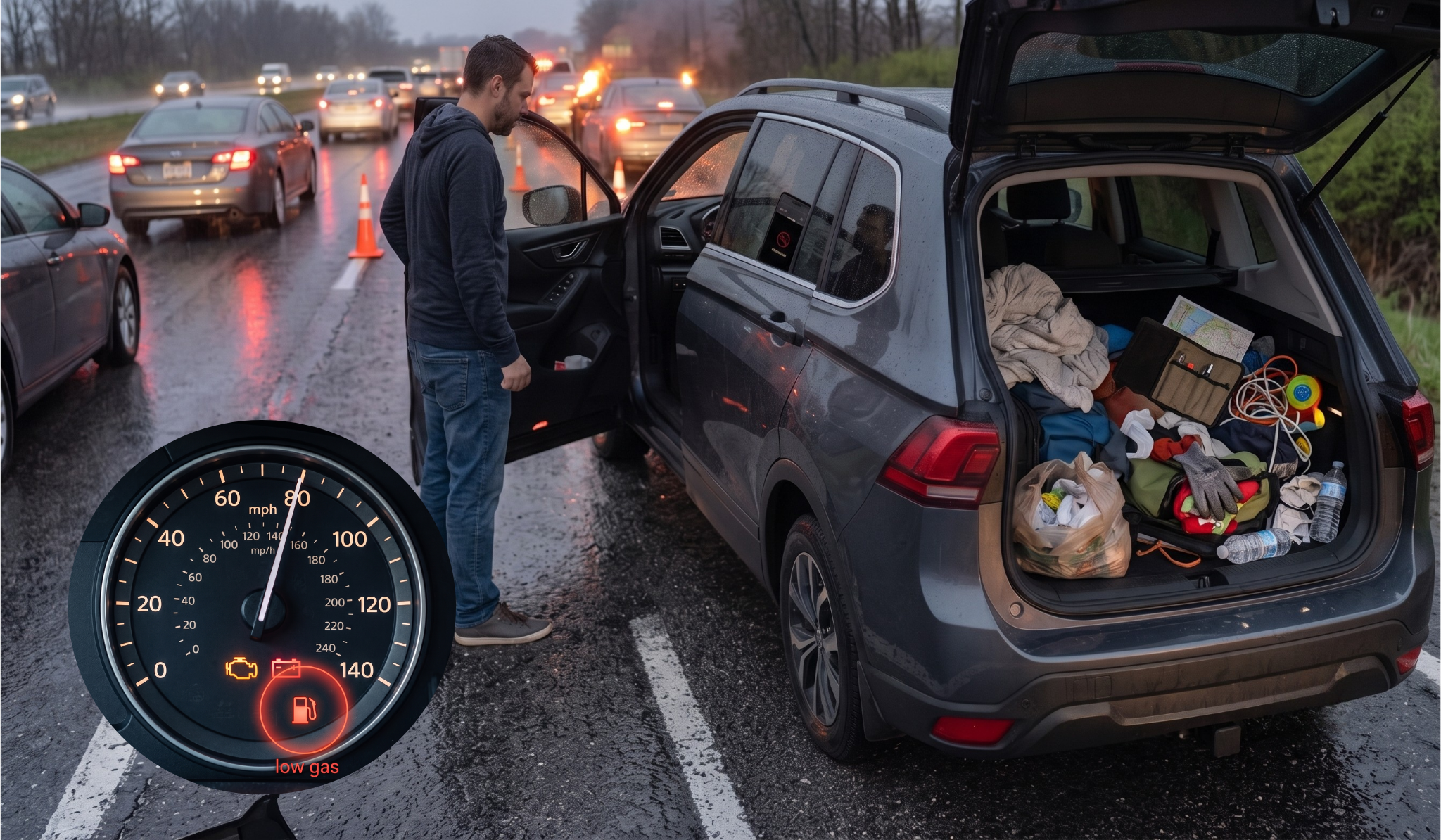

Your vehicle is your first bug-out tool. Most people forget that until they’re already in trouble.
I’ve talked to families who had a 72-hour bag packed, a plan, and zero way to execute it. Why? Their truck was sitting on a quarter tank of gas. Their spare tire was flat. Their kids didn’t know where the emergency cash was. The bag was full and the vehicle was dead weight.
That’s not preparedness. That’s a prop.
Whether you’re heading out for summer road trips or you’re serious about having an actual exit plan for your family, vehicle prep is the same list. Get it done once. Check it twice a year. Don’t skip this just because it feels too simple.
7 Bugout Car Traps to Avoid
A lot of people love buying cool survival gear. But they completely forget about the car. If a car will not start, a heavy emergency bag does not help at all.
If a real emergency happens today, here are 7 simple car traps to avoid and the easy fixes to get ready.
1. Driving Around on an Empty Gas Tank
Waiting until the fuel light turns on is a big mistake because power grids can snap off during a crisis. Nearby gas stations will quickly run out of fuel or have huge, two-hour lines. If you are stuck in gridlock with an empty tank, you will have to abandon your vehicle.
- The Fix: Always keep the gas tank at least half full. Make it a habit to fill up whenever the tank hits the halfway mark so you can always escape safely.
2. Forgetting to Check the Spare Tire
A lot of people think their spare tire is perfectly fine just because it sits in the trunk. However, tires naturally lose air pressure over time. A flat spare tire cannot help you if you get a flat on the road during a crisis.
- The Fix: Check your tire pressure every six months to make sure it is ready to roll. Keep a portable digital tire gauge in the glove box to check all of your tires quickly. Here’s where I got mine:

- EXPERT-GRADE CALIBRATION: Each AstroAI Tire Pressure Gauge is calibrated with professional-grade tools, ensuring quick and...
- SEAMLESS TESTING IN DIM AREAS: The AstroAI Digital Tire Pressure Gauge is equipped with an illuminated nozzle and backlit LCD...
Last update on 2026-10-22 / Affiliate links / Images from Amazon Product Advertising API
3. Trusting a Cell Phone for Directions
It is easy to assume your phone map app will always work when escaping a disaster. But cell towers often crash or slow down when too many people use them at once during a regional emergency. If your phone dies or loses service, your whole route disappears.
- The Fix: Get a real paper map that does not need a battery or a cell signal to work. The Rand McNally Road Atlas costs about $12 and shows the small backroads you need to escape heavy traffic.
4. Carrying Old Jumper Cables
Old jumper cables require another driver to help jump-start your vehicle. In a major emergency, another car might not be around to help you out. You could end up completely stuck waiting for a stranger to save you.
- The Fix: Get a portable battery pack that lets you start a dead battery all by yourself. The NOCO Boost Plus GB40 lithium jump starter fits right inside a glove box and is worth every dollar.
5. Letting Backup Gas Sit Too Long
Keeping extra gas in the garage for months without protecting it is a bad idea. Modern gas goes bad and gets gummy in just a few weeks. If you put bad gas into your car, it will ruin the engine and cause expensive repairs.
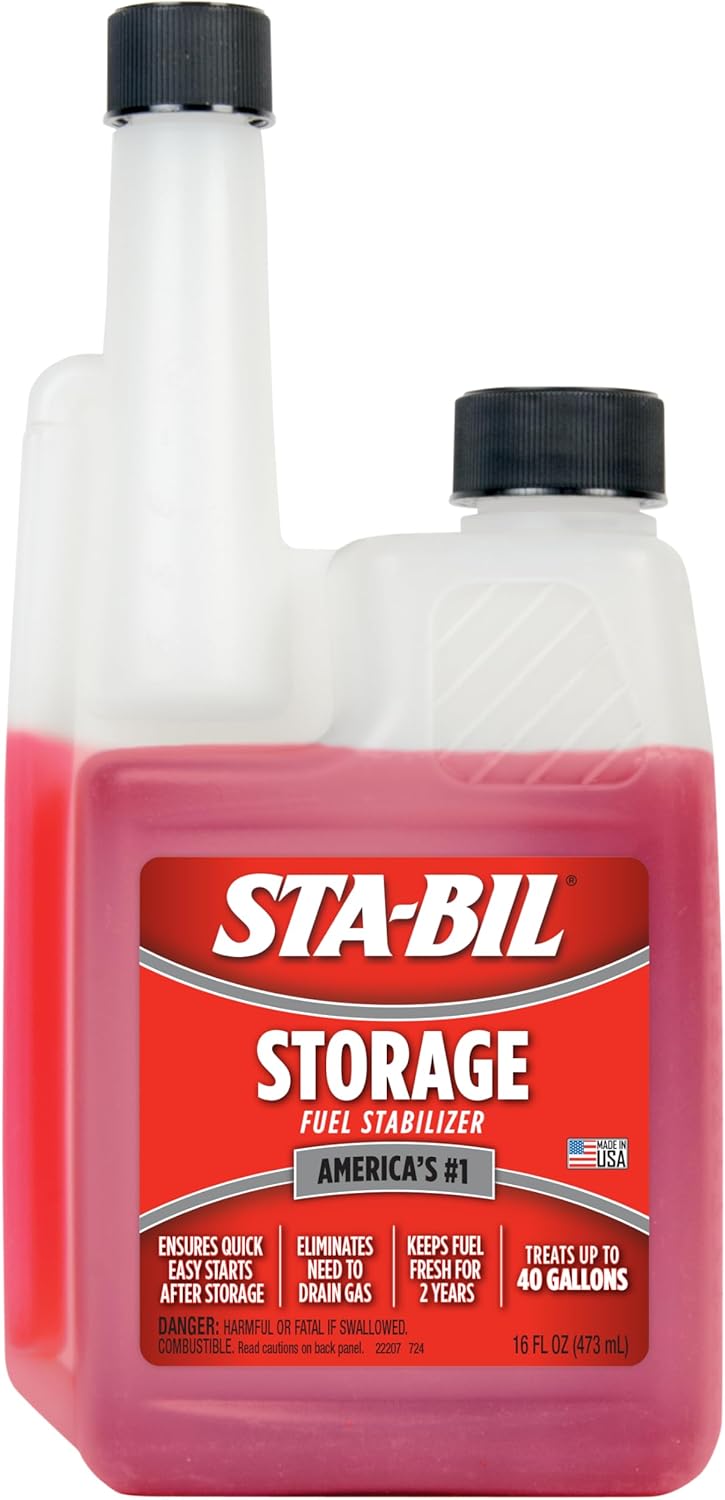
- The Fix: Store extra fuel in a safe container like a No-Spill 1450 5-Gallon Poly Gas Can. Mix it with STA-BIL fuel stabilizer to keep it fresh and safe to use for a long time. I learned the hard way that cheap cans leak fumes into your upholstery and stale gas will choke out your engine. This heavy-duty can paired with a bottle of stabilizer is the exact setup sitting in my trunk right now, completely odor-free and ready to pour.

6. Leaving the Emergency Bag in the House
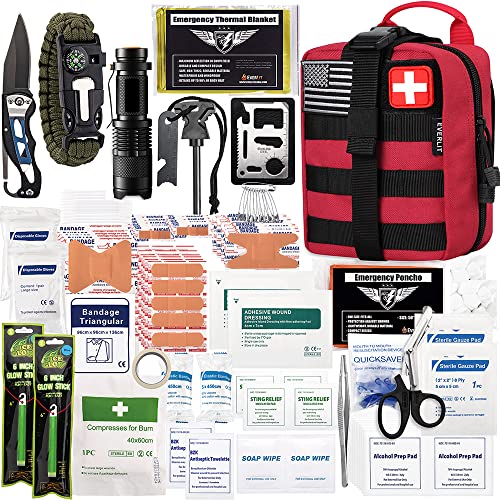
Keeping a survival bag tucked away in a bedroom closet means it is completely useless when you are away from home. Real emergencies happen fast, and going back inside the house to grab gear might not be an option. If you have to flee instantly from work or the road, your home gear cannot help you.
- The Fix: Put a basic emergency kit directly in the car trunk and leave it there for good so it is always with you.
7. Keeping the Whole Plan a Secret
Being the only person in the home who knows the meeting points or the way out is a major danger. A plan that stays locked inside one person’s head can easily fail if that person gets stuck at work or separated. Your family will be left confused and stuck without knowing what to do next.
- The Fix: Talk to the family openly and make sure your spouse and older kids know exactly where the emergency cash and meeting points are located.
BUGOUT CAR KIT LIST
1 gallon per person minimum, stored in the trunk. Rotate every 6 months. This is non-negotiable for summer travel in particular, when breakdowns in heat kill people.
A real one. The Adventure Medical Kits Mountain Series Backpacker (around $45) covers bleeding, burns, and basic trauma. Not a box of band-aids.
A portable lithium jump starter like the NOCO Boost Plus GB40 (around $100) doesn’t need another car. Fits in a glove compartment. Worth every dollar.
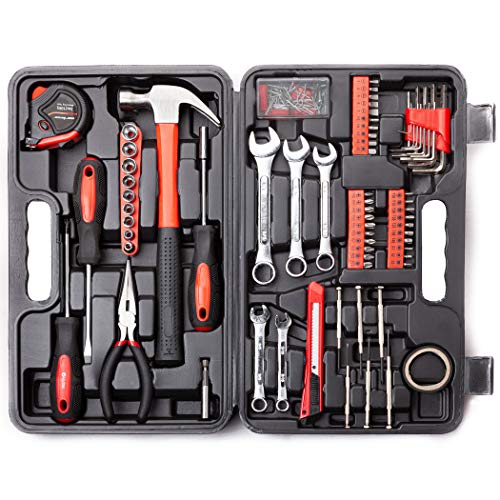
Pliers, screwdrivers, zip ties, duct tape, work gloves, and car window breaker. These fix 80% of roadside problems that don’t require a mechanic.
$200 minimum in small bills. Cards don’t work when the grid is down. ATMs empty fast. Cash is still king in a disrupted economy.
Insurance, vehicle registration, medical info, out-of-area contact numbers. In a waterproof sleeve. Not on your phone.
Heat in summer, warmth in winter. Also useful for signaling if you’re stranded somewhere visible.
Or a hand-crank model. Car emergencies don’t wait for daylight.
snacks that won’t melt, activities, any prescription medications with at least a 3-day supply, and a comfort item for younger children. A kid in panic mode is a distraction at exactly the wrong moment.
I finally decided to stop putting it off and built out a dedicated, permanent setup for my own car. I didn’t want to overcomplicate it with hyper-tactical military gear I’d never use, but I also refused to settle for cheap, grocery-store plastic backups. I wanted a solid, pragmatic baseline of self-reliance.
Here is the exact gear I recently added to my trunk:
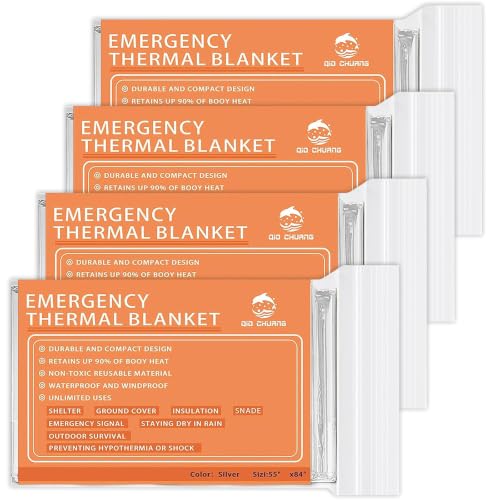


Last update on 2026-10-22 / Affiliate links / Images from Amazon Product Advertising API
READ MORE: The Vehicle Bugout Kit Checklist: 35 Items for Your Car (2026)
How to Navigate If Your Phone Dies On the Road
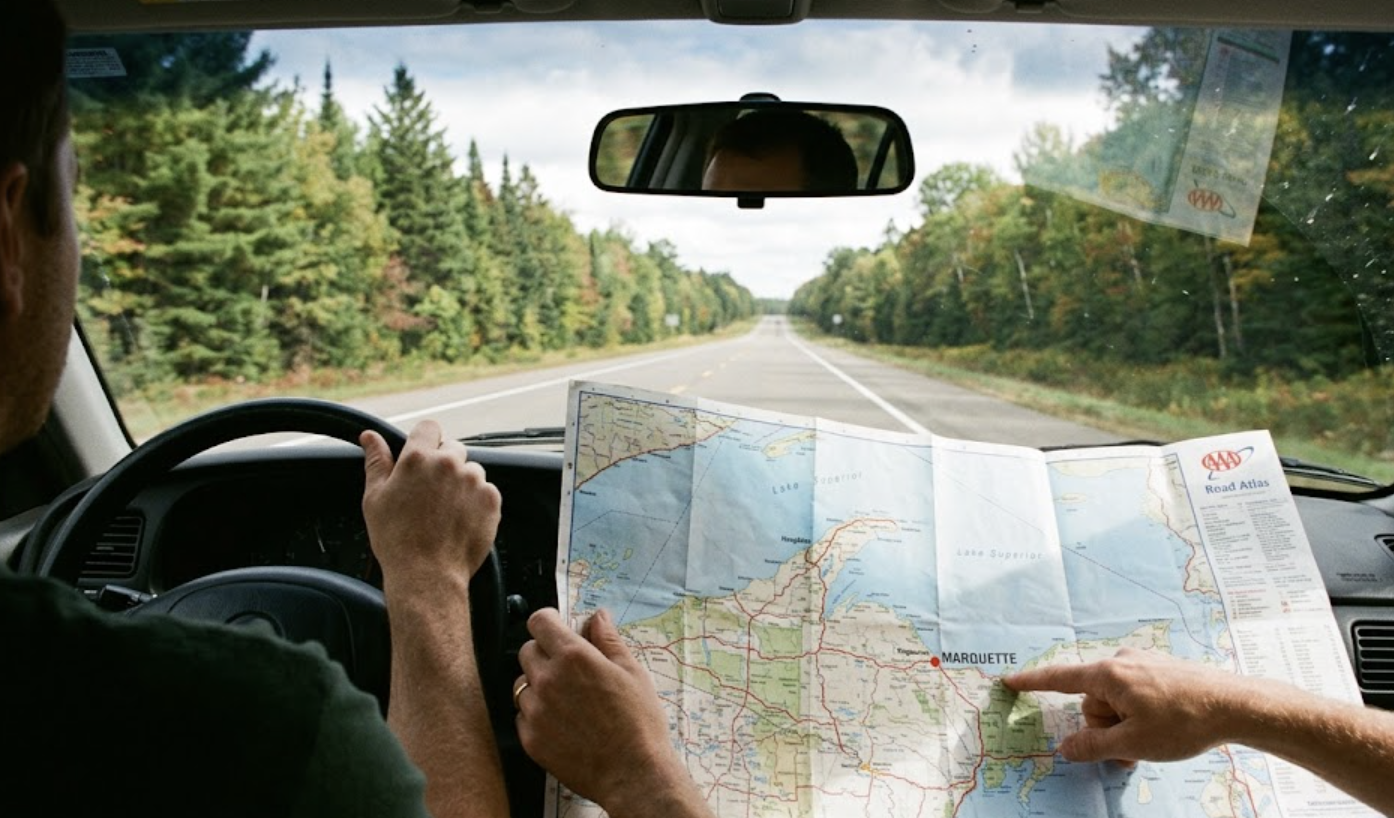
Your phone’s GPS works until cell towers go down or batteries die. Data networks collapse under load during regional emergencies. Everybody learned this lesson in different ways over the last few years.
Print your routes and keep them in the vehicle. This may sound old-fashioned, but do it anyway.
For your primary bug-out route and at least two alternates, print the step-by-step directions. Laminate them if you want to be thorough. Put them in a folder in the door pocket. Also mark your rally points, your secondary destination, and out-of-area contact information on the same sheet.
Physical Maps
A road atlas for your region costs about $12 and weighs almost nothing. Get one. The Rand McNally Road Atlas covers all 50 states with enough detail to navigate county roads, which is exactly what you need when the interstate is a parking lot and you’re rerouting through smaller roads.
Know your primary route cold before you need it. Drive it once, deliberately, with your family. Not on a map. Actually drive it. You’ll notice things on the road that no app will ever show you.
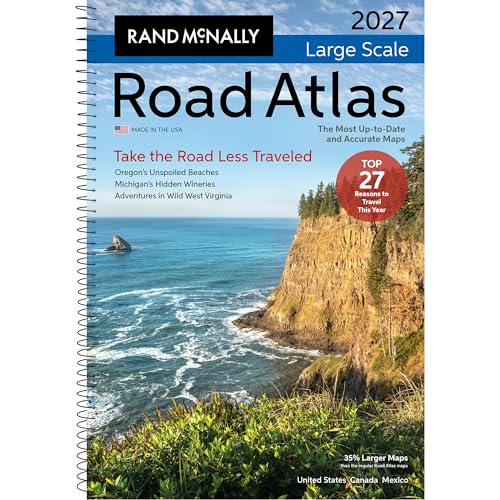
Last update on 2026-10-22 / Affiliate links / Images from Amazon Product Advertising API
PACE Navigation Plan
PACE stands for Primary, Alternate, Contingency, Emergency. It’s a planning method for communications, but it applies directly to navigation and routes.
Primary: Your normal, fastest route to your destination.
Alternate: A parallel route that avoids the main highway corridors.
Contingency: A slower, less direct path that uses county roads or rural routes.
Emergency: On foot or by other means if all vehicle routes are blocked. Know where you’d walk to and how far that is.
You don’t need a military background to use this. You just need to think through the problem once, write it down, and put it in the car.
One Thing to Do Today
Don’t try to do all of this at once. Pick one thing from this list and handle it before you go to bed tonight.
If you do nothing else: fill your tank to full right now, and write down your two best alternate routes out of your area. Put that paper in your glove compartment. You’ve just done more than most families will ever do.
The rest of the list will still be there tomorrow. But get that one thing done today.
QUICK POLL
Is bugging in actually safer than bugging out?
What’s your bug in / bug out story? Let’s discuss in the comments below!