
Last Updated: November 2026
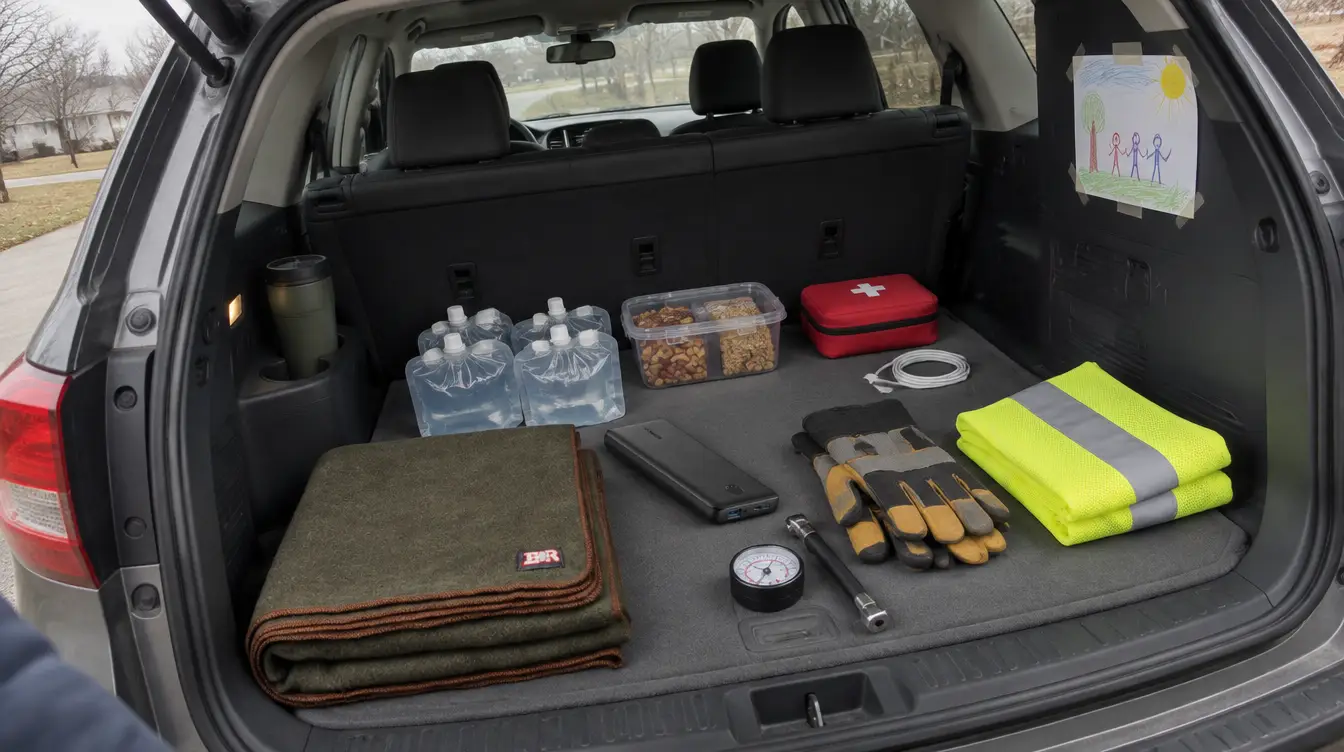
Most drivers don’t need a truck full of gear. A vehicle bugout kit has to handle a dead battery or a night stuck in the cold, and it has to fit in the trunk you already have.
This list has 35 items in 8 categories. Each one carries a tag. Every car means it belongs in any vehicle. Winter means add it for cold weather or long drives. Evacuation means it only makes sense if you plan to leave town by road.
Here’s where I land: stock the Every car items first, then add the rest as your climate and your trips call for them. The “Stay With the Car First” section below holds the advice most lists skip.
At a Glance: Vehicle Bugout Kit
- A vehicle bugout kit starts with 3 gallons of water per person and a way to charge your phone.
- Stuck in snow? Stay with the car and keep the tailpipe clear.
- Tags tell you what to buy first: Every car, Winter, or Evacuation.
- Swap stored water, food and medications twice a year.
Survival Life earns a commission if you buy through the Amazon links on this page, at no extra cost to you. As an Amazon Associate, Survival Life earns from qualifying purchases.
Stay With the Car First
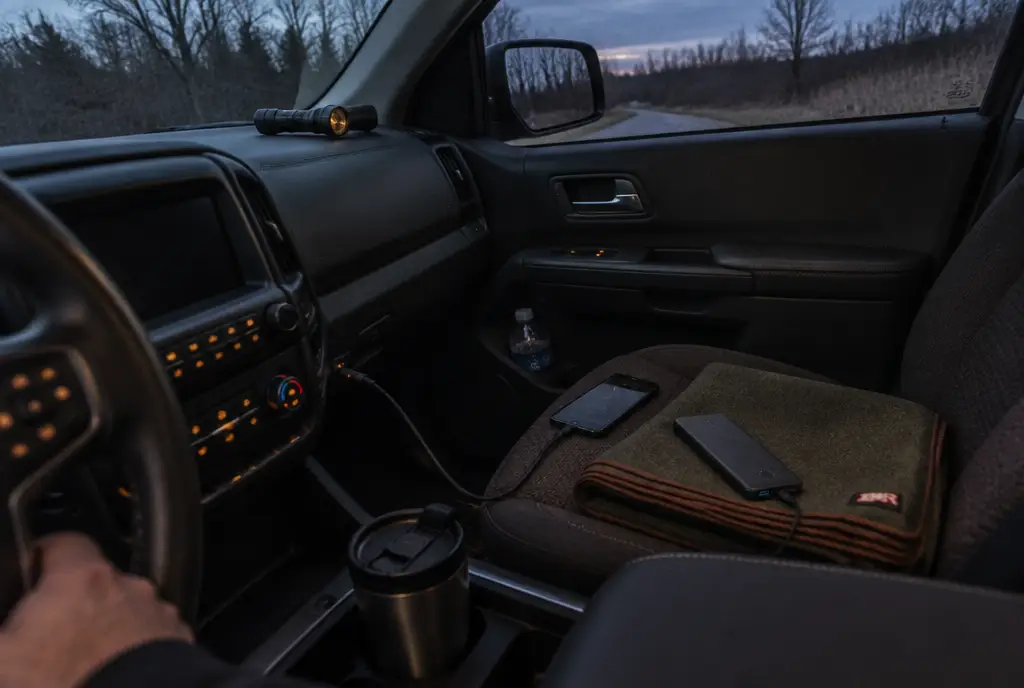
A stalled car is easier for rescuers to find than a person on foot. In a winter storm, the advice is to stay in the vehicle, because walking off in wind-driven snow gets you lost fast.
Clear snow from the tailpipe before you run the engine. A blocked exhaust can fill the cabin with carbon monoxide, so crack a window and run the engine for about 10 minutes each hour. Recheck the tailpipe each time.
Leave the car only when staying is the bigger danger, such as a fire or rising water. Before you leave home, tell someone your route and when you expect to arrive.
| Situation | Do this | Get professional help when |
|---|---|---|
| Stuck in snow | Stay put, clear the tailpipe, tie bright cloth to the antenna | Nobody can reach you, or anyone feels sick or sleepy |
| Engine overheats | Pull over, shut it off, let it cool before touching the hood | Steam or fluid keeps coming out after it cools |
| Floodwater ahead | Turn around and find another route | You’re already in moving water, so call right away |
| Dead battery | Use a jump starter or cables | The car won’t start after a jump |
| Flat tire | Use the spare, or a plug for a small puncture | The sidewall is cut or you’re on a busy shoulder |
The Vehicle Bugout Kit Checklist: 35 Items by Category
On a tight budget, start with water and a phone charger. Add a blanket and a tire plug kit next. Buy the Evacuation items last. For a shorter starter list, see our basic car emergency kit guide.
If you might ever walk away from the car, weight matters. Each adult should be able to carry their own grab bag 3 miles. Test it on a weekend, not during a crisis.
1. Water and Hydration
Plan on 1 gallon per person per day. For 72 hours, that’s 3 gallons each. Water is heavy, so carry that much and treat the rest. Our guide to long-term water storage covers containers and rotation.
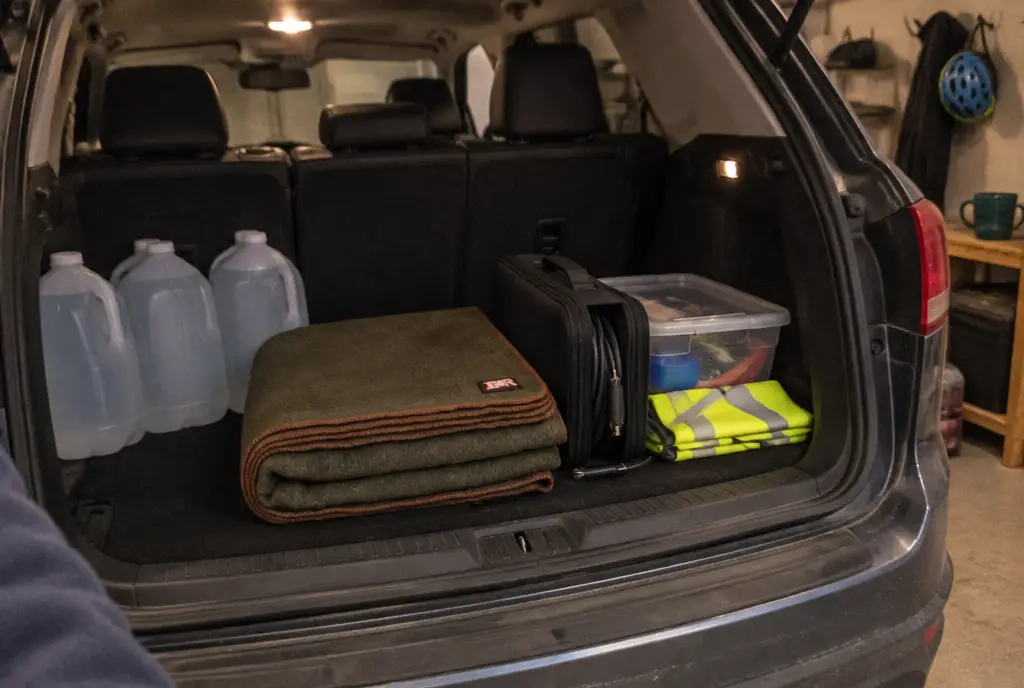
- Sealed water, 3 gallons per person (Every car): Use pouches or stainless bottles and leave headroom so ice has room to expand. A cheap plastic bottle can split when it freezes.
- Portable water filter (Winter): A pocket-size water filter (paid link) handles clear fresh water from a lake or a tap. It doesn’t remove viruses, so boil first when you’re unsure, and never use it on fuel or chemical runoff.
- Purification tablets (Evacuation): Keep them as a backup only. Fuel and chemical runoff can’t be boiled or treated out of water, so skip roadside ditches and puddles.
If you do have to treat clear water, bring it to a rolling boil for 1 minute, or 3 minutes above 6,500 feet.
2. Emergency Food
Heat ruins most snacks. Pick food that survives a hot trunk and a cold night.
- Emergency ration bars (Every car): Dense and shelf-stable, they hold up in heat better than trail mix. Check the date on the wrapper.
- Baby formula and pet food (Every car): Stores may be empty or closed, so pack what your family can’t skip. Rotate it often.
- Pop-top cans and a manual can opener (Evacuation): They need no cooking. They’re heavy, so pack only what you’ll eat in 1 day.
3. Fuel and Range
Keep your tank at least half full in winter. It’s the cheapest range extender you own.
- Approved portable fuel container (Evacuation): Check your state’s rules for approved containers and carrying fuel. Fuel never rides in the cabin.
- Fuel stabilizer (Evacuation): It can extend how long stored fuel lasts. Date the container and follow the label.
- Tire inflator with a pressure gauge (Every car): Slow leaks are common after rough roads, and the gauge tells you how much air you really have.
4. First Aid and Sanitation
Help may be slow. Plan for the first hour on your own.
- Car trauma kit (Every car): Look for a car trauma kit (paid link) and check the contents list for a tourniquet before you buy. Take a hands-on class so you know how to use it.
- Basic medications (Every car): Pack what your family already uses. Ask a doctor or pharmacist what’s right for each person. This isn’t medical advice.
- Bucket toilet with liner bags (Evacuation): It’s bulky, but it’s the answer when a road is shut for hours. Pack small items inside the bucket to save space.
- Sanitation wipes and hand sanitizer (Every car): They clean hands and small scrapes when there’s no running water.
5. Power, Light, and Communication
Your phone is your first tool. Keep it charged.
- Power bank and car phone charger (Every car): Charge the power bank (paid link) at home each month. A solar panel is slow, so treat it as a bonus.
- Weather radio (Winter): It gives you alerts, not driving routes. Use it to know what’s coming.
- Headlamp (Every car): It lights a tire change and leaves both hands free. A rechargeable headlamp (paid link) needs a charge before you rely on it, so top it up with your power bank.
- Jump starter or 16-foot jumper cables (Every car): A jump starter works when no one else is around. Keep it charged, because a dead one does nothing. Cables still work, but they need a second car.
- LED road beacon or signal flares (Every car): Use them to signal only, never as a fire starter. LED road flares (paid link) don’t burn, but you need to recharge them.
If you want a jump starter, one option is the NOCO below. It only helps if you keep it charged, and its maker lists engine size limits, so check them against your car.
Paid link.
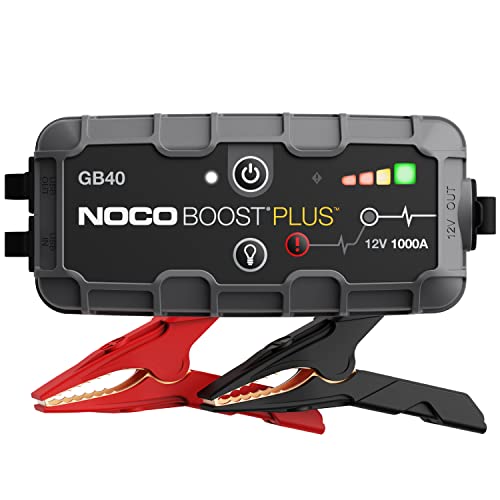
- START DEAD BATTERIES — Instantly start dead batteries with 1000 amps of peak lithium power. Up to 20 starts per charge on...
- ULTRASAFE TECHNOLOGY — Engineered with patented spark-proof and reverse polarity protection for foolproof connections to...
Last update on 2026-11-13 / Affiliate links / Images from Amazon Product Advertising API
6. Shelter and Warmth
Stay dry first, then stay warm. Wet clothes cost you heat fast. For a full bag, see our guide to emergency sleeping bags for cold weather.
- Emergency bivvy or reflective space blankets (Every car): A reflective emergency bivvy (paid link) weighs almost nothing and reflects body heat. It’s thin, so pair it with a wool blanket.
- Wool blanket (Winter): A wool blanket (paid link) stays warm even when damp. It takes more room than a space blanket.
- Extra socks, gloves and a hat (Winter): Dry layers matter more than extra gear. Keep them in a sealed bag.
- Snow shovel, ice scraper and brush (Winter): A snow brush and ice scraper (paid link) clears the tailpipe, the windows and the area around your tires.
- Traction aid (Winter): Sand or traction mats (paid link) help when tires spin. Mats need room to slide under the tire, and sand costs less.
- Waterproof tarp (Evacuation): It blocks rain through a broken window or covers gear. It’s no substitute for a safe shelter.
7. Vehicle Tools and Repair
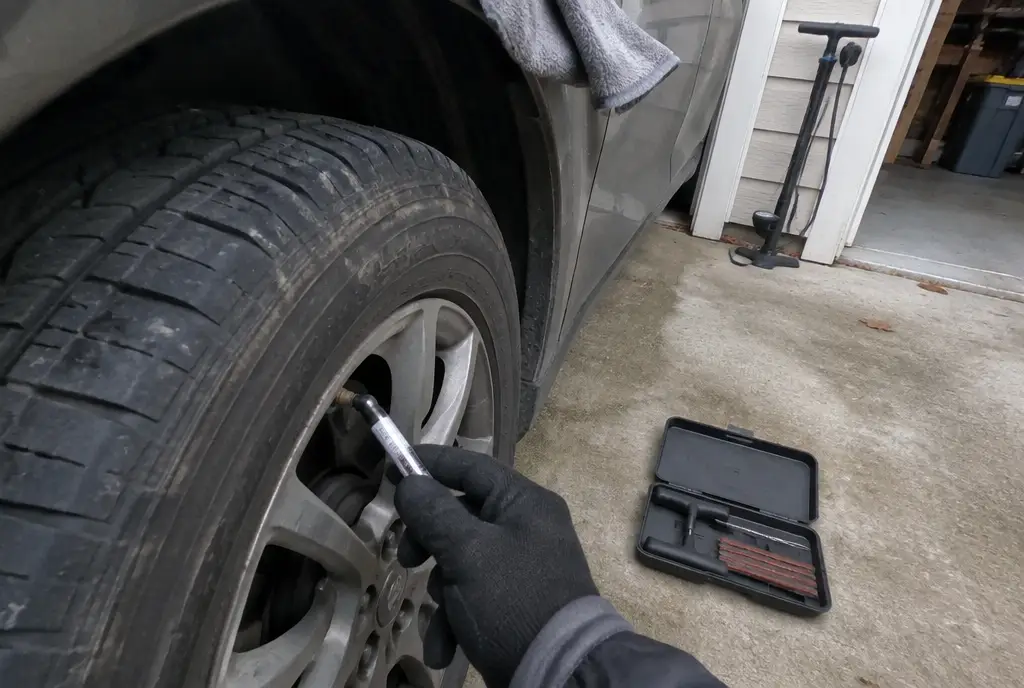
Only carry tools you know how to use. A tool you can’t use is just weight.
- Model-specific tool kit (Evacuation): Match sockets to your battery terminals and common bolts. Skip the giant all-in-one set.
- Escape tool (Every car): A glass breaker and seatbelt cutter belongs within reach of the driver, not in the trunk. Keep the escape tool (paid link) where you can grab it.
- Spare tire, jack and lug wrench (Every car): Check the spare’s pressure twice a year. A cross wrench gives better leverage than most factory wrenches.
- Tire plug kit (Every car): Plugs fit small tread punctures only. A cut sidewall means a call for help.
- Work gloves and duct tape (Every car): Gloves protect your hands, and tape holds a loose cover or hose clamp until you reach a shop. Tape isn’t a repair that makes a damaged car safe to drive.
- Reflective warning triangles (Every car): Reflective warning triangles (paid link) make a car on the shoulder easier to see from far away.
8. Navigation and Admin
Paper and planning don’t need power.
- Reflective safety vest (Every car): Put it on before you step out onto a road.
- Offline maps and a paper road atlas (Every car): Offline maps can guide you as long as the whole route is inside the downloaded area. Download your region today. Keep a paper road atlas (paid link) as backup. It won’t show every back road.
- Written plan and route (Every car): Write down who to call and where you’re headed, then share it with someone.
- Water-resistant document bag (Every car): Keep copies of your ID and insurance card dry. A fire and water resistant document bag (paid link) fits legal-size papers, but it isn’t a sealed dry bag, so keep it off a wet trunk floor.
- Small bills (Evacuation): Card readers fail in power outages. Small bills still work.
Check and Rotate Your Vehicle Bugout Kit Twice a Year
Pick 2 dates, such as the first weekend of spring and the first weekend of fall. Pull everything out of the trunk. Swap the water, food and medications, charge the power bank, and check the spare tire’s pressure.
A hot trunk can age supplies faster than the label suggests. Try on the winter layers too, and make sure they still fit everyone in the car.
Common Mistakes
- Packing the heavy stuff first. Start with the Every car items. Add the Evacuation items only if you’d really leave town by road.
- Leaving the kit untouched for years. Food, water and medications expire. Swap them twice a year.
- Storing water in cheap bottles. They can split when frozen. Use pouches or leave headroom.
- Treating tape or cord as a repair. A damaged bumper or part needs a real check before you drive.
- Walking away from a stuck car. Staying put is usually safer. Keep the tailpipe clear and wait for help.
Do one thing today
Today, put 3 gallons of water per person in the car. Everything else on this list can wait until tomorrow.
Quick Poll: Which is more dangerous, bugging in or bugging out?
What would change your answer? Tell us in the comments.
Frequently asked questions
Start with 3 gallons of water per person, a phone charger, a warm blanket, jumper cables or a jump starter, a tire plug kit and a reflective vest. Then add the Winter and Evacuation items from the list only if your climate and your trips call for them.
Check it twice a year. Swap the water, food and medications, charge the power bank, and check the spare tire’s pressure. A hot trunk can age supplies faster than the label suggests.
Yes, with care. Use pouches or stainless bottles and leave headroom so ice has room to expand. Swap the water twice a year, because a hot trunk is hard on any container.
Yes, in most cases. Clear snow from the tailpipe, crack a window, and run the engine for about 10 minutes each hour. Leave only if staying is the bigger danger, such as a fire or rising water.
Yes. Skip the fuel container and stabilizer. Keep the charging cable that came with your car, a jump starter and warm layers. Cold can cut your range, so charge up before long trips and plan your route around chargers.