
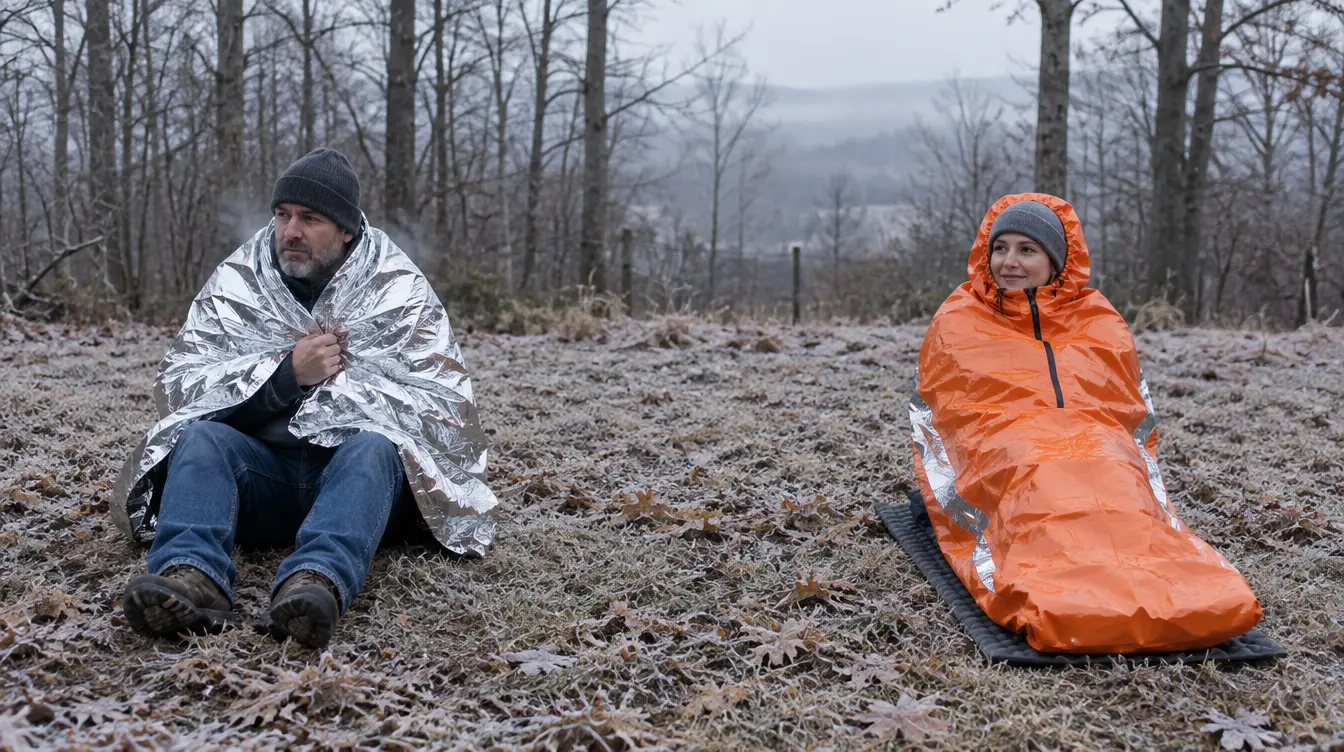

An emergency sleeping bag will not replace a real sleeping bag on a freezing night. What it does well is block wind and wet and bounce your body heat back at you. Used over a sleeping bag or a pile of blankets, it can make a cold house or a stalled car a lot more livable until the power comes back.
Here is how they work, how to use one so you don’t wake up damp, and 4 picks for the car, the go bag and the family.
At a Glance: Emergency Sleeping Bags for Cold Weather
- What they are: Thin, reflective, waterproof sacks that trap body heat and block wind. Most weigh about 4 to 5 ounces.
- What they are not: Rated sleeping bags. No emergency bivy lists a tested temperature rating, so treat any “keeps you warm to X degrees” claim as marketing.
- Best use in an outage: Pull one over a regular sleeping bag or blankets, on a pad, in 1 small room.
- Main problem: They don’t breathe. Keep your face outside the bag and vent it so you don’t wake up wet.
- Bivy or space blanket: A bivy you can climb into beats a flat space blanket that slips off when you move.
Survival Life earns a commission if you buy through the Amazon links on this page, at no extra cost to you. As an Amazon Associate, Survival Life earns from qualifying purchases.
Why a Cold-Night Plan Matters More Than You Think
Power outages are not rare. About 1 in 4 U.S. households lost power at least once in a single year, and 7 in 10 of those had an outage that lasted 6 hours or more.
Winter is when a long outage gets dangerous. In January 2026, an ice storm knocked out power to more than 1 million customers across the South at its peak. Ice on the lines meant repairs took days, not hours.
Families in Nashville slept in their cars to stay warm. In Mississippi, people went to warming shelters because their houses were too cold. A small kit of sleep gear lets you stay home safely instead.
Do Emergency Sleeping Bags Actually Work?
Yes, for the job they are built for. An emergency sleeping bag, often called a bivy, is a sack made of thin reflective plastic. The shiny inside bounces your body heat back at you. The outside stops wind and water.
That matters most in two places: outdoors in wind and rain, and over the top of a regular sleeping bag. On its own, on a cold floor, a bivy has almost no padding. The cold ground will pull heat out of your back faster than the bag can bounce it back.
One limit to know
Most real sleeping bags carry a lab-tested temperature rating. Emergency bivies don’t. None of the 4 picks below lists a tested temperature rating.
Treat these bags as a booster for the bedding you already have, not a stand-alone bed for a freezing night.
Space Blanket or Emergency Bivy: Which One Should You Use?
Both are made from the same kind of reflective sheet. The difference is the shape, and on a cold night the shape matters.
A flat space blanket is cheap and tiny. It works for a quick wrap at a car wreck or on a hike. But it slides off every time you roll over, and cold air gets in at the edges. It also tears easily once it’s been used.
A bivy sack is the same idea sewn into a bag. You climb in, so it stays put all night. Seams and a drawstring hood keep the wind out. For sleeping, pick the bivy.
A big, heavy-duty reflective tarp is a third option. It’s too bulky for a go bag, but it works as a family ground sheet or a wall of heat behind your sleeping area.
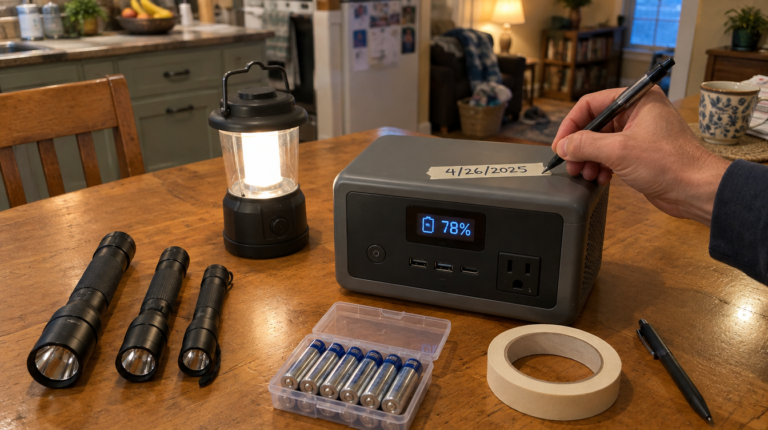
How to Sleep Warm in a Power Outage
Gear helps, but setup does most of the work. Here is the order that matters:
- Pick 1 small room. Close the doors and hang a blanket over the doorway. A small room holds heat from the people in it.
- Get off the floor. Lay down a foam pad, couch cushions or folded blankets first. The floor steals more heat than the air.
- Build the layers. Regular sleeping bag or blankets on the inside, emergency bivy over the top to stop drafts and hold heat in.
- Keep your face out. Your breath is wet. Breathing inside the bag is the fastest way to soak it.
- Dress dry, not heavy. Wear a hat and dry wool or synthetic layers. Don’t wear cotton, and don’t overheat. Sweat turns into dampness by morning.
Never run a generator, grill or camp stove indoors to warm up. They give off carbon monoxide, which you can’t see or smell.
Inside or outside your sleeping bag?
Campers argue about this one, and both sides have a point. Most people put the bivy outside, over the sleeping bag. It stops drafts and adds a few degrees, but your sweat can get trapped in the sleeping bag over several nights.
Others put it inside, as a liner next to a thin base layer. That keeps the sleeping bag dry, but you will feel damp against the plastic.
For a 1 or 2 night outage, outside is simpler. If the outage drags on, air out the sleeping bag every day.
4 Emergency Sleeping Bags Worth Keeping
These 4 cover the places most families need one: the go bag, the car, the kids and the whole room. Specs below come from each maker’s product page or the Amazon listing.
1. S.O.L. Emergency Bivvy: Best for the Go Bag
When every ounce counts, this is the one to pack. It weighs 3.8 ounces and is waterproof and windproof with sealed seams, and the bright orange outside is easy to spot. The catch: it does not breathe, so expect damp by morning if you sleep in it more than one night. Check it with the rest of your gear in our 60-minute go bag checklist.
Paid link.
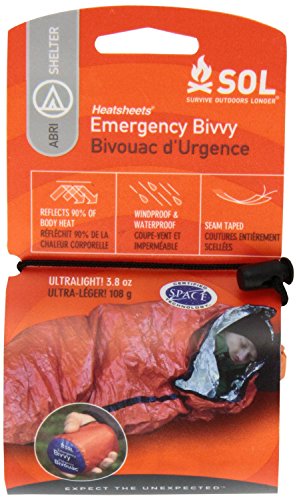
- EMERGENCY SLEEPING BAG OR BLANKET: Get inside the bivvy like a sleeping bag for the unexpected night out or turn the bivvy...
- 90% HEAT REFLECTIVITY: Stay warm in the fiercest conditions. The Emergency Bivvy reflects 90% of your body heat back to you...
Last update on 2026-10-29 / Affiliate links / Images from Amazon Product Advertising API
2. Tact Bivvy 2.0: Best for the Car
This one comes with a stuff sack, a whistle and a fire-starting cord, so it covers several jobs in a glove box or trunk kit. The maker lists it at 4.7 ounces and says you can slide a sleeping bag inside it for extra warmth. The maker also claims a 20 degree boost. That number isn’t from a lab test, so don’t count on it. For the rest of the trunk, see our winter car survival kit list.
Paid link.
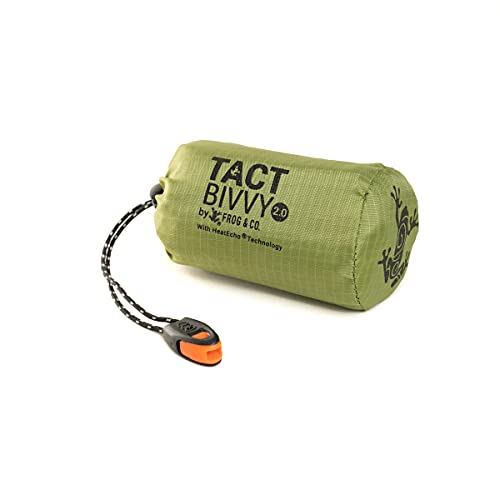
- ULTRA LIGHTWEIGHT COMPACT SLEEPING BAG: Made out of ultra-lightweight HeatEcho reflective polyester film, this thermal...
- MADE FOR EMERGENCIES: The bright orange color of this light weight sleeping bag cover helps rescuers identify you with ease...
Last update on 2026-10-29 / Affiliate links / Images from Amazon Product Advertising API
3. Go Time Gear Life Bivy: Best for Kids and Family Kits
This one is a bit tougher than most. It’s made from 26-micron coated polyethylene and weighs 4.1 ounces, with a paracord drawstring and a whistle. Thicker material means fewer rips when a kid rolls around all night. Like the others, it doesn’t breathe, so keep faces outside.
Paid link.

- Rugged Thermal Protection: The Go Time Gear Life Bivy Emergency Sleeping Bag is meticulously engineered to retain up to...
- Compact Adventure-Ready: Weighing a mere 4.1 ounces, this thermal sleeping bag for adults is effortlessly portable, fitting...
Last update on 2026-10-29 / Affiliate links / Images from Amazon Product Advertising API
4. Arcturus XL Heavy Duty Survival Blanket: Best for the Whole Room
This isn’t a bag. It’s an 8.5 by 12 foot reflective tarp, big enough to put under a family’s sleeping pads or hang behind them. It’s the heaviest pick here, so it stays home instead of in the go bag.
Paid link.

- ALL WEATHER BLANKET: This unique blanket features a Mylar reflective side which can be used to reflect heat, create a radiant...
- MANY USES: Can be used as a ground tarp, shelter, tent or emergency blanket when camping, hunting, backpacking or boating...
Last update on 2026-10-29 / Affiliate links / Images from Amazon Product Advertising API
Common Mistakes
- Using a bivy as your only bed. Without a pad and blankets under you, the floor pulls heat out of your back all night.
- Breathing inside the bag. Every breath adds water. Keep the opening at your chin, not over your face.
- Testing it for the first time in an emergency. Open one at home, climb in, and practice repacking it. Some are hard to stuff back.
- Trusting a degree rating on the box. These bags aren’t lab-rated. Plan your bedding as if the bivy adds only a little warmth.
- Keeping only flat space blankets. They’re fine for a quick wrap, but they slip off when you sleep.
Do one thing today
Pick the room your family would sleep in if the power went out tonight. Put a sleeping pad or a stack of blankets in that room’s closet, so it’s ready before the next storm.
Quick Poll: If the power went out tonight, what would your family sleep in?
What kept you warm the last time the power went out? Tell us in the comments.
Frequently asked questions
Not by themselves. They block wind and reflect body heat, but they have no padding and no tested temperature rating. In winter, use one over a regular sleeping bag or blankets, on a pad, in a small closed room.
Most people put it outside, over the sleeping bag, to stop drafts. That can trap moisture in the sleeping bag over several nights. Putting it inside as a liner keeps the sleeping bag dry, but you will feel damp.
Thicker bivies can be used more than once if you dry them out and repack them carefully. Thin flat space blankets usually tear after one use. Open and practice with yours at home so you know how it repacks.
They use similar reflective material, but a space blanket is a flat sheet and a bivy is a sewn bag. For sleeping, a bivy is better because it stays around you when you move.
Keep your face outside the bag, leave the top open a little, and wear dry wool or synthetic layers instead of cotton. Don’t overheat. Air the bag and your bedding out every day.

1 thought on “Emergency Sleeping Bags for Cold Weather: What Works in a Winter Outage”
Hot water bottles, rocks, potatoes, and even a pee bottle can provide warmth when you need it.
Place them along your arteries to warm your blood. Heat items or water using a campfire.
A dog, cat, or another person can share body heat. Wear a wool beanie, wool socks, gloves, and a scarf.
Rule of thumb. Don’t heat the room; heat the body. More insulation under you than over you. Heat rises, so choose a small upper room.