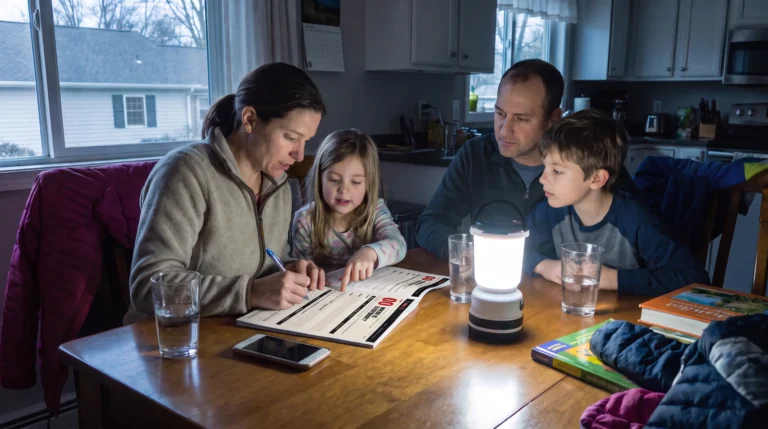
A storm warning just went out and your tap still runs. How much water could your family hold in the next hour?
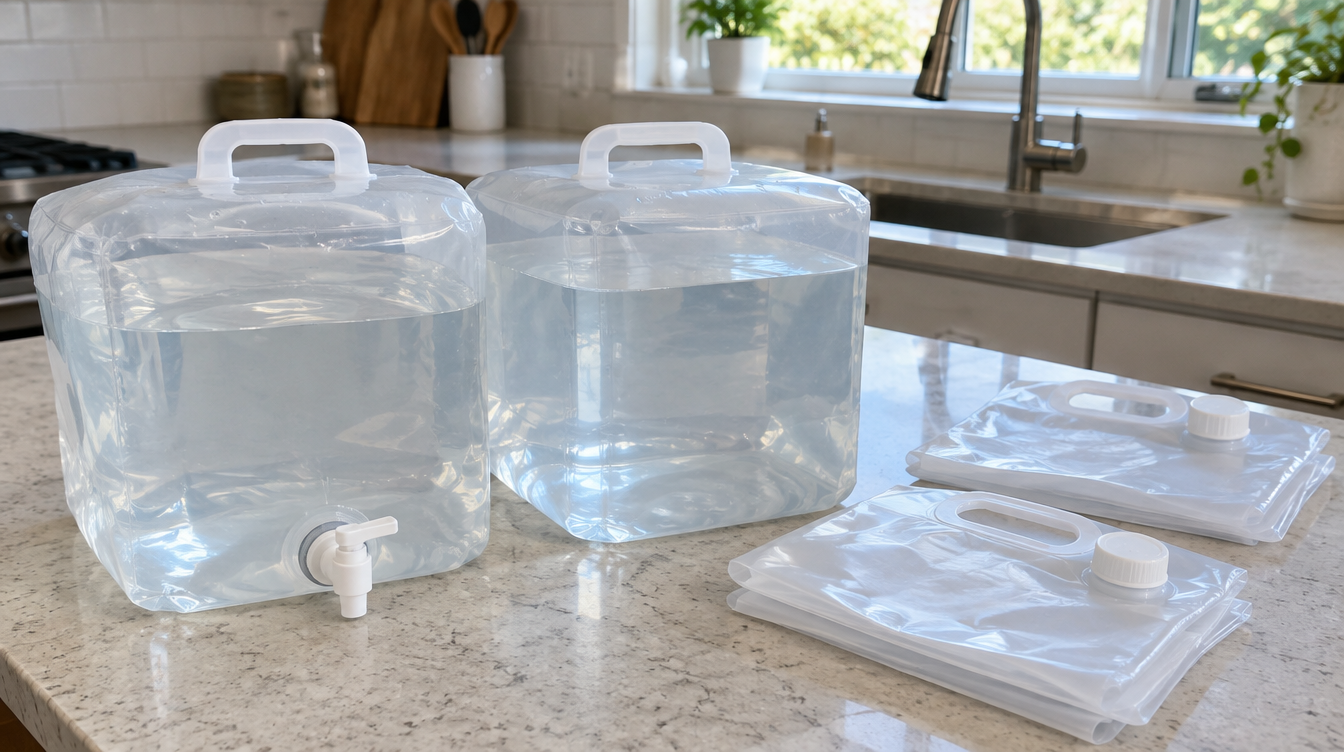
For most apartment and small-house families, the honest answer is a few bottles and a pitcher. Rigid 55-gallon drums don’t fit a closet, and that’s the gap a collapsible water container fills. It stores flat until you need it, then holds gallons when you do.
Below are 5 picks with the job each one does best, plus the math for how much to store. If you already own a few, skip to the section on cleaning and folding. That’s where stored water most often goes wrong.
At a Glance: Collapsible Water Containers
- How much to store: at least 1 gallon per person per day for 3 days, and up to 2 weeks if you can.
- Best for the kitchen counter: a 5.3-gallon cube with a spigot.
- Best for staying put in a long outage: a bathtub liner that holds up to 100 gallons.
- Best for a go-bag: a 4-liter folding jug that packs flat.
- How long stored water lasts: swap tap water you filled yourself every 6 months.
Survival Life earns a commission if you buy through the Amazon links on this page, at no extra cost to you. It doesn’t change what we recommend or the order we recommend it in.
How much water should you store?
Store at least 1 gallon of water per person, per day, for 3 days. That gallon covers drinking and basic sanitation, not showers.
Here’s what that looks like for a family of 4:
- 3 days: 4 people x 1 gallon x 3 days = 12 gallons.
- 2 weeks: 4 people x 1 gallon x 14 days = 56 gallons.
The same guidance says to try for a 2-week supply if you can, and to store more for anyone pregnant or sick and for pets. Hot climates need more too. In very hot weather, water needs can double.
That 56 gallons is where folding containers earn their spot. Keep the 3-day amount filled. Keep the rest flat in a drawer, ready to fill from the tap when a warning goes out.
What to look for in a collapsible water container
Before you pick one, sort out what you need it to do. These 4 checks rule out most of the bad buys.
- Made for drinking water. Look for a container sold as food-grade. The label should say it’s meant for drinking water, not just camping gear or garden use.
- Spigot or cap. A spigot lets you pour without lifting the container. A plain cap is cheaper and packs smaller, but you’ll tip a heavy jug to pour.
- Size you can lift. Every gallon of water weighs about 8.3 pounds. A 5-gallon jug is fine on a counter and hard on the stairs.
- Freezable or not. Only some containers can go in the freezer. If you want ice packs that turn into drinking water, check that the maker says it’s freezable.
A good rule: buy 1 container with a spigot for the kitchen, then fill out the rest of your supply with cheaper folding jugs. Keep the spigot model full and the cheap ones flat.
The 5 collapsible water containers worth keeping
Each pick below has one job. None of them does every job, so most families end up with 2 or 3.
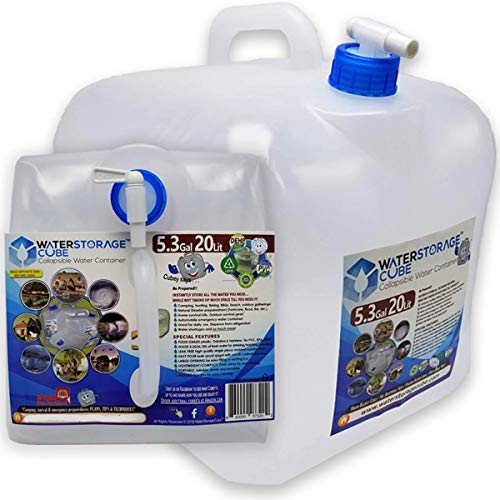
1. WaterStorageCube 5.3-gallon container with spigot: best for the kitchen counter
This is the one you’ll use most in an outage. It’s a 5.3-gallon cube with a spigot, and the listing says it’s BPA-free.
The spigot is the real reason to pick it. You pour a glass or fill a pot without lifting a full jug that weighs over 40 pounds.
One limit: the walls are see-through, so light gets in. Store it full in a dark closet, not on a sunny counter or in a bright garage.
- FOOD-GRADE ODORLESS GREAT TASTE: PE plastic made with highest quality USA raw material. Environmentally friendly non-toxic...
- LIGHT, COMPACT, PORTABLE AND REUSABLE Foldable space saving design store away easily. Remains soft and flexible even when...
Last update on 2026-11-03 / Affiliate links / Images from Amazon Product Advertising API
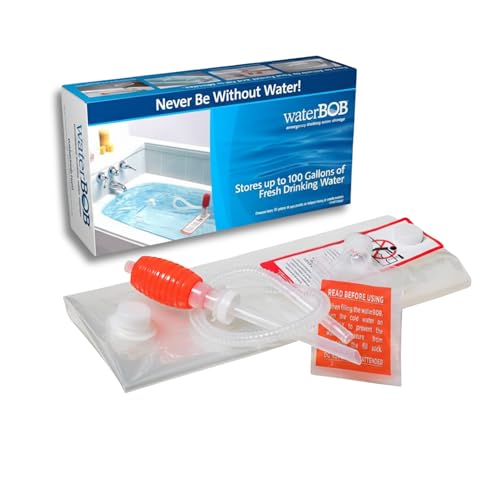
2. waterBOB bathtub liner: best for staying put through a long outage
When you expect the water to stop and you plan to stay home, this is the biggest single step you can take. The liner sits in your tub and holds up to 100 gallons, and it comes with a hand pump for getting the water out.
It only works if you have a standard bathtub. If you have a walk-in shower, skip it and add more folding jugs instead.
Treat it as extra water, not your only water. Fill your drinking containers first, then the liner. Order one before storm season, not the day a warning goes out.
As an Amazon Associate, Survival Life earns from qualifying purchases.
- Space-Saving Up To 100-Gallon Emergency Water Storage: Transform your existing bathtub into a clean, safe water storage...
- Sealed Food-Grade Liner Keeps Water Fresh Up to 16 Weeks: Heavy-duty, BPA-free plastic liner meeting USFDA food-grade...
Last update on 2026-11-03 / Affiliate links / Images from Amazon Product Advertising API
3. HydraPak Seeker 4-liter: best for a go-bag or get-home bag
This one is about weight, not volume. The 4-liter Seeker packs flat and light, and the listing says it’s BPA and PVC free and works with a water filter.
That last part matters if you have to leave home. You can fill it from a stream or a tap and run it through a filter on the way out. Our guide to the best water filters for survival covers which filters fit a setup like this.
One limit: 4 liters is about 1 gallon. That’s 1 person for 1 day. It’s a carry container, not a storage plan.
As an Amazon Associate, Survival Life earns from qualifying purchases.

- PORTABLE & PACKABLE: Crush the Seeker Hydration Reservoir when empty and store in the included storage bag. The flexible...
- DURABLE & VERSATILE: Made of flexible and abrasive-resistant TPU, the Seeker can be frozen to use as an ice pack, filled with...
Last update on 2026-11-03 / Affiliate links / Images from Amazon Product Advertising API
4. Reliance Fold-A-Carrier 5-gallon: best low-cost container for filling at the tap
If you need to add a lot of capacity on a small budget, this is the plain workhorse. It’s a 5-gallon carrier that folds down when it’s empty.
Buy a few and keep them flat in a closet. When a warning goes out, they’re the ones you fill from the tap.
One limit: 5 gallons of water weighs about 42 pounds. Fill it where you’ll store it, or fill it partway if someone in your house can’t lift that much.
As an Amazon Associate, Survival Life earns from qualifying purchases.

- The spigot design offers an on/off feature & is leak proof. Comfortable handle attached with metal clips that folds making it...
- Length: 12.00 width: 4.00 height: 16.00
Last update on 2026-11-03 / Affiliate links / Images from Amazon Product Advertising API
5. SUPANT freezable 5-liter and 10-liter set: best for doing double duty in the cooler
This set comes as a 5-liter and a 10-liter jug, about 4 gallons together. The listing says they’re BPA-free and freezable.
That makes them useful before the outage starts. Freeze them partly full, and they keep a cooler cold. When they thaw, you have drinking water.
One limit: water expands as it freezes. Leave room at the top, or the seams take the strain.
As an Amazon Associate, Survival Life earns from qualifying purchases.

- SET INCLUDES: 1*5 Liter +1*10 Liter Collapsible Water Tank Carriers. Constructed to hold saltwater or fresh water or some...
- FREEZABLE- It can be freezed with liquid. Besides, it can weaken sunlight burn inner liquid directly.
Last update on 2026-11-03 / Affiliate links / Images from Amazon Product Advertising API
How to clean, fold and store a collapsible water container
A collapsible water container that went into the drawer damp is how mold gets a start. This section is the part to get right.
Clean and sanitize before the first fill
- Wash the container with soap and rinse it completely.
- Mix 1 teaspoon of unscented liquid household bleach into 1 quart of water. Use bleach that’s 5% to 9% sodium hypochlorite.
- Swish the solution around the inside, wait at least 30 seconds, then pour it out.
- Let it air-dry before you fill it or fold it.
Only use containers made for drinking water. Never reuse a jug that held bleach or any other chemical.
Fold it flat
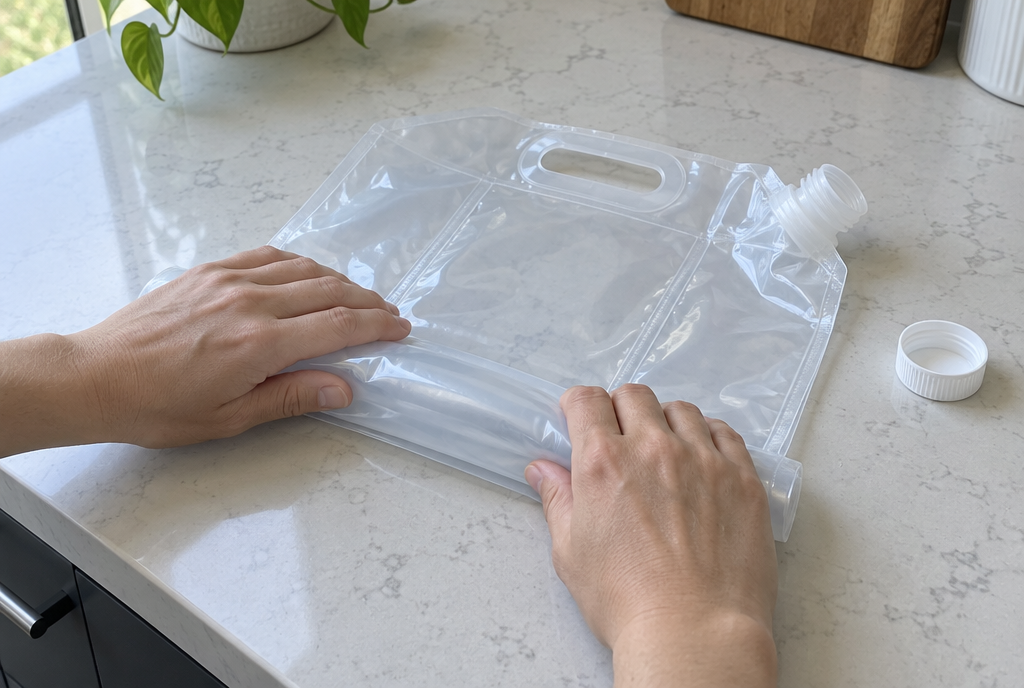
- Empty it completely.
- Leave the cap or spigot open so the trapped air can escape.
- Flatten it from the bottom up and roll it along the seams.
- Cap it while it’s pressed flat, so it stays that way in the drawer.
Store it full the right way
Keep filled containers somewhere cool, between 50°F and 70°F, out of direct sunlight. Keep them away from gasoline and pesticides too.
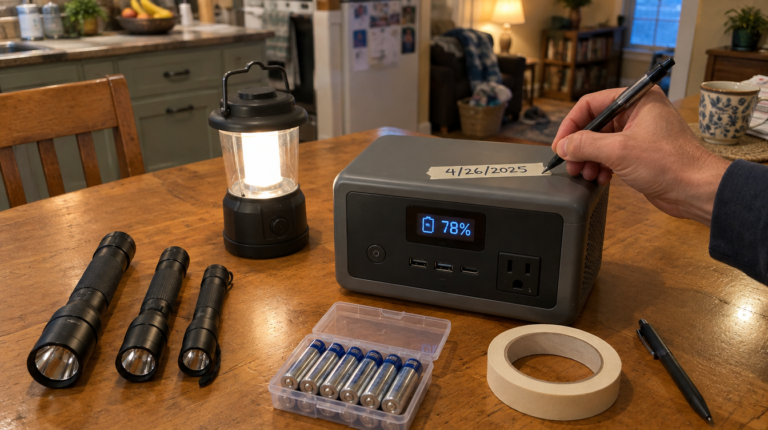
Replace water you filled yourself every 6 months. Write the fill date on the container with a marker, so nobody has to guess.
For a bigger setup, our guide to setting up long-term water storage at home covers barrels and rotation.
When to fill them: the first hour after a warning
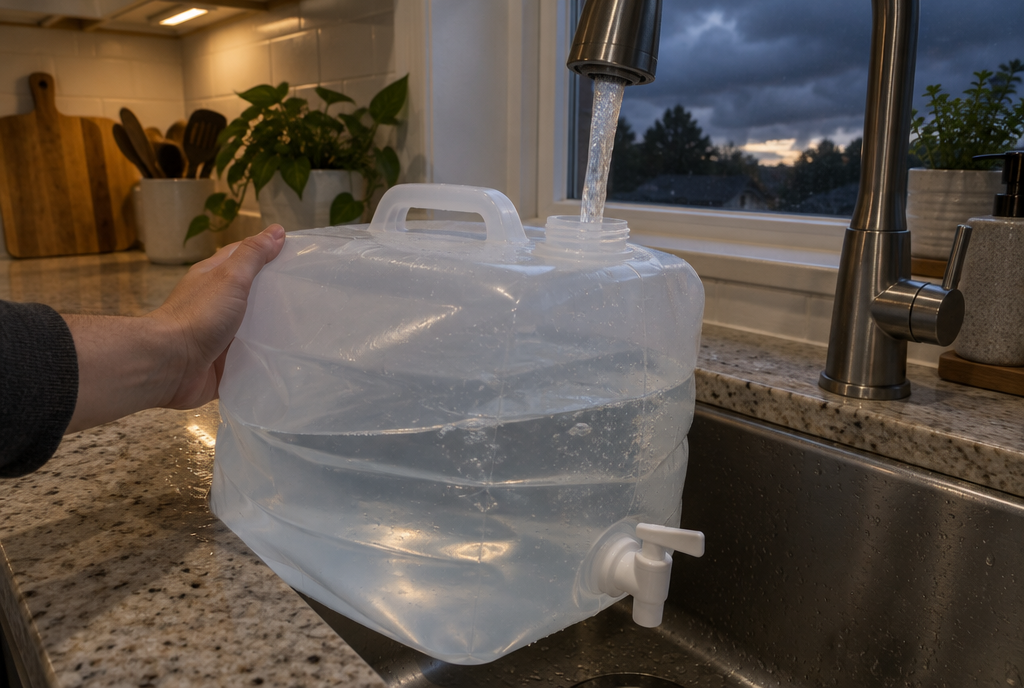
During an outage, you may have time before the water stops. Use it.
Fill in this order:
- Your drinking containers, from the kitchen tap.
- The folded jugs from the drawer.
- The bathtub liner, if you have one.
Even without a liner, a clean tub with the drain closed holds water you can use for flushing and washing. Keep your stored containers for drinking and cooking.
If you’re working through a full storm list, add these steps to our hurricane preparedness checklist.
Common mistakes with stored water
- Storing full jugs in a sunny garage. Heat and light are hard on stored water. A cool, dark closet is better.
- Reusing a chemical jug. A bottle that held bleach or a cleaner isn’t safe for drinking water, even after washing.
- Folding it damp. Moisture trapped in a folded container can grow mold. Let it air-dry first.
- Counting on the tub liner alone. It’s a big backup, not your whole plan. Keep a filled 3-day supply too.
- Filling jugs nobody can carry. 5 gallons weighs about 42 pounds. Use smaller containers for anyone who can’t lift that.
- Forgetting the swap. Water you filled yourself gets replaced every 6 months. Put the date on a calendar.
Frequently asked questions
Replace water you filled from the tap every 6 months. Write the fill date on the container so you know when to swap it, and keep it somewhere cool and dark until then.
Yes, if they’re made for drinking water. Pick ones sold as food-grade, wash and sanitize them before the first fill, and never reuse a jug that held a chemical.
At least 12 gallons for 3 days, at 1 gallon per person per day. A 2-week supply is 56 gallons, and you’ll want more in hot weather or with pets.
Only if the maker says it’s rated for hot liquids. Many aren’t, so let boiled water cool before you pour it in.
Only if it’s sold as freezable. Fill it partway so the water has room to expand as it freezes.
Do one thing today
Multiply the people in your house by 3. That’s how many gallons you need filled for a 3-day supply. Count what you have now, then write the gap and today’s date inside your pantry door.
Collapsible water jugs: smart space-saver, or soft plastic you’d rather skip?
Folding jugs store flat and hold gallons when you need them. Some people would rather keep their water in rigid containers and skip soft plastic altogether.
Which container does your family actually keep water in? Tell us in the comments.