
Your kid is at school, your spouse is at work, and the phones just stopped working. Who goes where? If you can’t answer that in one sentence, you’re not alone, and it’s fixable this weekend.
A family emergency plan that only lists phone numbers falls apart the moment the network is jammed or the power is out. This guide builds a version that keeps working without a signal. The part most families skip, updating the plan for every person in the house, is in the section on who’s on the plan now.
At a Glance: Family Emergency Plan
- A family emergency plan needs a no-phone way to reach each other, like a set of 2-way radios, plus an out-of-area contact everyone checks in with.
- Pick 3 meeting spots: one on your street, one across town, one out of the area. Give each spot a wait time.
- Stay home by default. Leave when officials order it or the house turns unsafe, and plan a move if you run out of something you can’t replace.
- Write a line for every person, including school pickup names, a college student, an older parent, a caregiver and the pets.
- Practice it once with the power off. That’s where the gaps show up.
Survival Life earns a commission if you buy through the Amazon links on this page, at no extra cost to you. It doesn’t change what we recommend or the order we recommend it in.
How Does Your Family Reach Each Other When Cell Service Goes Down?
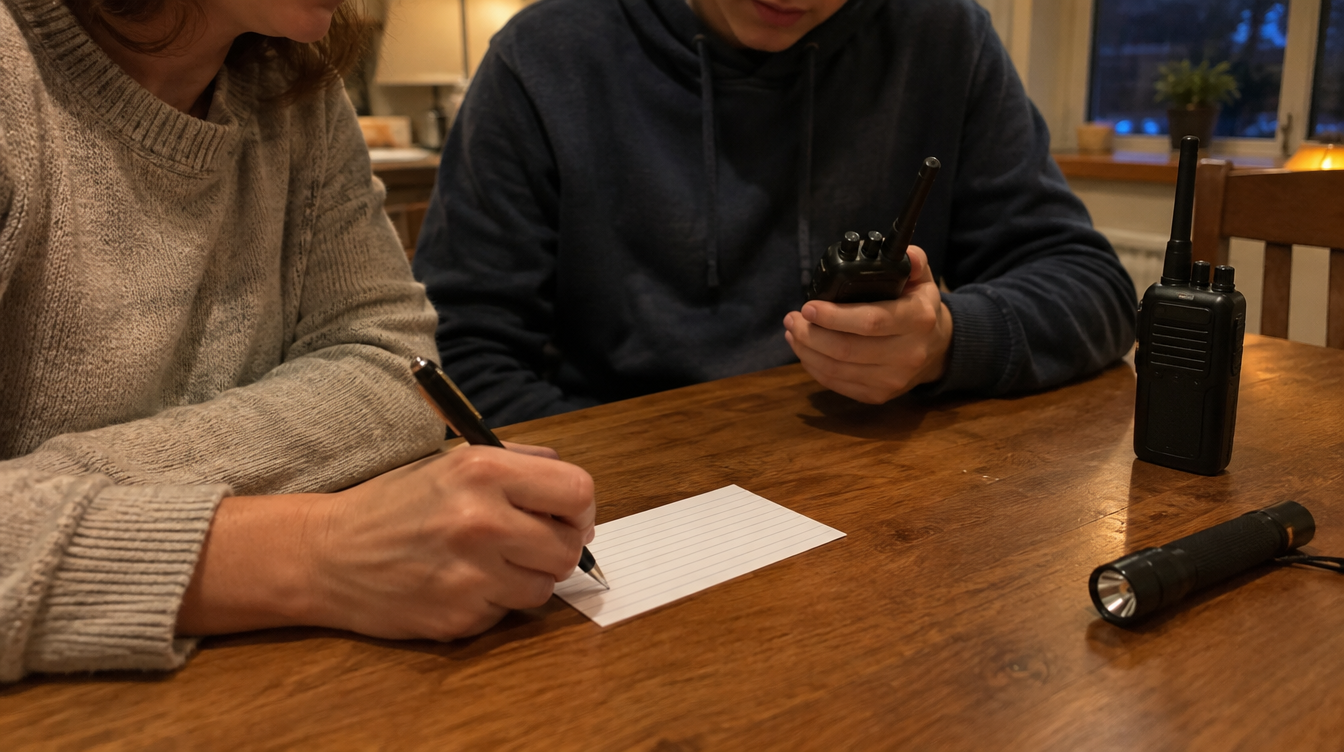
Plan on 4 ways to talk, in order, so nobody has to guess what to try next. Write them on one card for each person.
- Text first. Our rule is text before you call. Keep it short: where you are and whether you’re OK.
- A Wi-Fi app second. If the cell network drops but your home internet is still up, a messaging app over Wi-Fi can still get through.
- Radios third. A pair of handheld 2-way radios works with no network at all.
- The out-of-area contact last. Pick one relative or friend who lives far enough away that the same storm or outage won’t hit them. Everyone checks in with that person, and that person passes news along.
What kind of radio does your family need?
There are 2 common kinds of consumer radio, and the difference matters for the paperwork.
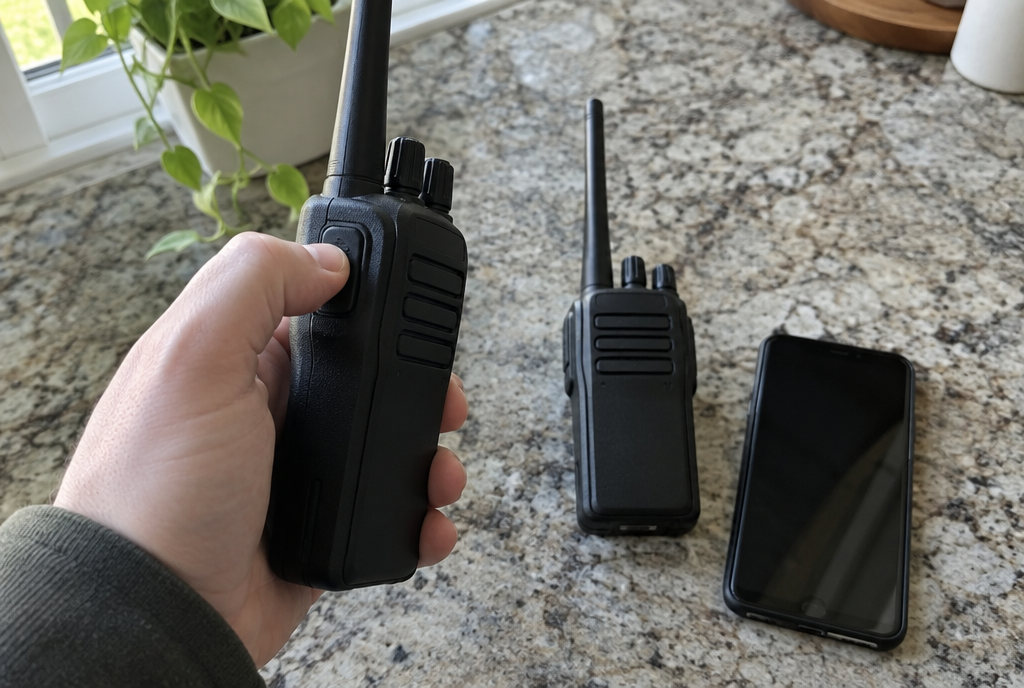
FRS radios are the simple walkie-talkies sold in pairs. They don’t need a license.
Power is capped at 2 watts on most channels and 0.5 watts on channels 8 to 14, so range is short. They’re fine for the house and the street.
For that short-range job, a 2-pack of license-free FRS radios is the easy start. They’re light, but they won’t reach across town.

- Two way Radio: FCC ID ; 2ASV6-T5A. MOICO walkie talkies have 22 FRS channels plus 99 sets of CTCSS tones (privacy codes),The...
- VOX-Hands Free Function: Walkie talkies for adults have easy voice and sound activation transmission (VOX) with 3 sensitivity...
Last update on 2026-10-22 / Affiliate links / Images from Amazon Product Advertising API
GMRS radios can go farther. Expect anywhere from 1 to 25 miles, depending on the radio and what’s between you.
GMRS needs a license from the Federal Communications Commission. One license is good for 10 years, and anyone in the licensee’s family can use the radios under it. The person applying has to be 18 or older.
Need more range and willing to get the license? A 2-pack of GMRS handheld radios can reach farther, but you’ll need the GMRS license before you talk on them. (paid link)
The radio is the part people buy and never turn on. Charge them, put them on the same channel, and write that channel number on everyone’s card. Rules and fees change, so check the current licensing rules for the radio you buy before you rely on it.
Keep phones going too. A 10,000mAh power bank can recharge a phone through a short outage. It won’t run a medical device or a big radio. (paid link)
Should You Stay Home or Leave?
For most families, staying home is the safer default. Your water, food, medicine and beds are there. Out on a crowded road, you have only what fits in the car.
Use 3 questions to make the call, and write them on the plan so nobody has to argue in the moment. For the bigger version of this choice, see our guide on when to leave home and when to stay.
1. Have officials told your area to leave?
If an evacuation order covers your area, that settles it.
- Yes: Go now, and use the route officials give you.
- No: Go to question 2.
2. Is the house unsafe right now?
Fire coming your way, water rising, a gas smell, or damage that makes the building unsafe all count.
- Yes: Leave now. Grab people, pets, medicine and phones. Leave the heavy gear.
- No: Go to question 3.
3. Have you run out of something you can’t replace at home?
That means water, a needed medicine, power for a medical device, or care someone needs that you can’t give.
- Yes: Plan the move. Tell your out-of-area contact where you’re going, then go.
- No: Stay put. Lock up, check on neighbors and settle in.
Will everything fit in the car?
Before you ever pack, open the driver’s door and find the tire and loading label on the door frame. It lists the most weight your vehicle is built to carry, people and cargo together.
Add up your family, the pets and your bags. If you’re close to that number, you’ll need to leave some gear behind, so decide now what stays.
Where Should Your Family Meet, and How Long Do You Wait?
“Meet back at the house” fails when the street is blocked or the area is closed off. Set 3 meeting spots and give each one a wait time.
- Spot 1, your street. Our rule of thumb: somewhere you can walk to in a minute, like a neighbor’s mailbox or the corner stop sign. Use it for a house fire or a gas leak.
- Spot 2, across town. We suggest a place 5 to 10 miles out, like a friend’s house or a church parking lot you all know. Use it if your neighborhood is closed.
- Spot 3, out of the area. We suggest a relative’s home at least 50 miles away. Use it if the whole region is hit.
Set a wait time for each spot
A meeting spot without a wait time turns into people waiting all night. Our rule of thumb: wait 30 minutes at spot 1, then move on. At spot 2, wait 2 hours, then check in with the out-of-area contact and follow their update.
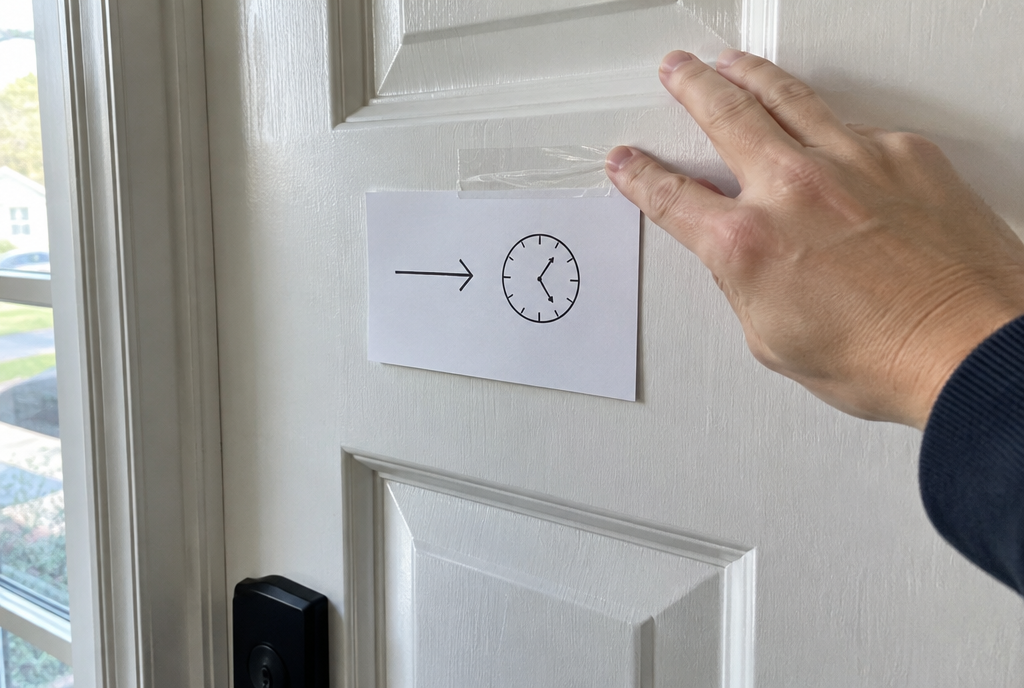
Leave a note if you move. Tape a card inside the front door or put it in the mailbox. Write who you’re with and where you’re headed.
Know 2 ways to each spot
Drive or walk each route once. Pick a second route that avoids the main road. A route you’ve seen with your own eyes beats a map you’ve never used.
Who’s on Your Family Emergency Plan Now?
Most plans are written once and never touched again. Then a kid goes to college, a grandparent moves in, or you hire a caregiver.
Give every person their own line. Our printable family disaster plan template has a spot for each name.
Kids at school or day care
Ask the school for its emergency release plan. Find out where they’d move the kids and who they’ll release them to. Then put 2 backup adults on the school’s pickup list, so a neighbor can get your child if you can’t reach the school.
Tell your kids the rule out loud: stay with your teacher. They don’t walk home on their own unless you’ve planned exactly that with them.
A college student who lives away
Their plan is different from yours, and it should be. Ask them to learn their school’s alert system and where their building’s shelter spot is. Agree on one check-in: they text the out-of-area contact, not you, so you’re not both stuck trying to reach each other.
Older parents and grandparents
Write down every medicine, the dose and the pharmacy. Note what they can’t do alone, like stairs or a long walk.
If they use a powered medical device, plan how you’ll keep it running or where you’d take them to charge it.
Ask their doctor what to do in an outage. We can’t cover medical care in a general guide, and their doctor knows their case.
A caregiver or sitter
Anyone who watches your kids or a parent needs a copy of the plan. Show them the meeting spots and the radio channel. If they can’t run the plan without calling you, the plan isn’t done.
Pets
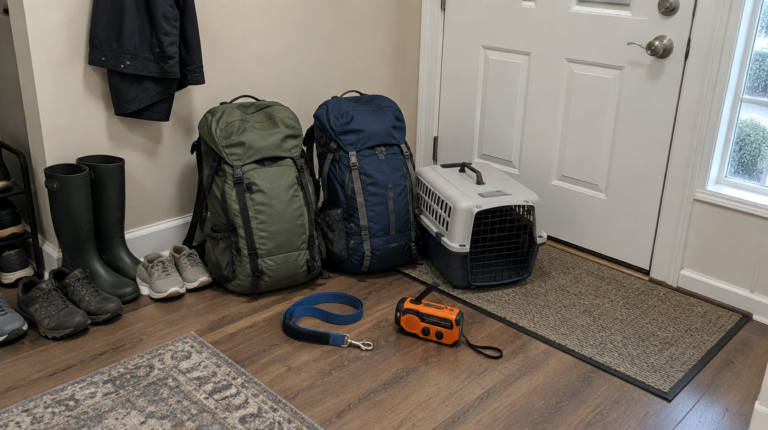
Add the pets to the head count and to the car math. Pack food, water, any medicine, a leash or carrier, and a recent photo in case you get separated. Call your local shelter ahead of time to ask about pets, and put a pet-friendly hotel or a relative on your list.
How Do You Practice a Family Emergency Plan Without Scaring the Kids?
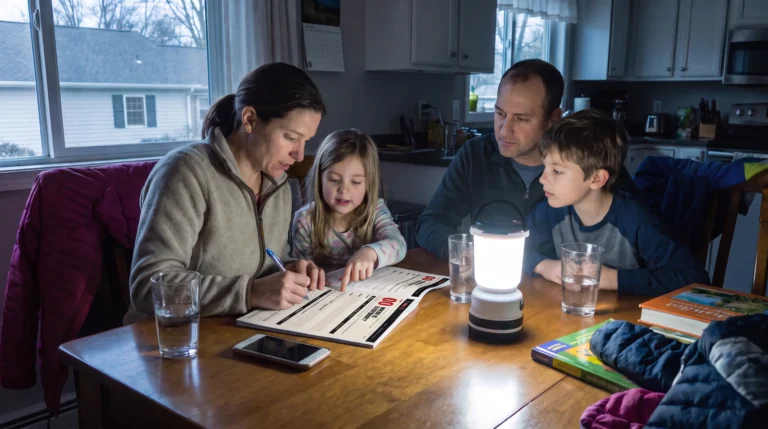
People freeze in an emergency when they have to make choices they never thought about. Practice takes the choices out of it. Keep it calm and treat it like a game night, not a test.
As an Amazon Associate, Survival Life earns from qualifying purchases.
A headlamp beats a flashlight in a drill because it keeps both hands free. This battery one is cheap and simple, though you’ll want spare AAA batteries in the drawer.

Last update on 2026-10-22 / Affiliate links / Images from Amazon Product Advertising API
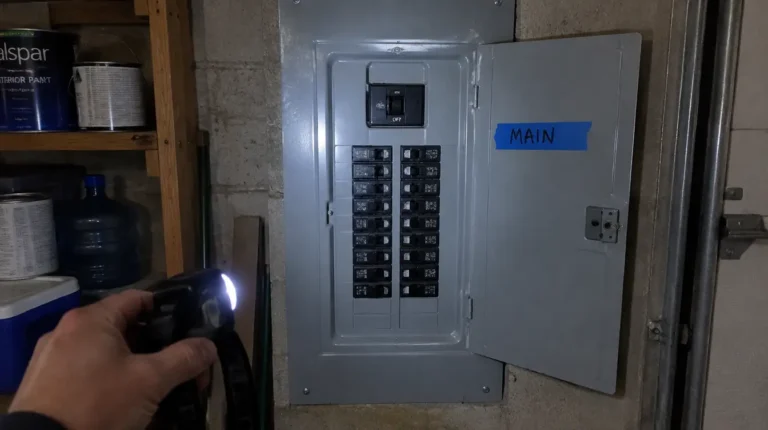
Pick a Saturday evening. Turn off the main breaker, or just the lights if that’s easier. Then run these steps:
- Everyone finds their flashlight or headlamp in the dark.
- Each person says their job and their first meeting spot.
- Two people take radios to opposite ends of the house or the street and check in.
- Someone sends a test text to the out-of-area contact.
- Walk to spot 1 together.
Want a longer drill that includes leaving the house? Our steps for practicing an evacuation as a family walk you through it.
Write down what broke. Dead batteries and a radio on the wrong channel are normal finds. Fix them that week, then run it again in 6 months.
Common Mistakes
- Only listing phone numbers. When the network is down, a list of numbers is a list you can’t use. Add the radio channel and the out-of-area contact.
- One adult holds the whole plan. If you’re the only one who knows it, it fails the day you’re stuck in traffic. Every person gets a card.
- No wait time at a meeting spot. Without one, people wait in the wrong place for hours. Write the wait time next to each spot.
- Forgetting to update it. A new baby, a parent moving in or a new sitter changes the plan. Look at it every time the household changes.
- Overpacking the car. A loaded car with no room to spare is a breakdown waiting to happen. Check the door label and decide what stays.
- Buying radios and never turning them on. Charge them, set the channel and use them once in the drill.
Frequently asked questions
A family emergency plan should cover how you’ll reach each other without a phone signal, 3 meeting spots with wait times, a stay-or-go test, and a line for every person in the house, including kids at school, older parents, a caregiver and pets.
Pick a relative or friend who lives far enough away that the same storm or outage won’t reach them. Everyone in the house checks in with that person, so news gets passed along even when local calls won’t go through.
FRS walkie-talkies don’t need a license. GMRS radios do. One GMRS license lasts 10 years and covers family members, and the person applying has to be 18 or older. Check the current rules for the radio you buy.
Ask the school for its emergency release plan, put 2 backup adults on the pickup list, and teach your kids one rule: stay with your teacher. Practice that rule out loud at home.
Run a lights-off drill at least twice a year, and again any time someone moves in or out of the house. Each drill should end with a short list of what broke and a date to fix it.
Do one thing today
Pick your out-of-area contact. Call them today, ask if they’re willing, and text their number to everyone in the house. That one step gives your family a place to check in when nothing else works.