


Editors Note: I want to make sure that you realize that this entire article was written based on my passion for survival and my need to learn everything I can to protect my family. I have done a lot of research, but I am not a doctor and nothing I have written should not be taken as medical advice. If storage of your insulin or other medication during a crisis is a concern to you (and it should be) you should speak with your family doctor about it.
One of the fastest growing concerns regarding prepping and survival is the skyrocketing number of Americans who are Insulin Dependent Diabetics.
Diabetes runs in my family and is a concern that is very near and dear to my heart.
Many times when people prepare for disasters they fail to ensure that they have enough medications, home medical supplies, and oxygen.
My family was lucky during Hurricane Rita, in that my grandfather had my grandfather had a little over a months worth of insulin, and they only went without help for roughly two weeks.
Others were not so lucky…
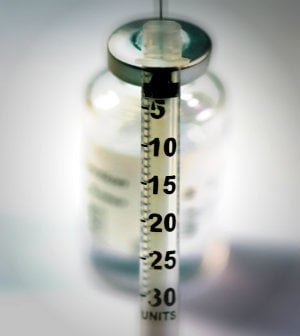
How do you make sure that you have enough insulin on hand?
Your family doctor may balk at prescribing two years of insulin in one fell swoop, but not a few extra bottles at a time as a backup.
The next time you see your doctor, request a few more. All my grandfather has to do is remind his doctor of the hurricane and the fact that he is 38 miles from the nearest pharmacy and the doctor doesn’t bat an eyelash about writing him the prescription.
Be sure to ask your pharmacist for the insulin with the longest shelf life—one, two years preferably.
Just like with your food supplies you need to follow the FIFO (first in first out) method.
Keep alternating your stockpile, using up the ones with the earliest expiration date and replacing them with your newest bottles.
The stress, exercise changes, and diet changes in a disaster will play havoc on a your blood sugar, so in addition to all of your standard first aid supplies, be sure to store extra glucose monitors, batteries, and test strips with long expiration dates. I recommend shelling out the extra cash for the long lasting lithium batteries, if they make them in the right size for your monitor.
After opened, the test strips should last up to three months in cool, dry storage.
Doing a bit of research, I have found a few items that can help extend the life of your insulin stores that I wanted to share with you.
When you need to be Mobile:
FRIO cooling cases offer a compact alternative to the refrigerator that is mobile and reusable.
These small, portable cooling packs keep insulin cool for several days once activated.
All you do is soak the pack in water for 5 to 10 minutes.
The crystals in the wallet panel expand into a gel, which stays cold as it evaporates.
When it dries all you need to do to reactivate the pack is submerge it in water again. They are fairly inexpensive, small, and work well for bug out bags:
FRIO wallets keep insulin cool for at least 45 hours in a warm environment of 100 degrees Fahrenheit.
This is five times as long as an ice pack–long enough for you to head out on a travel adventure.
The pack itself is dry to the touch, and easily stowed in a backpack or purse.
If you live in cold climates the FRIO wallet has the added benefit of being an insulator too.
When you are sheltering in place:
Another option, if you have access to a small power source, but not necessarily enough to power an entire fridge ( Like a portable solar charger) is something that I would have thought of as more of a novelty…
These little can cooler/warmers, have been on the market for years and are usually given away as a gag gift at Christmas. But think abou it for a second….

If you were able to store your insulin at 20-30 degrees below the ambient temperature, how much longer would your supply last?
Now bear in mind that the way these work varies heavily on the ambient temperature and humidity, but they DO work. (provided of course that you have some sort of power supply.
There are many different varieties of these coolers, ranging in price, size, and even power supply. You can get them that run off of A/C power, D/C or even off of USB. The smaller ones only draw around 10 watts of power and even the smallest solar panel kits should be able to generate enough juice to help keep this fridge cool during the heat of the day.
Click here to see all the different options.
These are just a couple of modern alternative storage options for your insulin, there are dozens if not hundreds of more ways that you can keep your necessary medicines stable during even the worst of disasters.
If you have a differing opinion or other alternatives, please leave a comment and let me know!