
TLDR:
- Solar storms are bursts of energy and charged particles from the Sun that shake Earth’s magnetic field.
- Strong storms can stress power grids, throw off GPS, disturb satellites, and weaken radio on polar flights.
- The November 12 solar storm lit up the sky with auroras and was a reminder that “space weather” can touch everyday life.
- Why Are Solar Storms Dangerous?
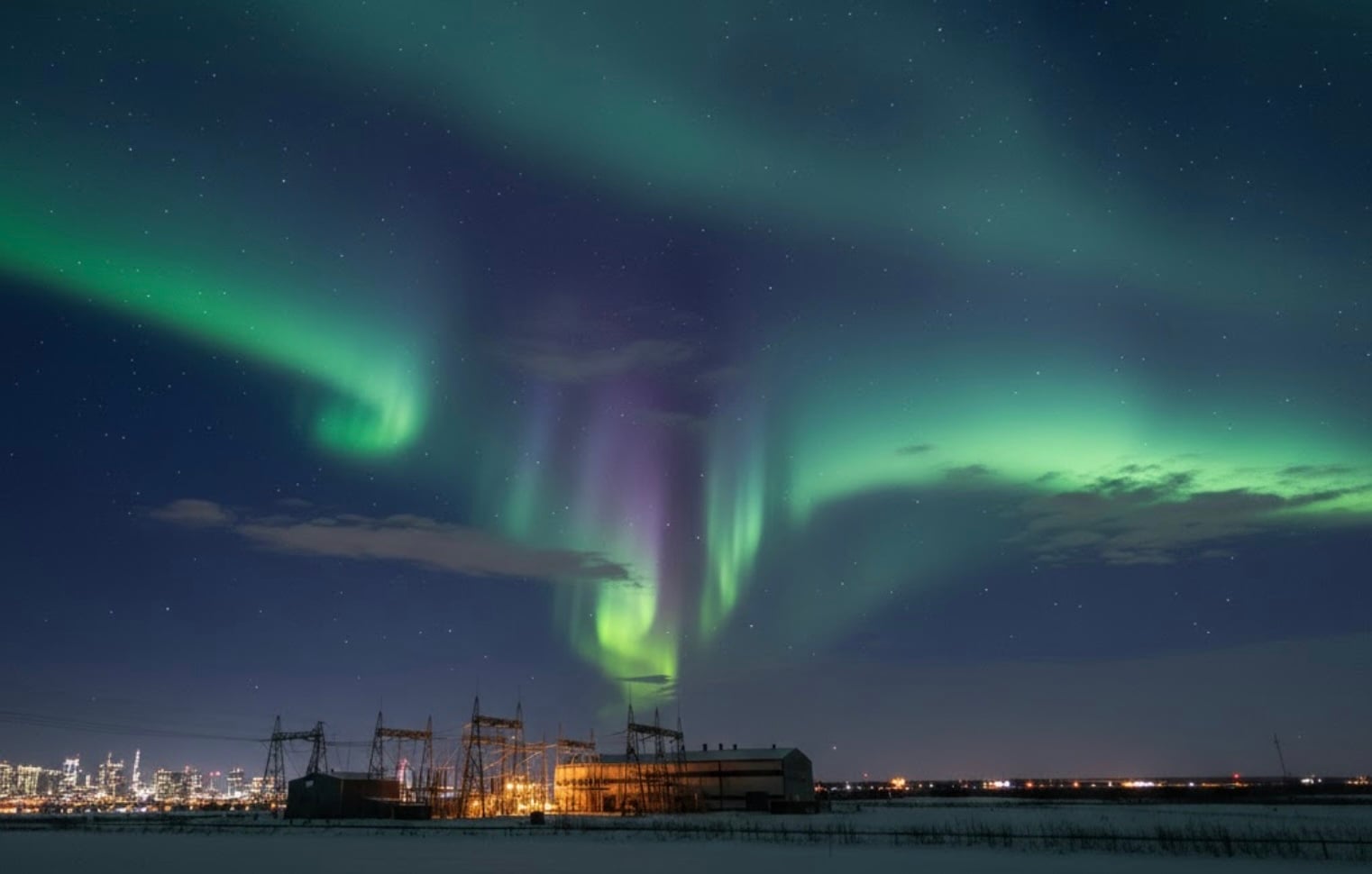
On the night of November 12, the sky gave a lot of people an unexpected show. Color poured into places that almost never see auroras. Social feeds filled with streaks of purple, green, and red.
Those lights weren’t just pretty. They were proof that Earth’s magnetic field was working overtime. The same energy that lit up atoms high above us also tugged on the systems we rely on every day.
Power lines picked up slow, unwanted currents. Radio waves scattered in the upper atmosphere. Satellites flew through air that had puffed up just enough to change their orbits a bit. Most people didn’t notice a thing, which says a lot about the engineers who plan for nights like this.
Still, when the sky glows and headlines shout about a “solar storm,” it helps to know what you’re looking at.
Here’s the basic idea. Sometimes the Sun hurls out huge clouds of charged particles that carry their own magnetic fields. When one of those clouds reaches Earth and the fields line up the wrong way, extra energy pours into the space around our planet. Currents jump, the aurora flares, and our tech gets a gentle shove.
For families, it’s a night of beauty. For operators, it’s a live stress test. Same event, two different views.
(As an Amazon Associate, we earn from qualifying purchases.)

- PORTABLE POWER STATION 350W: This portable power station can run air pumps, recharge phones and laptops, and power the Goal...
- FAST CHARGING PORTABLE POWER STATION: High-speed charging mode takes this portable power station from 0% to 100% in about...
Last update on 2026-10-07 / Affiliate links / Images from Amazon Product Advertising API
What Are Solar Storms Anyway?
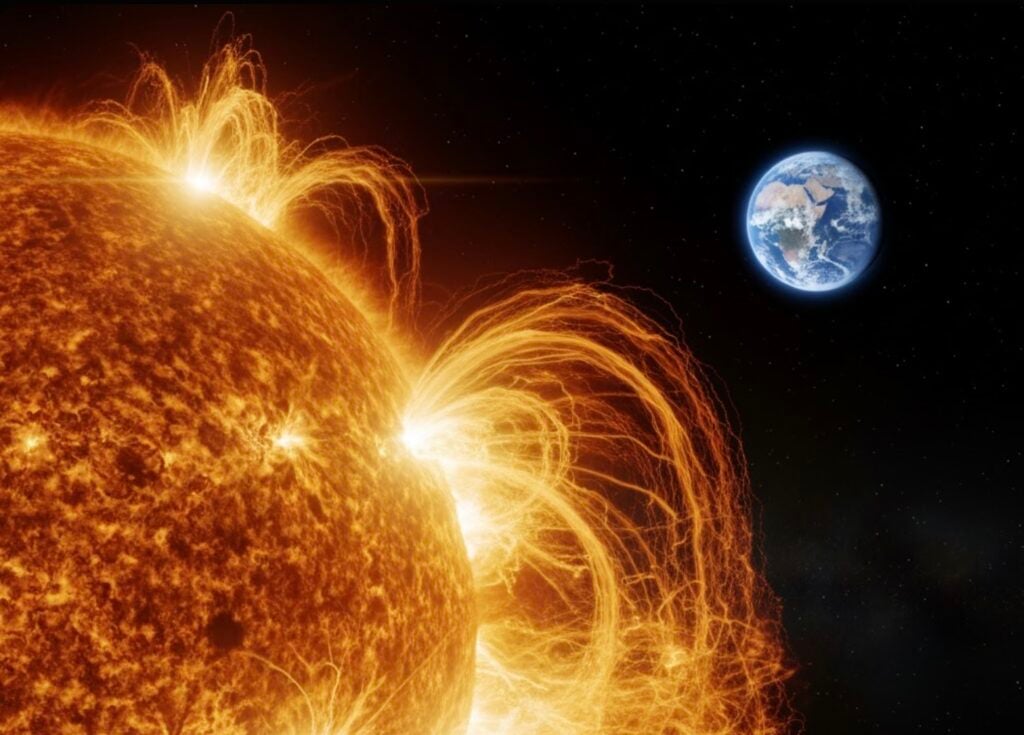
The Sun is always blowing a steady wind of charged particles. We call it the solar wind. Earth sits inside this stream, and most days our magnetic field swats it away without much drama.
A solar storm is what happens when the Sun sends more than the usual background wind.
Two main solar events matter for us:
- Solar flares are sudden flashes of electromagnetic energy. Their effects reach Earth in about eight minutes. Strong flares can mess with radio signals on the sunlit side of Earth for a short time.
- Coronal mass ejections (CMEs) are different. A CME is a giant, moving cloud of magnetized plasma. It can take one to three days to get here. If a flare is a flash, a CME is a weather front in space.
When a CME heads toward Earth, speed is only part of the story. The cloud’s shape and magnetic field decide what happens next.
As the CME runs into Earth’s magnetic field, the two fields push, pull, and sometimes lock together. If they don’t connect much, the cloud cruises by with little impact. If they link up well, energy flows into the magnetosphere and the system wakes up.
Particles then stream down along magnetic field lines and slam into atoms high in the atmosphere. Those collisions make the aurora that fills your screen with neon curtains and arcs.
At the same time, space around Earth gets rougher for technology. Radio, navigation, satellites, and power systems all feel the change. A solar storm isn’t just “pretty lights.” It’s a chain reaction that starts at the Sun and ends in our power outlets, planes, and phones.
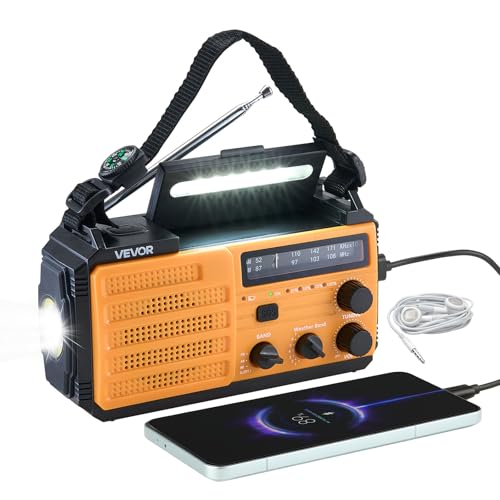
- Weather Alerts & SOS: This emergency weather radio supports 7 WX channels and auto-tunes to the strongest signal for instant...
- Multiple Power Sources: Built-in battery, USB charging, solar panel, hand crank, and Type-C charging options keep your NOAA...
Last update on 2026-10-07 / Affiliate links / Images from Amazon Product Advertising API
The Orientation That Decides The Outcome
Not every incoming CME turns into a big deal. One key factor is orientation.
Forecasters watch a number called Bz. Bz tells them whether the magnetic field in the solar wind points north or south compared to Earth’s.
- If Bz points north, Earth’s field and the solar wind tend to slide past each other. Less energy gets in.
- If Bz points south and stays that way, the fields can lock together more easily. That “magnetic handshake” lets energy flow in fast and sets up a stronger storm.
This is where upstream satellites matter. Spacecraft sitting between Earth and the Sun sniff the solar wind before it reaches us. They measure speed, density, and which way the magnetic field points.
A fast flow plus a steady, southward Bz tells forecasters, “The magnetosphere is about to take a hit.” That energy doesn’t stay parked in space. It drives currents, moves the auroral oval toward lower latitudes, and changes how the upper atmosphere bends radio waves and GPS signals.
On the ground, the results show up in simple ways. Your navigation app might wander a little. A flight might shift its route. That doesn’t mean panic. It just means a single number like Bz can explain why one storm is only a light show while another nudges our tech.
No products found.
How Scientists Measure Solar Storms In Plain English
People often want one simple score for “how bad is it?” Space weather has a couple of them.
Kp index
The Kp index squeezes global magnetic activity into a number from 0 to 9.
- Kp 0–1: Very quiet. Auroras hug the poles.
- Kp 5 and above: We’re in storm territory. Auroras spread toward lower latitudes. Tech starts to feel more stress.
Kp is a summary, not a perfect map. But it gives a quick feel for how far the storm reaches and how intense it is.
NOAA G scale
Operators also use the NOAA G scale, which goes from G1 to G5:
- G1: Minor. Maybe faint auroras and small, temporary glitches.
- G3–G4: Strong and severe. Auroras are widespread, and the odds of navigation errors, radio problems near the poles, and extra currents in long power lines go up.
- G5: Extreme and rare. Everyone who runs critical systems pays attention.
These scales exist so people who manage power, satellites, and aviation can turn complex physics into simple “go/no-go” decisions.
When you hear “G3 storm” or “Kp 7,” it means the auroral oval probably pushed south and the folks running big infrastructure followed their playbooks. The numbers don’t guarantee damage. They describe conditions where certain problems are more likely, so people can prepare.
Why Our Infrastructure Feels These Solar Storms
Modern systems love two things: steady power and precise timing. Geomagnetic storms threaten both.
Power grids
On the ground, fast changes in Earth’s magnetic field can induce electric currents. These “geomagnetically induced currents” prefer long conductors, like high-voltage transmission lines. Those lines can then funnel extra current into transformers and other equipment.
Utilities know this. They have procedures and hardware designed to ride out short bursts. But a strong or long-lasting storm can still push transformers hard or trigger protective shutdowns.
Most storm nights pass with no visible effect. On “busy” nights, however, grid operators lower risk by shifting loads, watching temperatures, and adjusting known weak spots.
Satellites and GPS
Satellites orbit in a region that looks empty but isn’t. During storms, the upper atmosphere heats and expands. That extra “puff” of air increases drag on satellites in low Earth orbit and nudges their paths. Teams respond with tracking updates and small burns.
Electronics on board can also build up charge or take radiation hits. Designers build in shields and margins to handle this, but storms raise the stakes.
Navigation signals are also vulnerable. GPS signals pass through the ionosphere, which gets lumpy and irregular during storms. Your phone’s map usually smooths this out. But precision users—surveyors, some farmers, certain military and aviation operations—see bigger errors.
Aviation and pipelines
Aviation cares about two things here: radio and radiation exposure on long routes.
On polar flights, crews rely heavily on high frequency (HF) radio. Strong storms can fade or block HF for stretches of time. When alerts go out, dispatchers may reroute flights away from the poles or switch to backup communications.
Even pipelines feel space weather. Long metal pipes pick up small induced currents, which can interfere with systems that protect them from corrosion. Operators watch these shifts and adjust once conditions calm down.
Forecasting And Early Warning Systems You Can Trust
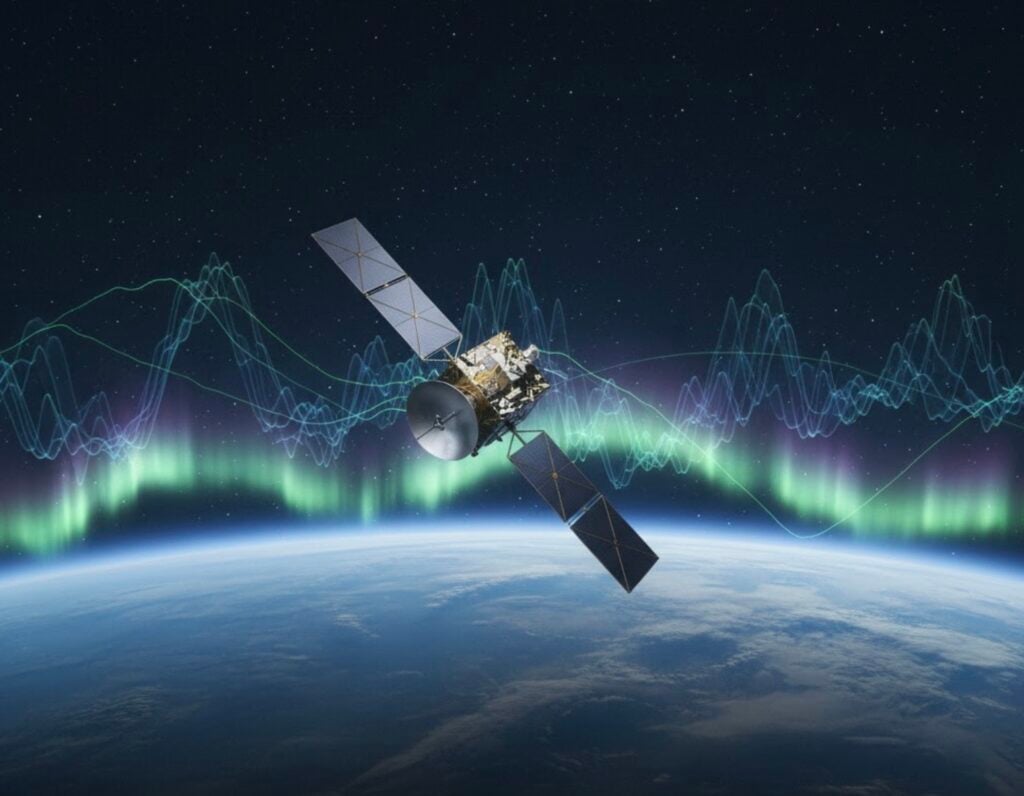
Space weather forecasting exists so solar storms show up as managed events, not blindsides.
Here’s how the chain works:
- Solar telescopes watch sunspots and active regions grow.
- When the Sun erupts, cameras track whether the CME is aimed at Earth and how fast it moves.
- Models estimate the arrival time and likely strength.
- Upstream spacecraft take real-time measurements of the solar wind and its magnetic field in the final hour before impact.
Forecasters combine all this and issue watches and warnings. Grid operators, satellite controllers, airlines, and emergency managers fold those alerts into their normal procedures.
For families, the benefits are quiet but real:
- Lights stay on because control rooms adjusted flows beforehand.
- Flights arrive safely, even if the route and arrival time shift a bit.
- GPS and communications stay “good enough” because systems are built with storms in mind.
Reliable alerts come from national space weather centers that share their methods and coordinate with other agencies. Clear, calm messages beat rumor-fueled panic every time.
Forecasting can’t stop a solar storm. But it can turn a scary headline into “something the system was built to handle.”
Lessons From History And A Realistic View Of Risk from Solar Storms
We’ve been through serious storms before. Two events come up often:
- March 1989: A severe geomagnetic storm helped trigger a widespread power outage in Quebec. It showed how long transmission lines can collect induced currents and push transformers past their limits.
- September 1859 (the Carrington Event): Auroras lit skies around the world. Telegraph systems sparked, failed, and in some cases shocked operators. It’s still the benchmark for “worst known case.”
While these stories are important, they aren’t the everyday reality. Today’s grids are stronger and better monitored. Satellites are built with radiation and charging in mind. Aviation has layered communication and routing plans. Most storms cause small hiccups and a night of incredible photos. A smaller number keep operators busy. Only a tiny fraction sit at the extreme edge of what the Sun can throw at us.
Planning focuses on the storms we see often and builds cushions for the rare monsters.
For a family, a realistic view matters more than hype. It’s fine to feel awe when the sky lights up and to be curious about the science. It’s also fair to expect that professionals have tools and plans that match the real level of risk.
Learning a few basic terms such as CME, Kp, G scale, Bz helps turn the next alert from gibberish into something you can read and calmly interpret. Space weather becomes just another part of the environment, like winter storms or heat waves, that we learn to live with.
Looking Ahead In The Solar Cycle
The Sun follows a roughly 11-year cycle. During the active years, more sunspots pop up and the odds of flares and CMEs go up too.
That doesn’t mean constant trouble. It just means the background chance of a strong event is higher, so good monitoring matters more.
In practical terms:
- You’ll likely see more aurora pictures from friends and family.
- You may hear more about advisories for airlines, satellite operators, and utilities.
- Most of the time, these advisories simply tell professionals, “Stick to the playbook for active conditions.”
If the Nov 12 storm was your first real brush with space weather, treat it as a reference point. You saw what a strong night looks like—and you also saw that daily life continued.
Next time the sky glows, you’ll know what it means:
- The Sun sent out more than its usual wind.
- Earth’s magnetic shield caught most of it.
- Forecasters and operators did their jobs in the background.
That quiet partnership between the Sun, our planet, and our technology is why solar storms can be stunning to watch without becoming something to fear.