
At a Glance: How to Survive Attending NFL Live (8 Stadium Safety Protocols)
✓ Park smart: Back into perimeter spots, mark your location, scout backup routes
✓ Prep for dead phones: Screenshot everything, set physical meeting points
✓ Know your exits: Spot secondary routes when you arrive, not when you need them
✓ Read the crowd: Watch for tension early, decide whether to leave or wait
The NFL Championship games are more than just football matches. For millions of Americans, playoff weekends are where decades of team loyalty, city pride, and underdog stories all come together in four intense quarters.
But with millions of fans pouring into arenas for the NFL Championship games, that same energy creates real logistical problems. Cell towers can’t handle 70,000 phones at once while parking lots turn into mazes of identical vehicles. If you’re planning to watch the championship live with your crew, check out the eight common challenges in crowded arenas and the stadium safety protocols to enjoy the game with fewer risks and hassles.

- STADIUM APPROVED: Suitable for workplaces that require clear bags and meets stadium tournament guidelines.
- STURDY MATERIAL: It is made of from 0.4 mm thick waterproof PVC and thick enough to feel strong and durable.The strong nylon...
Last update on 2026-10-10 / Affiliate links / Images from Amazon Product Advertising API
(As an Amazon Associate, we earn from qualifying purchases.)8 Most Common Game Day Challenges
Seeing your favorite team live means massive crowds and unexpected problems. Here’s how to handle the seven biggest game day challenges in the field:
Challenge #1: Signal Loss & “The Digital Blackout”
Tens of thousands of phones hitting the same towers at once kill the network. This gets worse at halftime and right after the game when everyone tries to connect. Your phone might look like it has signal, but texts won’t send and calls won’t connect.
The How-To:
- Pick a physical meeting spot outside the stadium before you go in
- Screenshot your tickets, maps, and emergency contacts so you can access them offline
- Turn on low-power mode before kickoff to stretch your battery
- Set specific check-in times instead of constant texting to save battery and reduce stress
Challenge #2: The Separated Companion
In a sea of people, one moment of distraction is all it takes to lose a child or friend. If the network gets jammed, finding them becomes a needle-in-a-haystack nightmare.
The How-To: Identify a Physical Rally Point outside the stadium gates before you enter. Never pick a spot inside (like a specific section) because security may cordon off areas during an incident. Pick a numbered pillar or a specific gate letter (e.g., “Gate C, Pillar 4”).
The “Fit Check”: Take a group photo on your phone before kickoff. If someone goes missing, you have an exact, high-resolution photo of their clothing to show security or police.
Challenge #3: The “Sea of Cars” (Parking Recovery)
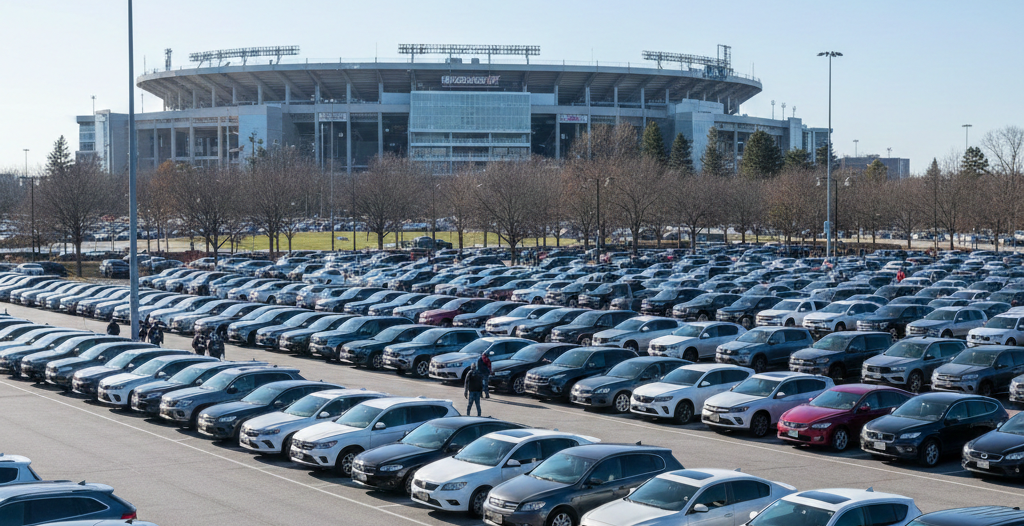
Walk into a lot of 20,000 vehicles after dark, and you’ll quickly realize every fourth car is a silver SUV identical to yours. Don’t trust your phone’s GPS to save you, as tall stadium walls cause “signal drift,” and often drop the location pin a hundred feet away from your actual bumper.
The How-To: Use a Visual Anchor. For example, tie a high-visibility ribbon or a unique, bright flag to your antenna or roof rail.
The Biological Hack: If the signal is too weak, hold your key fob against your chin and open your mouth. The fluid in your head acts as a biological antenna and boost the signal range by 20–30 feet. This hack may sound silly but it totally works!
Challenge #4: Stampedes & Crowd Crush
Crowd crush happens when people are packed so tightly (4+ people per square meter) that you lose control of your own movement. This often happens in narrow tunnels or during mass exits.
The How-To: Get into a Boxer Stance. Keep your feet staggered for balance and your arms up in front of your chest. This position creates a “breathing cage” to protect your lungs from being compressed by the pressure of the crowd.
The Exit: Don’t push against the crowd. Instead, move diagonally toward the edges of the flow where the pressure is lower. Look for “dead space” behind pillars or in side-alcoves.
Challenge #5: Medical Emergencies in Dense Crowds
Medical emergencies such as heart attacks, heatstroke, and allergic reactions do happen in crowded arenas. While professional medical teams are on-site, it’ll take them time to spot the patient in a crowd of thousands.
The How-To: Don’t call 911 on a dead signal. Find the nearest security guard or usher with a radio so they can reach the on-site medical team instantly.
The Visibility Protocol: Get out of your row. Stand in the aisle and wave your arms toward the tunnel entrance. Responders can’t search 40 rows, so they need to see exactly where you are.

- Small In Size, Big On Function: Featuring a Fan, Flashlight, and Backup Power Bank, the JISULIFE pocket bear fan is your...
- 12-19 Hours Cooling Time: With up to 19 hours of cooling time on a single charge(Charging time 2–3 hours with 5V/1A...
Last update on 2026-10-10 / Affiliate links / Images from Amazon Product Advertising API
Challenge #6: Stadium Fights & Rivalry Fever

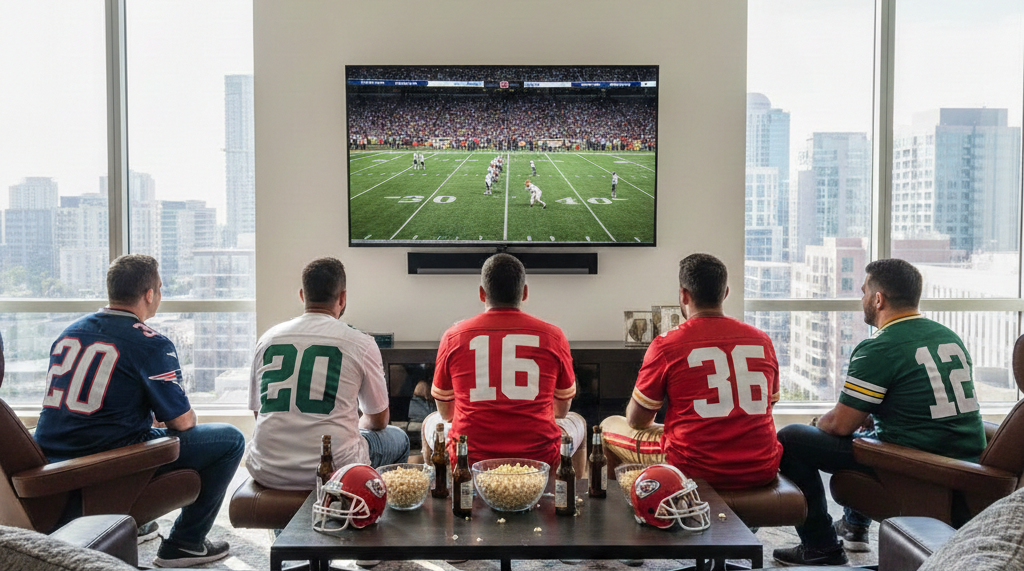
Alcohol plus playoff disappointment is a dangerous mix. Row-fights are often sparked by nothing more than a wrong look or a loud cheer.
The How-To: Never engage with a “screamer.” Use the stadium’s “Text for Security” number (usually posted on the jumbotron or seat backs) to alert professionals without drawing the aggressor’s attention to you. If you see a “scrum” or fight forming, don’t stop to film it and move the opposite way immediately.
The “Cover Your Colors” Rule: Don’t forget to bring a neutral-colored jacket in case you end up sitting in a hostile rival home crowd (e.g., wearing a Rams jersey at Soldier Field). If your environment’s getting aggressive, wear the outerwear to “cover your colors” and reduce your profile as a target.
Challenge #7: Structural Failure & Emergency Evacuations
While modern stadiums are engineering marvels, “dynamic loads” (tens of thousands of fans jumping in unison) put immense stress on concrete and steel. Railing or walkway failures are rare, but they do happen.
The How-To: If you feel an unusual vibration or hear a sharp “crack” in the concrete, move toward primary structural supports (large concrete pillars).
The 3-Exit Rule: Identify three exits near your section. Most people will jam the main gate they entered through; look for “non-obvious” service ramps or side tunnels for a faster extraction.
Challenge #8: The “Security Wall” (Commonly Prohibited Items)
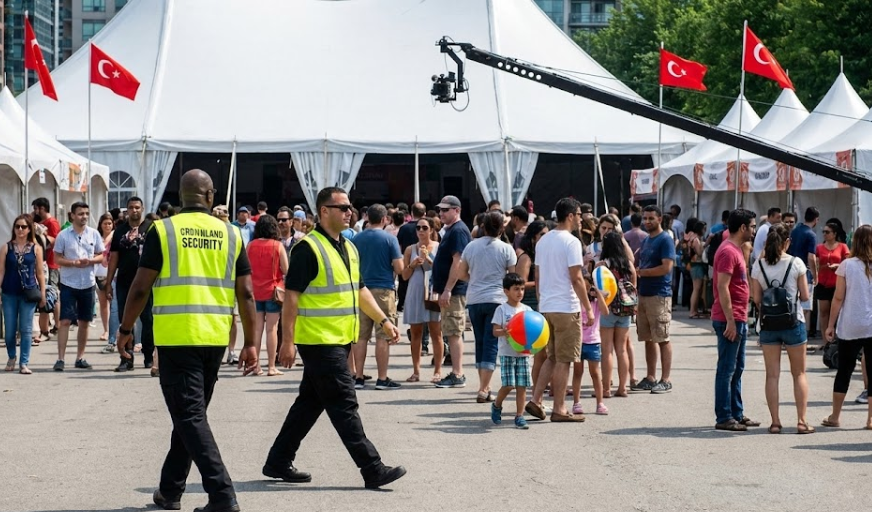
NFL security is strictly enforced. Bringing a banned item will cost you time or force you to leave your belongings at the gate.
Commonly Banned Items in Massive Stadiums 2026:
Non-Clear Bags: Any bag larger than 4.5″ x 6.5″ must be clear plastic, vinyl, or PVC (max size 12″ x 6″ x 12″).
Noisemakers: Air horns, whistles, and vuvuzelas are strictly prohibited.
Cardboard: Some stadiums (like Soldier Field) explicitly ban cardboard for sitting or standing on.
Pro Cameras: Any camera with a lens 6″ or longer is usually not permitted.
Battery Packs: While battery-operated clothing is allowed, large “power brick” batteries may be subject to additional screening or confiscation.

- 【Clear Bag For Stadium Events】Clear Bag For Stadium Events is10 inches tall and 9 inches wide Can hold phone keys wallets...
- 【Clear Bag】 Clear Bag that meet regulations are usually suitable for occasions requiring security checks such as sports...
Last update on 2026-10-09 / Affiliate links / Images from Amazon Product Advertising API
Final Thoughts on Stadium Safety Protocols
Root for your team to win, but root for safety first. At the end of the day, the best game day is one where everyone gets home in one piece! Handle these challenges right to enjoy every moment of the football season.
DOWNLOAD THE FREE NFL STADIUM SURVIVAL CHECKLIST HERE
Frequently Asked Questions
What’s the safest place to park at a large stadium event?
Park in perimeter areas away from main gates, back into your spot, and pick locations near multiple exit routes. You’ll skip the worst post-game gridlock.
How can I stay connected if cell service fails inside the stadium?
Set a specific meeting spot outside the stadium before you go in. Screenshot tickets and maps. Use pre-set check-in times instead of constant texting.
What are the early warning signs of a dangerous crowd crush?
Sudden stops in movement, people struggling to breathe or move their arms, and increasing density in tunnels or ramps. Move diagonally toward open space if you see these signs.
When should I leave a stadium during a tense post-game situation?
Either leave 5 to 10 minutes before the final whistle or wait 20 to 30 minutes after the game ends. Avoid the immediate post-game window when tensions peak.