
Want to make your own DIY antiseptic ointment? Keep reading for a quick and easy guide.
RELATED: Wilderness Emergency Medicine | In-The-Field First Aid In A Pinch
How To Make DIY Antiseptic Ointment
Save Money and Make Your Own Antiseptic Ointment
For treating minor cuts, scrapes, abrasions, and whatnot, most people will reach for the Neosporin or some other antiseptic ointments. These are great items to keep in your first aid kit, but hold on just a second before you rush out to the pharmacy to stock up on these!
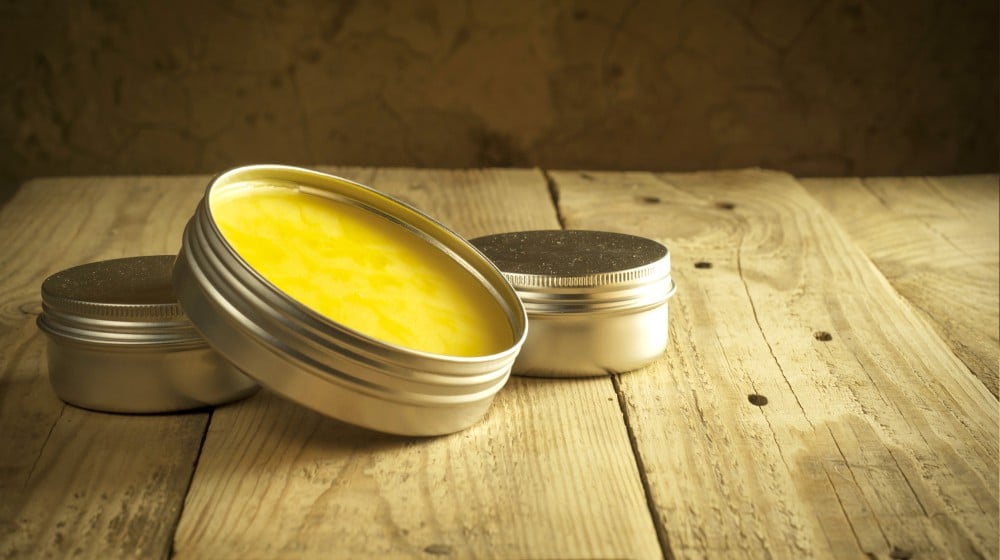
Did you know that instead of wasting $5 to $10 on ointment, you can make your own DIY antiseptic from scratch? This homemade antiseptic ointment is packed with germ-killing properties that will help treat those everyday minor cuts, scrapes, and abrasions you might have, and best of all, it’s really easy to make.
Here’s All You Need:
- 1 1/2 ounces beeswax, grated
- 1 cup olive, almond, or coconut oil
- 1/4 teaspoon vitamin E oil
- 1/2 teaspoon tea tree oil
- 20 drops lavender essential oil
- 10 drops lemon essential oil
Ointment Recipe Directions
1. In a small pot, melt the oils (except the lavender and lemon essential oils) and beeswax using low heat (very low heat).
What is beeswax? It is a natural kind of wax that bees produce. It is an essential material for making a honeycomb, but people can also use it for many jobs.
2. Remove pot from the heat and add Vitamin E oil, lemon, and lavender essential oil. Stir with a chopstick or a small wooden spoon.
3. Pour the mixture into a small sterilized jar(s) (or a mason jar). Then let stand and cool on the counter.
4. Store it in a dark cool place.
When you get a cut, scrape or abrasion, use this ointment as needed on the wound(s). It should keep for roughly 5 years.
RELATED: Medicinal Plants You Need To Make Natural Home Remedies
How Does It Work?
The antiseptic properties include:
- Tea tree oil: antibiotic, anti-fungal, antiviral, antibacterial
- Lavender: analgesic (pain relief), antibiotic, anti-fungal, antiviral, and antibacterial
- Lemon: antibiotic, antifungal, antiviral, antibacterial
*For those who don’t like the smell of lavender, you can substitute chamomile essential oils for lavender and fir essential oils for lemon.
**Note: You also can buy all of these items at your local health food store**
Click here to read the original article.
Check out this quick tutorial by Natural Remedies on how to make antiseptic ointment that treats eczema and psoriasis:
https://www.youtube.com/watch?v=9kHMPBkZQmg
An antiseptic ointment can do wonders in easing the symptoms of different ailments. With simple ingredients that we can find at our local store, we’d be proud to say that we made our own DIY antiseptic ointment!
Have you tried making DIY antiseptic ointment before? How did it go? Share your experience with us in the comments section below!
Up Next:
Editor’s Note: This post was originally published on August 16, 2013, and has updated for quality and relevancy.