
You usually don’t find out your emergency batteries have failed until you actually need them. Sometimes they’ve leaked, sometimes they’re already dead, and by then the lights are out.
The fix isn’t more batteries. It’s a small system: the right type in the right place, a date on every pack, a test twice a year, and a safe way to toss the dead ones.
At a Glance: Battery shelf life
- Shelf life: Alkaline AA and AAA last about 5 to 7 years in storage. Lithium AA and AAA last 10 to 15 years.
- Storage: Room temperature, dry, in the package or a case. Not the fridge. Not inside the flashlight.
- Testing: Use a battery tester that puts a small load on the cell. A plain voltage reading can fool you.
- Restocking: Check everything twice a year. Use the oldest pack first.
- Disposal: Most plain alkaline cells can go in household trash, depending on your state. Rechargeables and lithium never do.
Survival Life may earn a commission if you buy through the Amazon links on this page, at no extra cost to you. It doesn’t change what we recommend, and the free option gets equal space.
Battery shelf life: how long do batteries last in storage?
Battery shelf life depends on what’s inside, not the brand. Energizer rates standard alkaline AA through D cells at 5 to 7 years in storage, and cheap “heavy duty” carbon-zinc cells at 3 to 5 years.
Battery shelf life by type
| Battery type | Storage life | Best job in your kit |
|---|---|---|
| Single-use | ||
| Carbon-zinc (“heavy duty”) | 3 to 5 years | Clocks and remotes only. Skip for emergencies |
| Alkaline AA, AAA, C, D | 5 to 7 years | Everyday stock you rotate through normal use |
| Lithium AA and AAA | 10 to 15 years | Go-bags, car kits and gear that sits for years |
| Rechargeable | ||
| Low-self-discharge NiMH | Holds up to 70% charge after 10 years | Headlamps and radios you use every week |
Heat kills shelf life. Every number above assumes room temperature. A pack in a hot garage or a car trunk won’t make it that long.
Sources: Energizer, Non-Rechargeable Batteries FAQ and Panasonic, eneloop charge retention. Check the date printed on your own packs.
NiMH (nickel-metal hydride) is the common rechargeable AA and AAA. Look for “pre-charged” or “low self-discharge” on the pack.
Panasonic says its eneloop cells keep up to 70% of their charge after 10 years when stored right. Older rechargeables drain much faster just sitting there.
Most homes need two packs: a big box of AAA and a lithium AA pack for the gear you forget about.
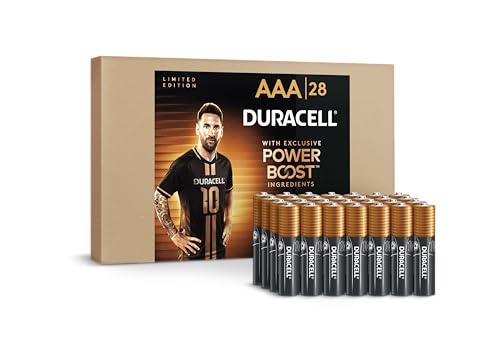
- LIMITED EDITION DURACELL × MESSI AAA BATTERIES — ICONIC INK, ICONIC POWER: These Duracell Messi AAA batteries feature a...
- FORMULATED WITH POWER BOOST INGREDIENTS: Duracell Coppertop AAA alkaline batteries contain Duracell’s exclusive POWER BOOST...

- Energizer Double A Lithium batteries are the world's longest lasting AA batteries.
- These AA Energizer batteries power your most critical devices, great for smart home devices, outdoor surveillance systems...
Last update on 2026-09-28 / Affiliate links / Images from Amazon Product Advertising API
As an Amazon Associate, Survival Life earns from qualifying purchases.
Where to store emergency batteries (not the fridge)
The power goes out at 9 p.m. You grab the flashlight from the kitchen drawer and click it. Nothing.
You unscrew the cap and find white crust. It sat loaded for three years, and the batteries leaked.
Here’s the rule that stops it. Store batteries where you’d be comfortable yourself. Energizer says 68°F to 78°F and 35% to 65% humidity, and warns that cold storage can harm batteries because damp air corrodes the contacts.
- Take them out of stored gear. A flashlight that sits for a year should sit empty. Tape its batteries to it in a small bag.
- Keep them in the package or a hard case. Loose cells roll against keys and coins in a junk drawer. A 9-volt’s two posts can short on metal and get hot.
- Never mix old and new. The strong cells drain the weak one below empty. That’s when leaks happen.
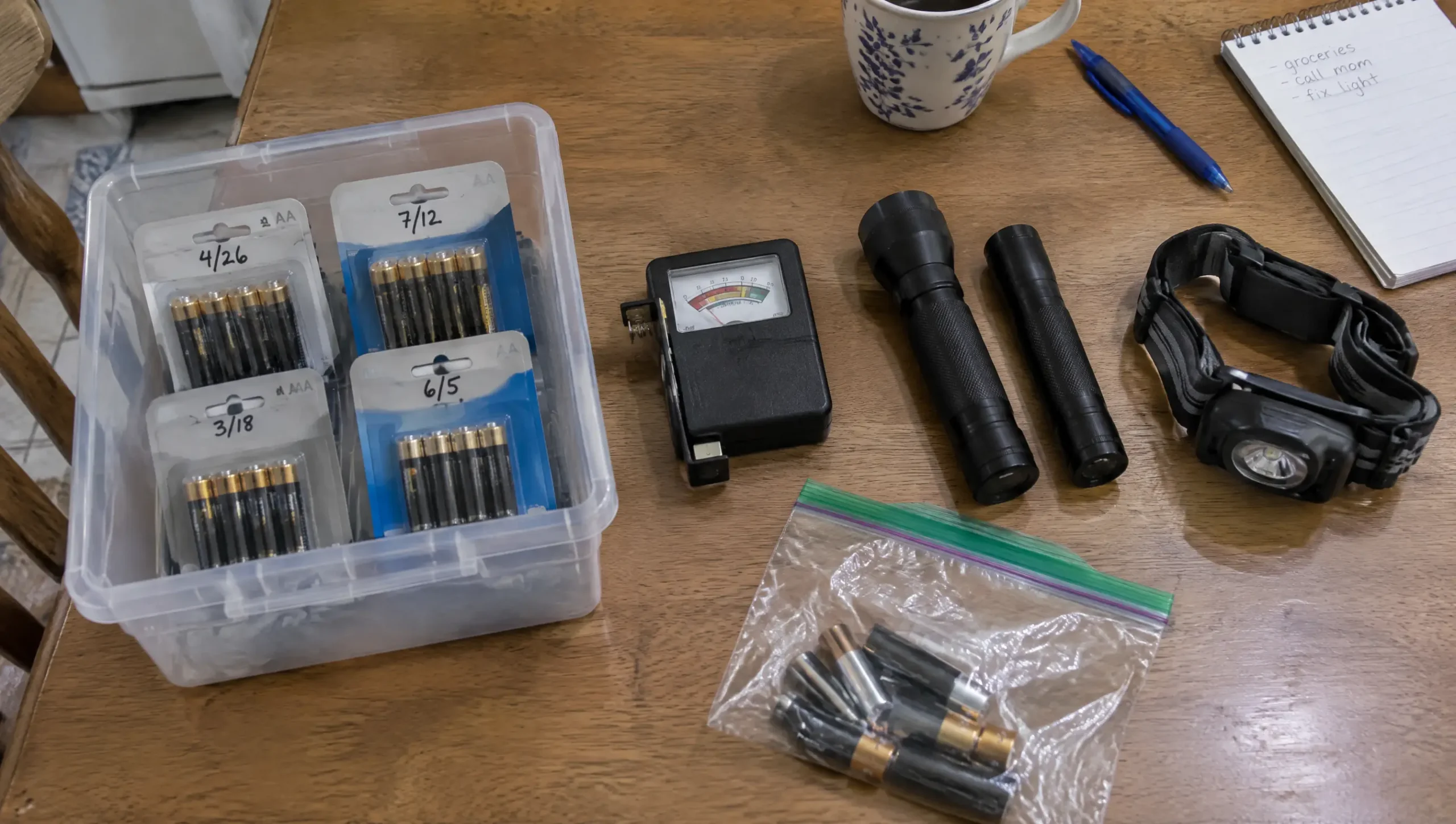
- Write the date on every pack. Month bought, plus the expiration date.
- Use FIFO. That’s “first in, first out.” New packs go to the back, and daily use comes from the front.
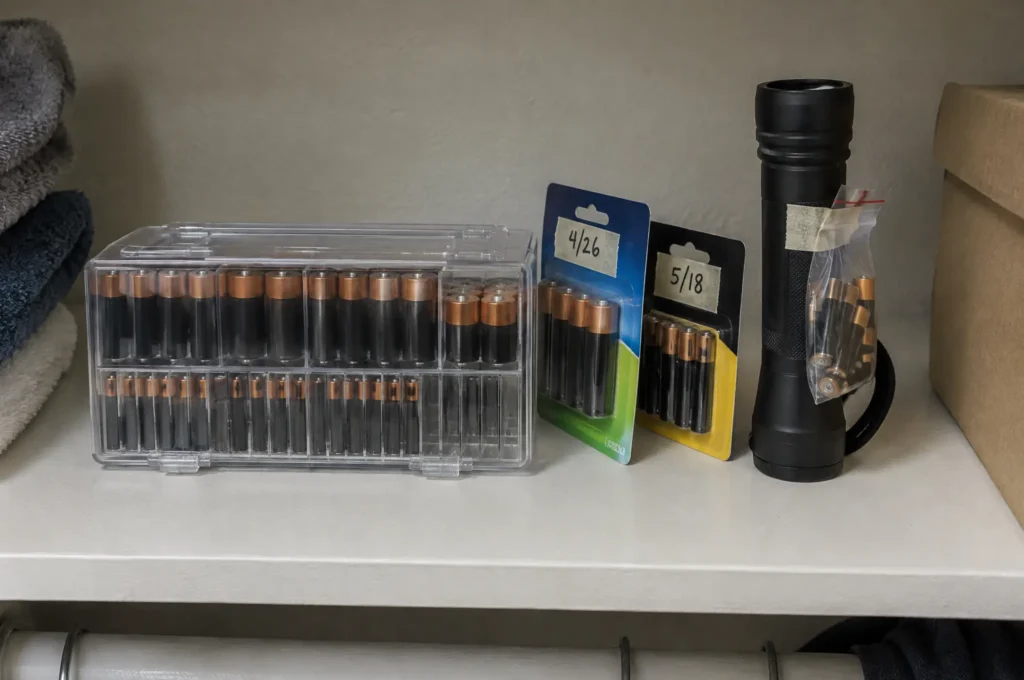
Set a battery check day twice a year. Pick two dates that already mean something, like the start of spring and fall. Give one person the job.
On that day, test the batteries in every emergency device. Move the oldest pack to daily use and add one new pack to the back.
Push the test button on every smoke and CO alarm too (plenty of them run on the same AA or 9-volt cells you’re already checking). The whole job takes about 20 minutes.
No battery-powered CO alarm yet? This one runs on 2 AA cells, so it keeps watching when the power’s out.
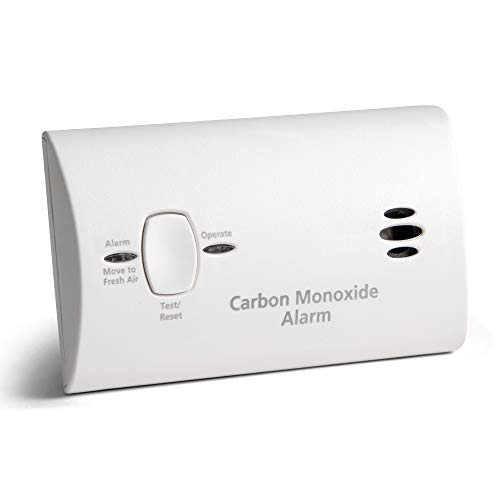
- Electrochemical sensor technology detects CO gas
- Easy installation, no wiring needed, detects during a power failure by operating on 2-AA batteries (included); Install on a...
Last update on 2026-09-28 / Affiliate links / Images from Amazon Product Advertising API
As an Amazon Associate, Survival Life earns from qualifying purchases.
How can you tell if a battery is still good?
Use a tester that puts a load on the battery. Energizer calls a battery tester (a “loaded voltmeter”) a simple way to tell good from bad, and warns that a voltmeter with no load “can give very misleading information”.
A “load” means the tester pulls a little power, like a flashlight does. A tired cell can look fine at rest and quit the second it has to work. Sneaky, right?
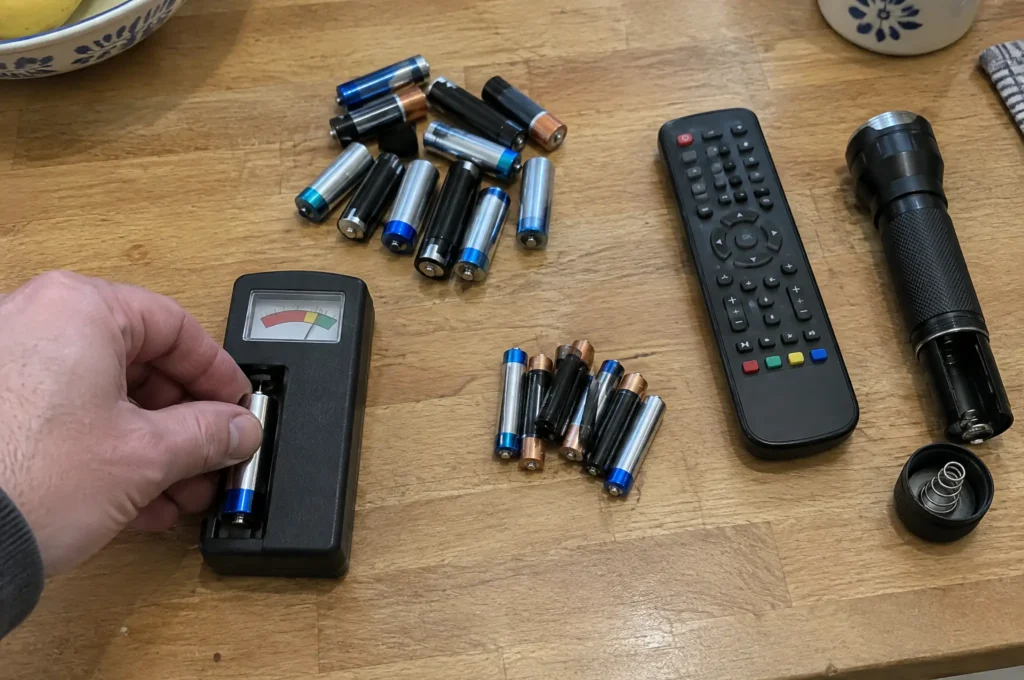
Experts split on whether you need to buy anything at all. One side says measure, don’t guess. The other says you already own the best tester: a flashlight you know works.
No good flashlight yet? Start with our ranked and tested flashlights. Then match your kit below.
- You only stock AA and AAA for flashlights and a radio: drop each cell into a known-good flashlight. Bright and steady means keep. Dim or flickering means remote or recycle. Cost: $0.
- You stock several sizes, 9-volts or button cells: a cheap tester saves time and guessing.
- You run lithium cells, rechargeables or coin cells in medical or safety gear: get a pulse-load tester. It reads more battery types, more accurately.
The buttons below are Amazon affiliate links. Survival Life may earn a commission at no extra cost to you.
Good
$0–$10
Flashlight test, or a simple analog tester
The flashlight test is free and works for everyday AA and AAA. A basic needle-style tester like the D-FantiX BT-168 adds C, D, 9-volt and button cells.
Better
About $10–$15
Digital battery tester
Same sizes, with a number on a screen instead of a needle. Easier to read, and easy to hand to a teenager on battery check day.
Best
About $100
ZTS MBT-1 pulse-load tester
Tests more than 40 types, including lithium AA, CR123 and coin cells, and NiMH rechargeables. Worth it only if your kit runs on those.
What none of these do. A tester reads the cell in your hand today, not how long a half-used one will run tonight. We haven’t bench-tested these models against each other.
Alkaline, lithium or rechargeable: which should you stock?
Experts split here too. One camp says buy deep and forget it. The other says store only what you use, and keep it moving.
Both are right. For different gear.
- Batteries you’ll burn through in daily life within a couple of years: alkaline, rotated with FIFO. Cheapest per cell.
- Gear that sits untouched for years (go-bag, car kit, the lantern on the top shelf): lithium. Energizer rates its lithium AA for 10 to 15 years in storage, and it handles cold far better than alkaline.
- Lights and radios you use every week: low-self-discharge rechargeables, plus a way to charge them when the grid is down.
The math: batteries for a two-week outage
- Assumptions: two flashlights (2 AA each), one radio (4 AA) and two headlamps (3 AAA each). One full set is 8 AA and 6 AAA. One set lasts about three to four nights of evening use. Check your own devices’ run times.
- The math: one set in use plus three spare sets covers about two weeks. That’s 24 spare AA and 18 spare AAA. If your house uses about 2 AA a month in remotes and toys, the AA stock turns over in about a year. That’s well inside a 5-to-7-year shelf life, so alkaline works.
- What breaks it: stocking far more than you use. A 100-pack of AA at 2 a month takes over four years to rotate. That’s when lithium, or a smaller pack, makes more sense.
Short on the gear that burns those batteries? The headlamp takes 3 AAA and the radio takes 2 AA, and both run about $10. The solar hand-crank radio charges itself, with AAA cells as backup.

- SUPER BRIGHT LED TECHNOLOGY (165 ft beam) – wide variety of white & red modes, all controlled by one glove-friendly button...
- WATERPROOF AND DURABLE – why equip yourself with anything but the best and most reliable headlamp? MX20 is built to last...

- 【Portable Design】You can hold mini radio by one hand. it's small enough to put it in emergency kit. This FM AM radio...
- 【Easy to Use】 After busy work, sometimes it’s nice to take a nap with a simple battery radio. Designed with three...
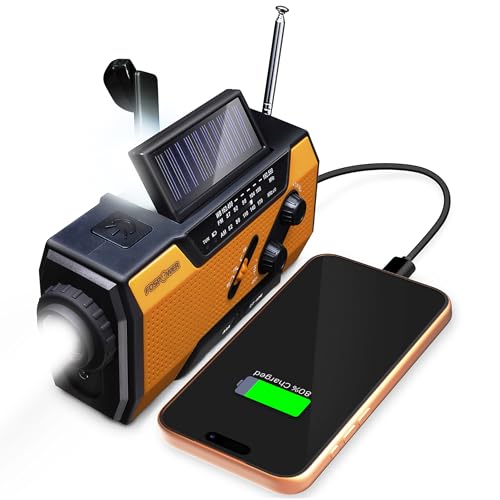
- [7400mWh (2000mAh) POWER BANK WILL KEEP DEVICES POWERED] The FosPower FOSPWB-2376 emergency radio incorporates a 7400mWh...
- [3 POWER SOURCES POWER WHEN YOU NEED IT] Use the emergency weather radio's 3 power sources when you need a boost of power or...
Last update on 2026-09-28 / Affiliate links / Images from Amazon Product Advertising API
As an Amazon Associate, Survival Life earns from qualifying purchases.
Already keep rechargeables? Then the weak link is charging when the power’s out. Our guide to portable power stations for home backup compares them by size and price.
What lithium doesn’t do: save you money. It costs several times more per cell, so keep it out of the TV remote.
Getting rid of old or leaking batteries safely
Sort them by type first. The rules differ.
- Plain alkaline (AA, AAA, C, D): Energizer notes that alkaline cells are classed as household waste in most of the U.S., but rules change by state and town. Some states, including California, ban all batteries from the trash. Check your local rules first.
- 9-volt: put tape over the two posts before it goes anywhere.
- Rechargeables (NiMH, lithium-ion): never in the trash. Drop-off programs like Call2Recycle take them and ask that you bag each battery or cover the terminals with electrical, duct or masking tape.
- Single-use lithium (AA lithium, CR123, coin cells): keep them out of the trash too. Tape them and drop them at a household hazardous waste site.
- Swollen or damaged lithium-ion: don’t charge it or crush it. Set it on a surface that can’t burn, and ask your drop-off site how to bring it in.
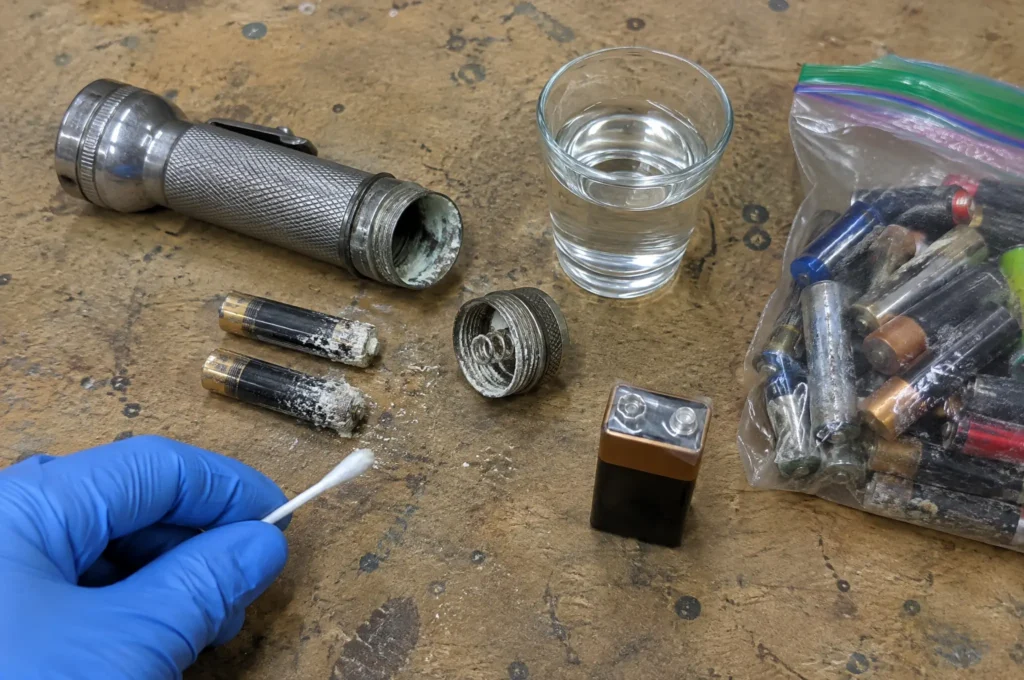
Cleaning a leak. Put on gloves and eye protection. The white crust from an alkaline leak burns skin.
Pull the cells out and bag them. Clean the contacts with a cotton swab dipped in white vinegar or lemon juice, and let it dry fully before new cells go in.
Button and coin cells are a child-safety issue. If you think a child swallowed one, go to the emergency room now. Don’t wait for symptoms.
Poison Control says a battery stuck in the throat can cause severe damage in just 2 hours. Call the National Battery Ingestion Hotline at 1-800-498-8666 on the way. Keep spares locked up, and tape used ones before they go out.
Common Mistakes
- Storing batteries inside the gear. Any brand can leak when it sits in a device for months. Store gear empty.
- Keeping batteries in the fridge or freezer. Damp air corrodes the contacts. Room temperature is better.
- Mixing old and new cells in one device. The strong cells drain the weak one below empty. That’s how leaks start.
- Buying a case you’ll never rotate. A giant alkaline pack that takes five years to use up expires in the drawer. Buy what you’ll use, or buy lithium.
- Tossing rechargeables and 9-volts in the trash. Lithium-ion can start fires in garbage trucks. Tape and drop off.
Frequently asked questions
Alkaline AA and AAA last about 5 to 7 years. Lithium AA and AAA last 10 to 15 years. Heat shortens both, so check the date on the pack.
No. Damp air can corrode the contacts and damage the seals. Store them at room temperature in a dry place.
Use a battery tester that puts a load on the cell, or drop it into a flashlight you know works. A plain voltage reading with no load can make a weak battery look full.
Plain alkaline AA batteries can go in household trash in most of the U.S., but not everywhere. Some states, including California, ban it. Rechargeable and lithium batteries should never go in the trash.
Yes, for gear that sits for years, like a go-bag or car kit. They last 10 to 15 years in storage and handle cold well. For everyday devices, rotated alkaline is cheaper.
Yes, but the date isn’t the day they die. It marks the end of the maker’s storage guarantee. Test anything past its date, and if it passes, use it in low-stakes devices.
Do one thing today
Go find every flashlight, lantern and radio in the house. Take the batteries out of anything you haven’t used this month, drop them in a zip bag, and tape the bag to the device.
Then write today’s date on every battery pack you own. Your first battery check day is done.
Related: Refresh your 72-hour emergency kit · Build a power outage kit · Portable power stations for home backup
For the emergency drawer, which do you trust more?
Why’d you vote that way? Tell us in the comments below.