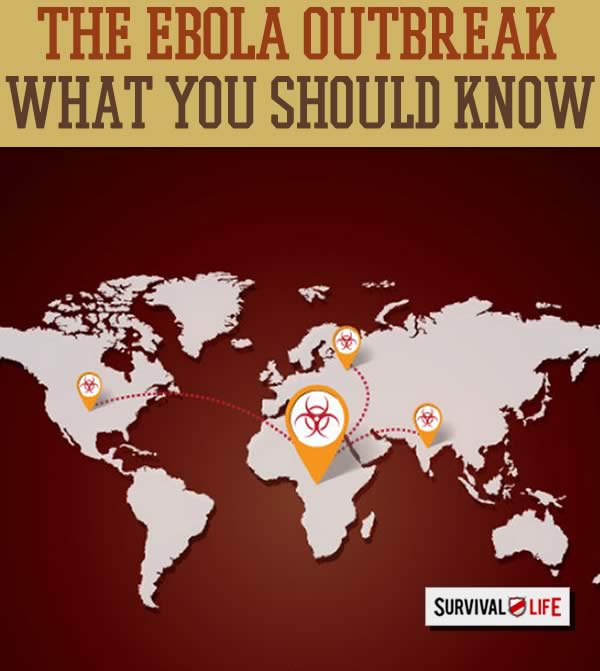

With the ebola virus hitting American soil and the recent diagnosis of a doctor in New York, there has been a lot of information (and misinformation) flying around about the virus.
In this article, I’m going to clear up some of the misconceptions and give you some useful information that can help you avoid contracting the ebola virus.
The Ebola Virus: Be Careful and You Will Survive!
The Ebola virus is not airborne. It is strictly a bodily fluid based transmittable disease such as AIDS and Hepatitis; Ebola is a blood borne pathogen.
Below are ways to prevent the Ebola virus from spreading:
There is currently no licensed vaccine or treatment for EVD.
If you are in a region where an Ebola outbreak has occurred, take these precautions:
- Avoid direct contact with blood, saliva, vomit, urine and other bodily fluids of people with EVD or unknown illnesses.
- Avoid close contact with wild animals and avoid handling wild meat.
- Avoid direct contact with bodies of people who died of EVD or unknown illnesses.
- Avoid contact with any medical equipment, such as needles, contaminated with blood or bodily fluids.
- If you are a health care worker, practice strict infection control measures. This includes isolating infected individuals and properly using personal protective equipment (gowns, masks, goggles and gloves).
- If you are a health care worker, properly use and disinfect instruments and equipment used to treat or care for patients with Ebola – like needles and thermometers – before throwing them out.
Avoid potential carriers, both live and dead, since both can spread the Ebola virus. Potential carriers of the Ebola virus include:
- chimpanzees
- gorillas
- monkeys
- forest antelope
- pigs
- porcupines, and
- fruit bats
-
Ebola facts (click to enlarge)

Know the symptoms of EVD and see a health care provider if they develop.
- Closely monitor your health during and after travel. Seek medical attention immediately if a fever and any other symptoms arise during or after travel.
- If you develop symptoms, be sure to tell your health care provider that you have travelled to a region where EVD was present.
Risk Factors
For most people, the risk of getting Ebola or Marburg viruses (hemorrhagic fevers) is low. The risk increases if you:
- Travel to Africa.You’re at increased risk if you visit or work in areas where Ebola virus or Marburg virus outbreaks have occurred.
- Conduct animal research.People are more likely to contract the Ebola or Marburg virus if they conduct animal research with monkeys imported from Africa or the Philippines.
- Provide medical or personal care.Family members are often infected as they care for sick relatives. Medical personnel also can be infected if they don’t use protective gear, such as surgical masks and gloves.
- Prepare people for burial.The bodies of people who have died of Ebola or Marburg hemorrhagic fever are still contagious. Helping prepare these bodies for burial can increase your risk of developing the disease.
Symptoms
Signs and symptoms typically begin abruptly within five to 10 days of infection with Ebola or Marburg virus. Early signs and symptoms include:
- Fever
- Severe headache
- Joint and muscle aches
- Chills
- Weakness
Over time, symptoms become increasingly severe and may include:
- Nausea and vomiting
- Diarrhea (may be bloody)
- Red eyes
- Raised rash
- Chest pain and cough
- Stomach pain
- Severe weight loss
- Bleeding, usually from the eyes, and bruising (people near death may bleed from other orifices, such as ears, nose and rectum)
- Internal bleeding
Below are a couple of informative videos on the Ebola virus:
Know about Ebola:
The Truth about Ebola – Airborne Transmission is not Possible unless it has been Weaponized
So Preppers, as long as you do not travel to the high risk areas in the world, and you do not touch the bodily fluids of an infected person, you will survive and will not run any risk of contracting the Ebola virus.
Be careful out there, and always remember, “If Not Me, Then Who?”