
Last Updated: April 2026
Most drivers have something in the trunk. A compact car emergency kit containing a set of jumper cables or maybe a road flare from a gas station. If that sounds familiar, let me ask you: do you know if any of it still works?
AAA responds to approximately 69 million roadside breakdowns per year. Most happen at the worst possible time, such as during rush-hour traffic or the middle of a winter storm. A kit that hasn’t been audited in two or more years is likely to fail when you need it most. Batteries might corrode, medications might expire, and jumper cables won’t work without a second car. This guide is for the driver who already has something in the trunk and needs to know what items to remove, replace, or update in case of car troubles.
Why Your Existing Car Emergency Kit Might Not Be Road-Ready
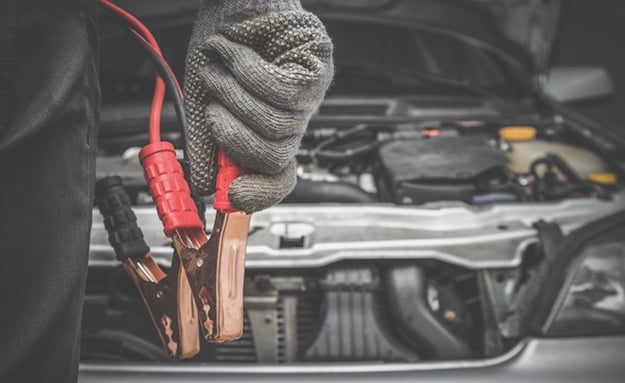
The average commercial road/car emergency kit typically includes jumper cables, a reflective vest, a few bandages, and a tire gauge. They’re also optimized for packaging cost and shelf presence. However, most pre-packaged kits still miss the following:
- Standalone jump starters. A lithium jump starter works alone, fits in a bag smaller than a shoebox, and doubles as a USB power bank.
- Trauma components. Car accidents are the leading cause of traumatic injury in the U.S. A tourniquet and hemostatic gauze might be the difference between stopping severe bleeding and waiting 20 minutes for EMS.
- Climate-appropriate supplies. A summer road trip kit and a winter commuter kit cater to different needs. Using the wrong one can leave you underprepared for the actual risk.
- Audited consumables. Remember that medications, antiseptic wipes, and emergency food bars also expire. A three-year-old kit sitting in storage is likely carrying dead weight by now, so you’ll need to replace them.
The goal here is not to build a bug-out vehicle (BOV) but a practical, auditable system that handles the 95% of scenarios every driver faces: dead battery, flat tire, minor to moderate medical, and short-duration weather exposure. For a deeper look at vehicle-level prep systems, see our guide to bug-out vehicle setup and gear.
I always thought jumper cables were enough. Then I got a flat at night in the rain with no light and gloves, clueless about what I was doing on the side of the highway. Never again. This is what I keep in my truck now.
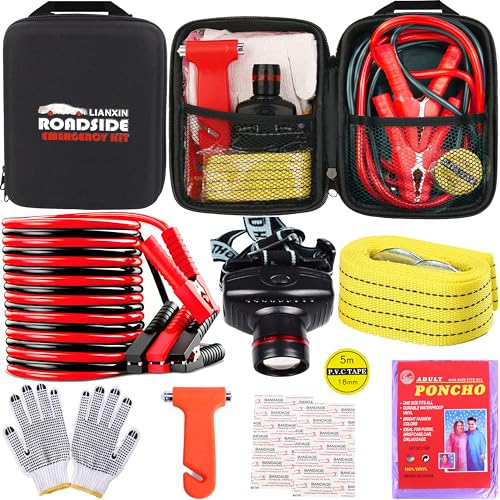
- ESSENTIAL RESOURCES: From car jumper cables kit, rainwear, headlamps, and safety hammers to tow ropes, non-slip gloves, first...
- RELIABLE JUMPER CABLES: Our cables are ul listed and are safer and more reliable than other non-ul listed patch cables. Our...
Last update on 2026-10-10 / Affiliate links / Images from Amazon Product Advertising API
The Four Layers of a Car Emergency Kit Checklist
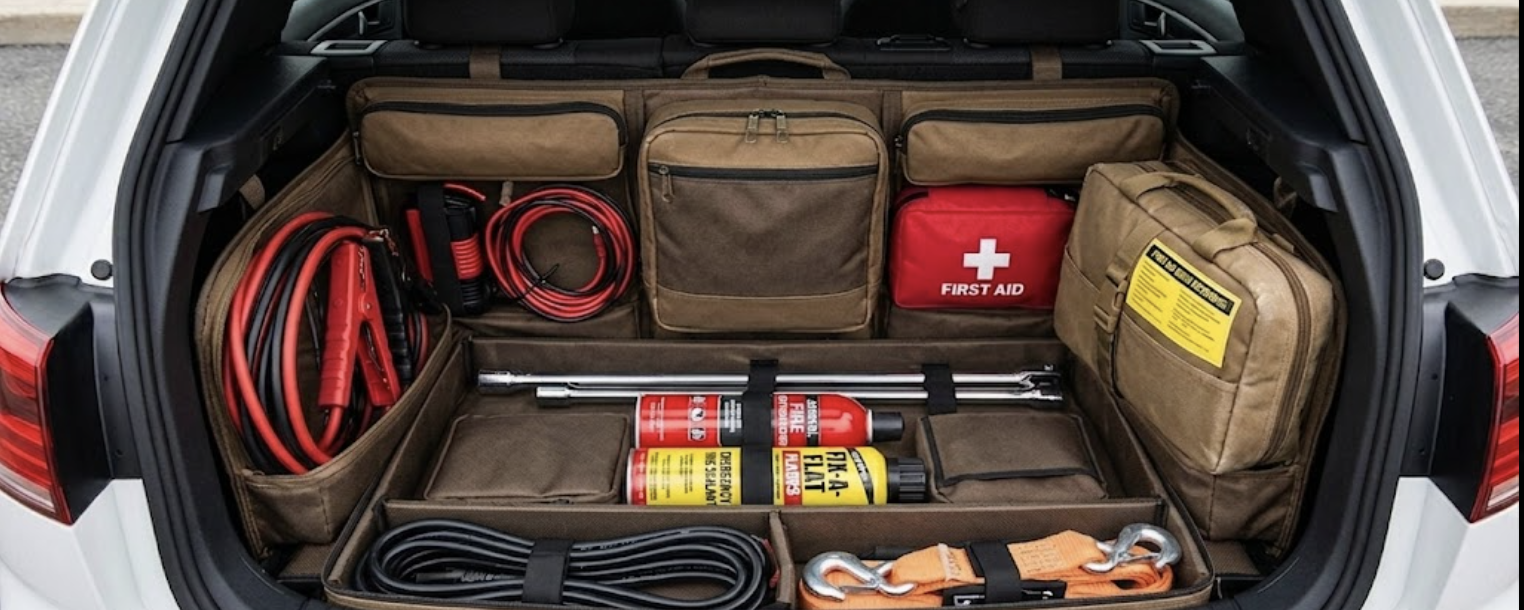
When you audit your car emergency kit, think of doing so by layer instead of by item. The PACE planning framework (Primary, Alternate, Contingency, Emergency) applies here: your kit is the Contingency and Emergency tiers of your roadside plan. The goal is to cover each layer before spending on upgrades within any single layer.
#1: Power and Mobility Layer
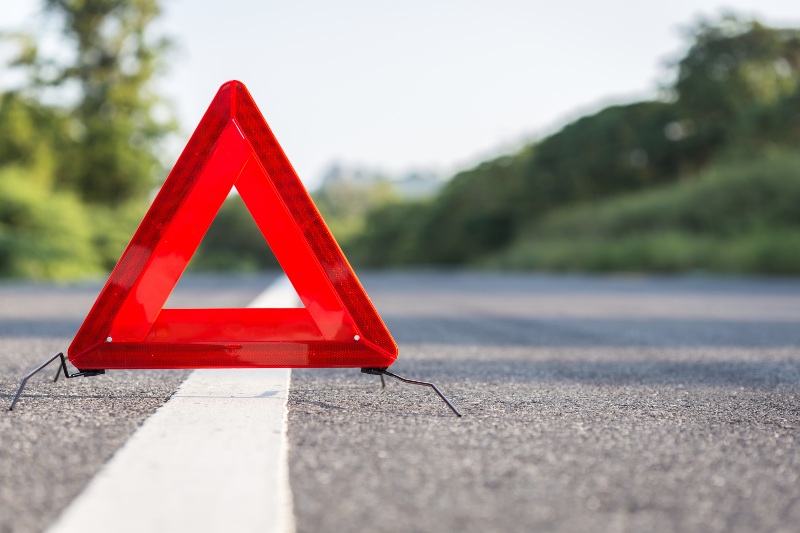
This layer handles the two most common breakdowns: dead battery and flat tire. Add these items to your checklist:
- Lithium jump starter (12V, 1,000A minimum): Works without needing a second vehicle. The NOCO Boost Plus GB40 ($99–130) can handle most cars and light trucks and double as a USB power bank. Recharge it twice a year as it loses charge from sitting in a hot trunk.
- Portable tire inflator: A compact 12V inflator plugs into your power port and handles slow leaks or underinflated tires. Pair it with a tire plug kit for puncture repairs.
- Reflective triangles or LED road flares (3 minimum): Position at 10, 50, and 150 feet behind the vehicle on a highway breakdown. LED flares last longer, won’t roll, and don’t require an open flame.
- Jumper cables (16-gauge, 20-foot minimum): Even with a jump starter, cables are worth carrying. There might be another driver who’ll stop to help you.
#2: Medical Layer

Most commercial first-aid kits only contain items that treat blisters and paper cuts. Since vehicle accidents can result in different injuries, your medical layer needs two tiers: basic items and trauma add-ons.
Basic first aid checklist:
- Adhesive bandages in multiple sizes, gauze pads, medical tape
- Antiseptic wipes and antibiotic ointment
- Nitrile gloves (2 pairs minimum)
- Pain reliever and antihistamine (check expiration annually)
- CPR mask
RELATED: Medical Supplies: Complete List Every Household Should Have
Trauma items checklist (strongly recommended for all drivers):
- CAT tourniquet — The standard in both military and civilian EMS. It costs around $30–35 and requires 60 seconds to learn to deploy correctly. Watch one training video. That’s the commitment.
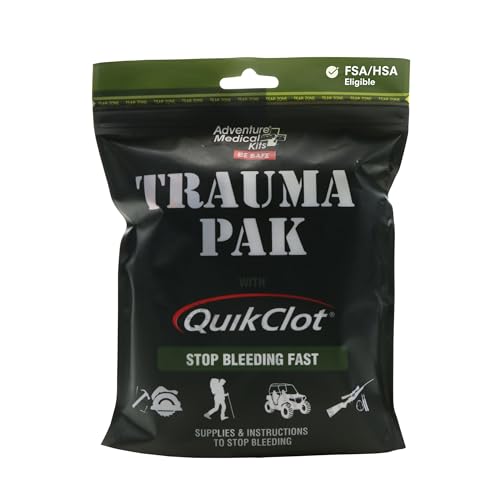
- Hemostatic gauze (QuikClot or similar) — Helps control severe bleeding in wounds or areas where a tourniquet can’t be applied such as the torso or neck.
- Israeli compression bandage — Applies sustained pressure to large wounds. Lightweight and compact.
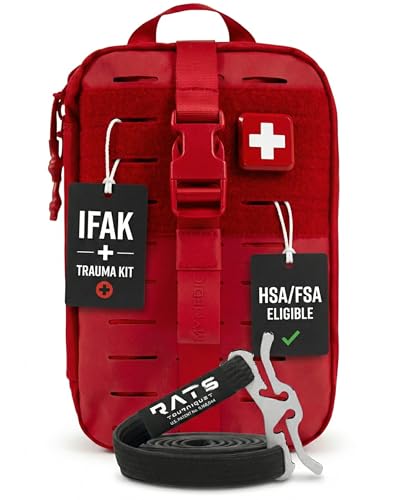
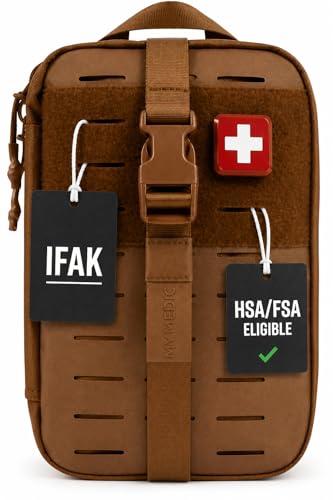
I don’t gamble with “safety blankets,”so I personally carry the MyMedic MyFAK Standard. I picked it because it’s already packed with the CAT tourniquet and hemostatic gauze I’d need to stop a major bleed. I’ve also researched two other solid setups; one if you want the full works and one if you’re trying to stay safe on a budget.
Last update on 2026-10-10 / Affiliate links / Images from Amazon Product Advertising API
Communication and Navigation Layer
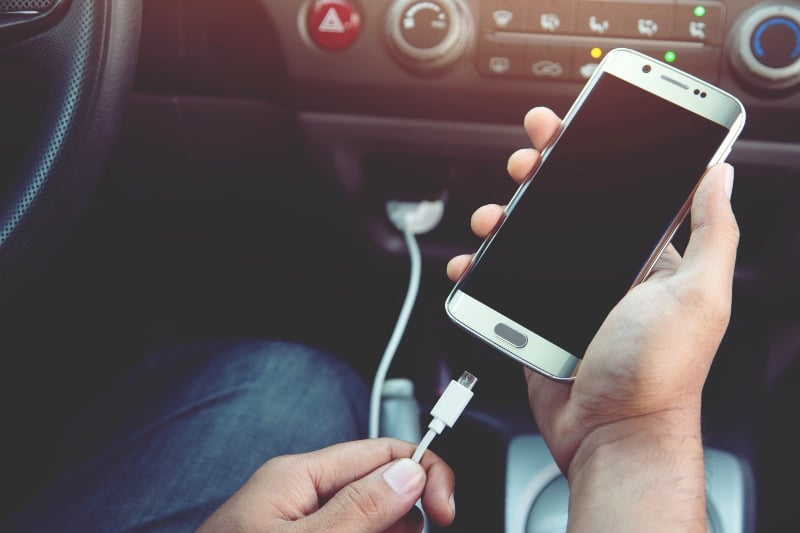
The communication and navigation layer is the most often overlooked in car emergency preparedness. Secure these items:
- Phone car charger — Both 12V port and USB-C. Store a cable in the kit itself and not just in your everyday bag.
- Printed emergency contact card — Fill out your name, blood type, emergency contacts, insurance info, and roadside assistance number. Laminate it and store it with the kit. Your phone may be inaccessible or locked after an accident.
- Paper road map for your region — GPS and cell service may fail. A state road atlas costs $10 and weighs like nothing.
- Loud whistle — For signaling in low-visibility or high-noise environments when shouting isn’t enough.
Climate Survival Layer
The climate survival layer is where summer and winter car emergency kits differ. The foundational essentials are the same, but you must add items specific to the season and area you’re driving in.
Year-round base:
- Emergency mylar blankets (2 minimum; one for heat retention, one for signaling)
- 3-day water ration (sealed pouches, 4.227 oz each) — Replace annually
- 3,600-calorie emergency food bar — Replace every 3 years
Add for winter conditions:
- Extra wool or fleece blanket
- Chemical hand warmers (10–12 pairs)
- Ice scraper with extended handle
- Traction mats or a small bag of kitty litter for stuck-in-snow situations
- Small candle in a metal container + lighter (produces usable heat inside a stalled vehicle)
Add for summer and desert conditions:
- Cooling towel
- Extra water (increase to 2 liters minimum for summer road trips)
- Sunscreen (SPF 30 minimum)
- Electrolyte packets
Good / Better / Best: Car Emergency Kit Tiers
There is no universal “right” kit so you need to find the suitable pack for your driving profile. Here’s how to tier your build by budget and risk exposure.
| Tier | Budget | What You Get | Best For |
| Good | $75–100 | Lithium jump starter, basic first aid kit, 3 reflective triangles, mylar blanket, tire gauge, phone charger cable | Daily commuters, mild climate zones, urban/suburban driving within 20 min of services |
| Better | $150–200 | Everything above + CAT tourniquet, hemostatic gauze, portable tire inflator + plug kit, 72-hour water and food ration, climate layer for your season | Family road-trippers, mixed-climate regions, anyone regularly driving 30+ min from services |
| Best | $300+ | Everything above + full trauma kit (MyMedic MyFAK), traction mats, printed emergency card, paper map, complete dual-season climate layer | Remote travel, winter mountain driving, parents with young children, rural route commuters |
Summer vs. Winter Car Emergency Kit: What’s the Differene?
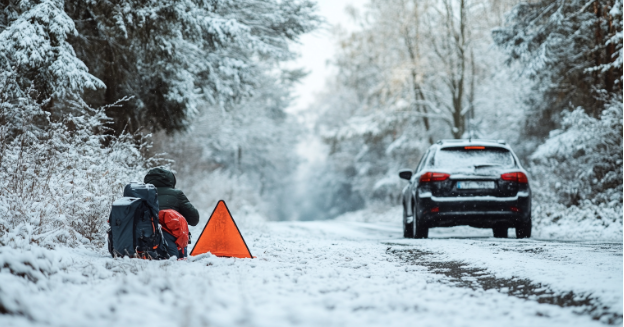
You don’t need an entirely separate kit for each season. You need a stable base system with a swappable climate layer. Here’s where the fork happens.
What stays the same year-round: Jump starter, trauma kit, communication layer, tire repair tools, emergency food and water base.
What changes by season:
- Winter extras: Wool blanket, hand warmers, traction mats, ice scraper, candle and lighter for in-vehicle heat. Cold-weather vehicle stranding even for a few hours in sub-freezing temperatures, is a survivable scenario with the right supplies. Without them, you risk hypothermia.
- Summer extras: Cooling towel, extra water, sunscreen, electrolyte packets. Heat exhaustion from a summer breakdown with no shade or hydration can incapacitate a healthy adult within 90 minutes in triple-digit heat.
If you live in a region with both harsh winters and hot summers such as most of the Midwest, Mountain West, Northeast, and Upper South, do a seasonal kit swap twice a year. Set a calendar reminder for October (winter prep) and April (summer prep). It takes 15 minutes.
Common Mistakes Drivers Make With Emergency Kits
- Buying once and never auditing. A car emergency kit purchased three years ago has expired medications, corroded clamp contacts on jumper cables, and depleted emergency food bars. An annual audit takes 15 minutes and catches every one of these failures before they happen in the field.
- Relying on jumper cables when you drive alone. Jumper cables require a second working vehicle and a good Samaritan, whereas a lithium jump starter requires neither. For solo commuters and road-trippers, the standalone jump starter is the more functional tool in every scenario.
- Skipping trauma components. Traffic accidents produce traumatic injuries, and a box of bandages won’t be sufficient for trauma care. Learn how to use a tourniquet and hemostatic gauze instead. They cost less than $50 and weigh under 4 oz.
- No plan to go with the kit. Gear without a plan is a drawer full of stuff. Every adult in the vehicle should know where the kit sits, what’s in it, and the basic steps for dead battery and severe bleeding.
- Wrong climate configuration for your region. A kit built for Phoenix will leave you dangerously underprepared stranded in a blizzard outside Minneapolis. Match your kit to your geography and your primary driving season before road trips into unfamiliar climate zones.
- Storing the kit where you can’t reach it. A kit buried under luggage or locked in an external cargo box will be harder to access under pressure. Keep it in the passenger compartment or in an “open” spot in the trunk with no other gear stacked on top.
Your First Step to Car Emergency Prep: The 15-Minute Kit Audit

Don’t buy anything yet. Audit your current vehicle emergency kit first. Open the box, pull everything out, and run this five-point check:
- Check expiration dates on all medications, antiseptic wipes, food bars, and water pouches. Pull and replace anything expired.
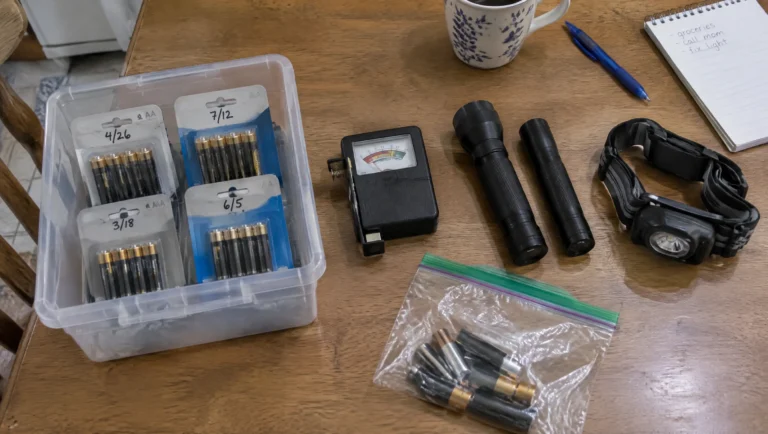
- Inspect battery-dependent items. Charge your jump starter if you have one. Check jumper cable clamp contacts for white corrosion as corroded clamps won’t make a reliable connection.
- Look for trauma components. If there is no tourniquet in the kit, it goes on the immediate replacement list.
- Check your climate layer. If it’s October and there are no hand warmers or blankets in the kit, they go on the list. If it’s April and you’re planning a summer trip, confirm your water and cooling supplies are current.
- Map what’s missing across all four layers. Power/Mobility, Medical, Communication, Climate. Address the highest-risk gaps first: trauma and power. The rest can follow.
You now have a priority list. A complete audit and first-round upgrade to the Good tier can be done for under $100 and finished in a single afternoon.
FAQs
Why are pre-packaged car emergency kits often insufficient?
Pre-packaged kits are typically optimized for low packaging costs and often lack essential high-stakes items like standalone lithium jump starters and trauma-grade medical supplies.
How often should I check the items in my car kit?
You should perform a 15-minute audit annually to replace expired medications, food bars, and water pouches while checking for battery corrosion or depletion.
What is the best way to handle a dead battery if I am driving alone?
A standalone lithium jump starter is recommended for solo drivers because it works without needing a second vehicle or assistance from a good Samaritan.
What medical supplies are essential for a vehicle accident?
In addition to basic first aid, every kit should include a CAT tourniquet and hemostatic gauze to control severe bleeding in the event of a traumatic injury.
Should I change my car emergency kit based on the season?
You should maintain a year-round base system and perform a seasonal swap in April and October to add climate-specific items like ice scrapers for winter or extra water and electrolyte packets for summer.
QUICK POLL
Speaking of car emergencies, let’s talk about AAA. What’s the most acceptable waiting time?
Is a 30-minute wait even realistic these days? Tell me more about your recent experiences and if the service actually lived up to the fee.