
A Guide to Using Your Hammock:
Step 1: Look for trees spaced approx. 12 – 15 ft. apart. Step 2: Attach 1 in. webbing straps around the trees 6 ft. high. Step 3: Connect suspension rope to the straps at a 30° angle to reduce strain.Step 4: Make sure it’s as level as possible.Step 5: Add a tarp or bug net for added protection.
Hammock camping is growing in popularity due to it’s convenience.
With less gear than traditional tent camping, many people are choosing hammock camping as a way to lighten up their backpacks.
Another asset of hammock camping is the variety of camp site options.
No need to find a flat, open, dry spot for your site. You just need a couple of trees and some light rigging and you’re set. For more about hammock camping, check out The Ultimate Hang.
Steps 1- 3: Hanging Your Hammock

One to 1.5 in (2.5 to 3.8 cm) polyester or polypropylene webbing straps help disperse the weight and reduce damage to trees or other objects. Polyester and polypropylene are also low-stretch, so you won’t sag during the night (avoid nylon straps, which stretch).
Tip: Keep your hammock even
Pitching a hammock too tight between anchor points puts an enormous amount of force on the suspension lines and hammock, leading to potential failure (and discomfort). A tight pitch also raises the center of gravity, making the hammock unsteady. Pitching the hammock at 30° ensures you get a deep sag.
Step 4: Add Tarp For Protection
A basic 8×10 tarp is more than adequate to protect you from rain and wind. You can also find models with extra tie-outs for more pitching options. You can pitch tarps in a variety of styles, including a basic diamond configuration, an “A”-frame, or a fully-enclosed shelter with doors on the ends.
Tip: How to make the toggle
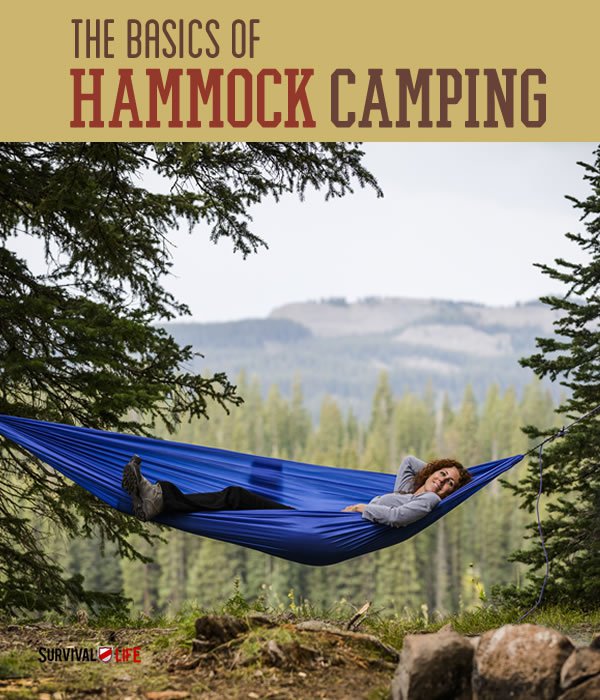
A lot of beginners try to sleep in line with the hammock, curving their bodies into a banana shape. I find that this takes a lot of effort, because with a good sag, your feet naturally slide to one side or the other, finding a “pocket” of fabric. By angling your body askew of center, you fall into a ergonomically flat position (it looks a bit like a recumbent bicyclist), where the hammock takes away all the pressure points naturally. The diagonal lay is the key to comfort in a gathered-end hammock.