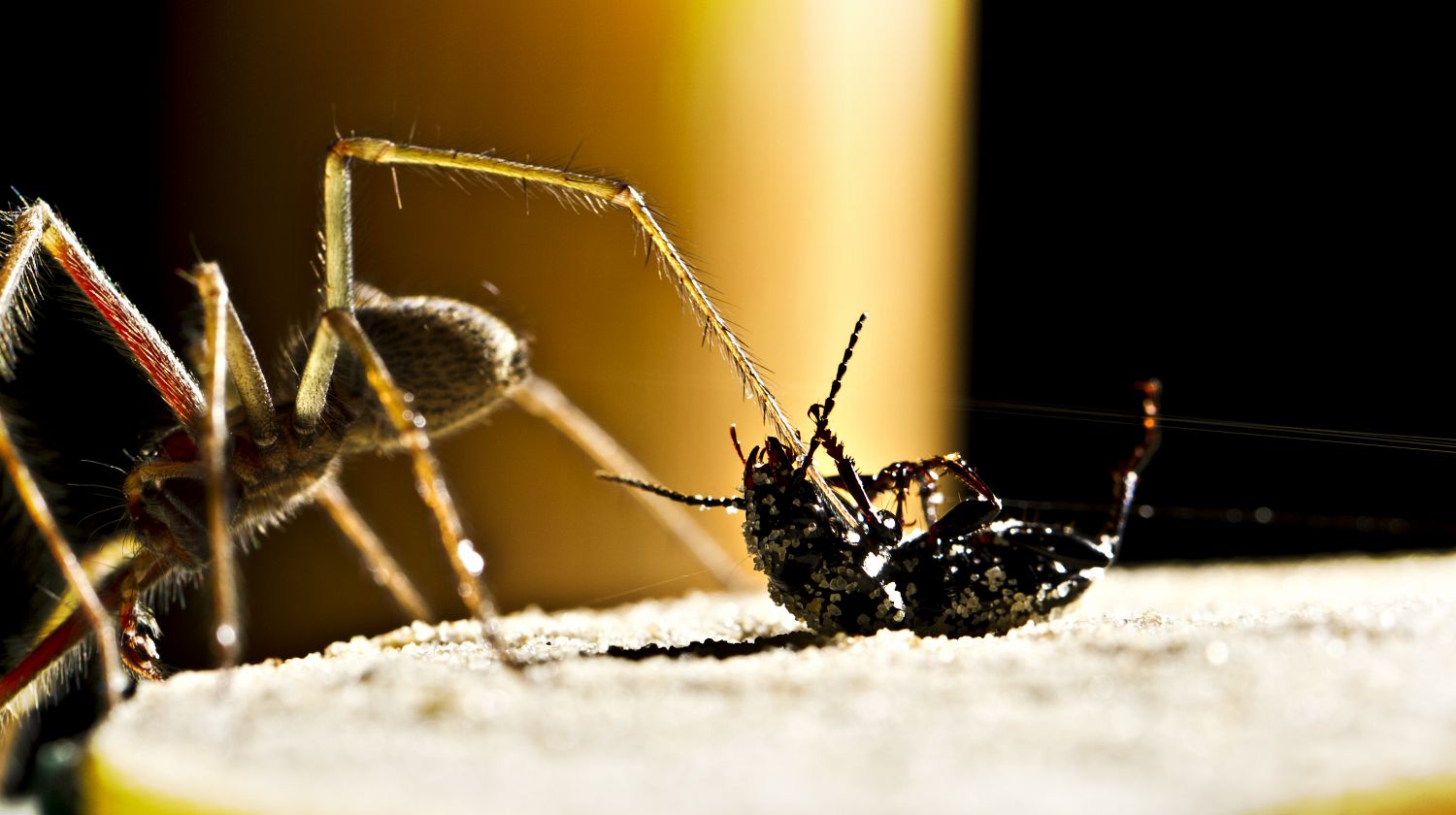

Knowledge about deadly spiders helps you identify the poisonous from the nontoxic ones.
RELATED: Survival Skills | Guide to Venomous Spiders
Knowing Common Crawlers from the Deadly Spiders
Different Spider Species
The sight of spiders sometimes causes panic, especially to those who are arachnophobic.
Truth is, most types of spiders aren’t harmful at all—their prey is not you but insects. But there are a few species you’d want to avoid.
If you see scary spiders that are not the usual house spiders, then you must be cautious. You wouldn’t want to get bitten by poisonous or might-be deadly spiders while doing your daily routine.
Boost your survival skills by knowing a few of these crawling creatures.
1. The Brown Recluse Spider
Adult brown recluse spiders, usually common in the south, reach about an inch in body length, but some grow larger.
A shape of a dark violin can be spotted on the topmost leg area, with the tip pointing towards the abdomen. This gave rise to the brown recluse spiders’ nickname, Fiddle Back.
What makes brown recluse spiders unique is that they have a pair of six eyes instead of the usual eight. Spider bites from a recluse may cause significant cutaneous injury with tissue loss and necrosis.
2. The Black Widow Spider
Fully mature black widow spiders can reach about half an inch in body length. They normally have a shiny black color with a yellowish-orange or red hourglass mark or dot under the stomach area.
You may come across these deadly spiders in these places:
- Underneath piles of rubble and wood
- Inside hollow stumps
- Underneath stones
- Sheds
- Garages
- Crawl spaces
- Untidy basements
Black widows are deadly spiders. Among the most venomous spiders, even a tiny amount of their venom immediately affects the nervous system.
When they bite, a person may experience a severe reaction—manifested through nausea, abdominal pain, headache, fever, extreme blood pressure increase, and vomiting. The good news is that black widow spiders do not bite people unless disturbed or threatened.
3. The Red Widow Spider
have a black abdomen with red spots, lined with yellow at the borders.
All the rest of their bodies have a reddish-brown color. Typically, their underside has one or more tiny red marks.
They create spider webs in rosemary, palmettos, scrub oak, and other shrubs, mostly in central and southeast Florida’s sand-pine scrub territories. Only the females bite and its venom, being a neurotoxin, leads to muscle spasms.
What is a Neurotoxin? A venom that affects the nervous system, which can cause low heart rate and paralysis.
4. The Hobo Spider
Adult hobo spiders have several chevron-shaped markings on their abdomen. They have a brownish color and can reach a body length of about half an inch.
The males’ mouth area has two large boxing glove-like parts. Females, meanwhile, have bigger abdomens.
A hobo spider lives anywhere in the following areas:
- Oregon
- Washington
- Wyoming
- Idaho
- Colorado
- Montana
- Utah
form a blister after 24 hours. The blister breaks open later and turns into an ulcer with liquid oozing out after a day or two.
A terrible headache is one of the frequent complaints, in addition to weakness, nausea, damaged eyesight, short-term loss of memory, and fatigue.
5. The Funnel Web Grass Spider
Generally, funnel grass spiders are grayish or brownish in color with dark and light stripes on the head. They have long spinnerets with a body size of nearly an inch in length.
Their webs are usually made near steps, foundations, window wells, low-lying shrubs, and in the ground. They can be frequently seen in the Northwestern part of the U.S.
The bite of these spiders is of low risk to humans.
RELATED: 10 Natural Ways to Repel Spiders
6. The Brown Widow Spider
Like the black widow, brown widow spiders have an hourglass-like shape at the abdomen — only it has an orange shade instead of red. Their color is tan or brown with a black accent marking.
They actually look like immature black widows, and it takes an expert to tell the difference.
The most distinctive feature of this spider species from the others is the shape of its egg sac. They have a pollen grain shape instead of a little cotton ball.
7. The Wolf Spider
An adult wolf spider may reach up to an inch or more in length. It has brown to grayish speckles and a distinct impression of a Union Jack on the upper stomach area.
When laying eggs, the female spiders carry the egg sacs around, as they are attached to their spinnerets. Newly hatched spiders ride on their mother’s back for several days.
Like most deadly spiders, wolf spiders prey on insects, but the bigger ones prey not just on insects but on lizards and frogs, too.
Wolf spiders are nocturnal ground dwellers. When they feel threatened, they run away swiftly and have burrows lined with silk to retreat into.
A spider bite from a wolf spider is not fatal, but it is still venomous and may cause a reaction in those who are allergic to it. Its bite, however, is quite painful, similar to a bee sting.
8. The Orb Weaving Spider
Adult orb-weaving spiders can grow to nearly an inch. They have a spherical abdomen, which is often colored with a light to dark brown pattern.
Another variety of orb-weaving, the golden orb-weaver spider, has the same round abdomen, but it has a purple-like color instead. These spiders may thrive in your garden during the summer.
You might discover their webs, which may reach a radius of more than 6 feet, between shrubs or buildings. A bite from orb weavers is nontoxic to people.
9. Cellar Spider (Daddy Long Legs)
Cellar spiders are non-venomous, fragile spiders. Their body measures up to a length of 2 to 10 mm, and their legs up to 50 mm.
A common house spider, it hangs upturned in irregular, tangled, and messy webs found in damp and dark recesses, such as:
- Caves
- Loose bark
- Beneath rocks
- Deserted burrows
- Undisturbed areas in buildings, such as cellars, are thus the name “cellar spider”
- In warm, dry places, like attics and household windows
10. The Huntsman Spider
Also called giant crab spiders, huntsman spiders have a body length of about an inch or more. Their legs are quite long, as they reach around five to six inches, but a giant huntsman spider has legs 12 inches long!
The two pairs of rear legs are considerably shorter than the two pairs in front. They have dark patches with a brownish beige color on their bodies.
Huntsman spiders are apprehensive and can move extremely fast, going sideways if disturbed. It likes to live beneath flat rocks, peeling tree barks, and inside building roof spaces.
They are a non-aggressive group of spiders, and the bite from huntsman spiders is not toxic to humans.
11. The Tarantula
On average, tarantulas measure 7 to 10 cm in length but are capable of exceeding 30 cm. Smaller tarantulas prey on insects, but like huntsman spiders, giant tarantulas prey on bigger animals like rodents, frogs, snakes, and bats.
Tarantulas commonly come in black or brown in color with distinguishable body hair, which they use as a defense mechanism against predators. They can be found in some, if not all, parts of:
- California
- New Mexico
- Arizona
- Louisiana
- Texas
- Arkansas
- Missouri
- Colorado
- Kansas
- Utah
- Oklahoma
- Nevada
Tarantulas thrive all over grassland and open desert areas with soils that are well-drained and dry. But, there are some species that survive in caves, cliffs, trees, including pineapple and banana crops.
Although all tarantulas are poisonous, there has been no recorded data of any deaths caused by a tarantula bite. However, their bites are excruciatingly painful and can last for a number of days.
Watch this video by eHow on identifying spiders of the Midwest in the United States:
Spiders are generally not bad. Many species of spiders are not even aggressive and only bite when provoked. Yet, it is still better to know more about deadly spiders, especially those that are venomous.
If you are knowledgeable about them, you can easily take the necessary precautions to keep them and yourself out of danger.
What’s your take on deadly spiders? Let us know in the comments section below!
UP NEXT:
- 7 Home Remedies for Healing Spider Bites
- How to Repel Pests with Essential Oils
- 25 Ways To Get Clean Drinking Water In An Emergency
Follow us on Facebook, Instagram, and Pinterest!Disclaimer: All content on this site is for informational purposes only. Please read our full disclaimer here.The contents of this article are for informational purposes only. Please read our full disclaimer.Editor’s Note: This post was originally published on March 12, 2016, and has been updated for quality and relevancy.