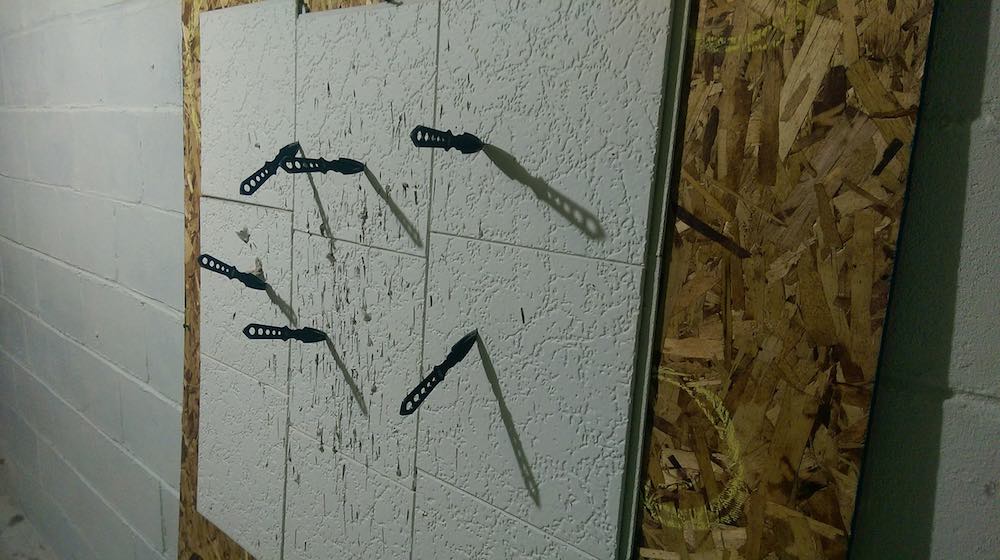

Knife Throwing
When you have nothing else and you need a ballistic weapon, what about learning to throw knives and tomahawks? It takes some practice, but it can be done.
Why would you want to learn to do a thing like that, you might ask? Well, throwing knives and tomahawks was a Native American pastime as well as a hobby for lumberjacks back in the early 20th century.
There are several decent YouTube videos on the topic, as well as some very good books.
Furthermore, it is an inexpensive hobby and skill to practice. Throwing knives are relatively cheap, and throwing tomahawks are not much more than the cost of the knives.
After you have practiced for a while, you will learn to throw virtually any knife you can find. I have been practicing for about nine years now, and my son has been practicing for a couple of years. We can now throw basically any knife or hatchet we can lay our hands on.
They sell actual target boards for knife throwing, but you can also just use some plywood or softwood planks set up in a safe direction in your backyard. I would not recommend throwing the knives and tomahawks at living trees because you will scar them and can eventually kill them, so stick with board targets or old tree trunks.
There are several different methods of throwing knives:
- You can throw by gripping the blade
- You can throw a knife, gripping the handle
- You can throw overhand
- You can throw underhand
Underhand is for close distances, as the knife does not spin but follows a straight trajectory to the target.
Overhand is for distances from about four to ten yards. Knife throwing is a relatively close-range activity.
The further you are away then the more the knife can change direction while traveling through the air.
The key is to try to throw with consistency and then change your distance from the target until the tip of the knife sticks into the target horizontally or parallel to the ground.
Distance is what will determine your success at sticking the blade once you have throwing consistency.
Remember: Safety First.
Always wear closed-toe shoes (in case you drop a knife), eye protection, and beware of the knife glancing or bouncing back off of the target if it does not stick.
Keep pets and children away, and make sure you are in a safe area outside.
So, my survivalist friends think about learning a new skill and taking up a new hobby that has both combative as well as entertainment purposes. Have fun and be safe, and remember, “When seconds count, the Police are only minutes away!”
Want more? Check out these related articles from our site:
Knifemaking: Make a Knife from an Old Wrench
How to Keep Your Edge | Knife Sharpener
Knife on Knife Defense Tips