
At a Glance: Rainwater System 101
- Catch free water from your roof to save money and beat droughts.
- A basic setup only requires gutters, simple filters, and a storage tank.
- You can start a simple system for under $100.
Why let free water run down the drain? City water costs money, and droughts happen fast. A rainwater system saves you cash and helps your garden grow, even when the grid dries up. If you are ready to take action now, grab a best-selling rainwater starter kit to get your setup running this weekend.
How Do Rainwater Systems Work? (The Basic Rules)
Rainwater systems work by catching the water that falls on your roof, cleaning out the dirt, and holding it safely in a tank until you need it.
The idea is very simple. Gravity moves the water down. Filters stop the dirt, bugs, and leaves from getting in. Then, the tanks hold the water so you have a backup supply ready to go.
What Parts Do You Need to Build a Rainwater System?
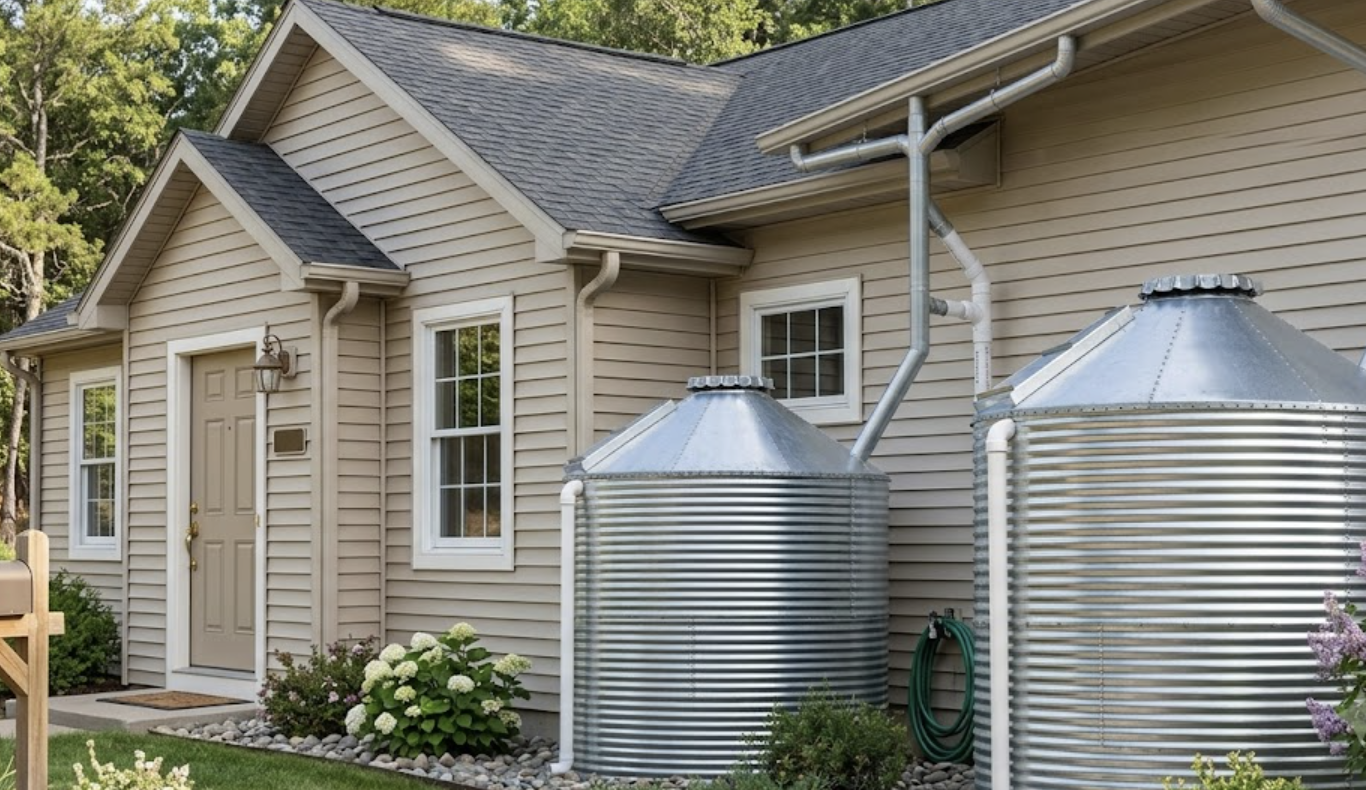
To build a rainwater system, you need gutters, filters, a storage tank, and a pump to move the water.
Let’s break down the exact parts you need to make this happen, starting with the roof and ending with your garden hose.
Gutters and Downspouts
You need these to catch the water from your roof and guide it down toward your tank.
Leaf Guards and Screens
These keep big debris out. Add top-rated gutter guards to stop bugs, leaves, and twigs from clogging your pipes.
First Flush Diverters
The first rain that hits your roof is dirty. A first flush diverter kit catches that dirty water and keeps it out of your clean tank.
Storage Tanks or Rain Barrels
This is where the water lives. You can use a simple 50-gallon barrel for a small garden, or link larger tanks together for more storage.
Pumps and Hoses
Gravity is great, but sometimes you need pressure. A good garden water pump helps you get the water out of the tank and onto your plants.
Rainwater System Costs: What Will You Pay?
You will pay anywhere from under $100 for a simple barrel setup to over $1,000 for a large, underground tank.
The final cost changes based on how much water you want to hold, so let’s look at the low, medium, and high-cost setups.
Low Cost
For under $100, you can set up a simple rain barrel right under your gutter.
Medium Cost
For $200 to $500, you can link a few barrels together and add a basic pump for better water pressure.
High Cost
For $1,000 or more, you can bury large tanks underground for whole-house use. If you want a big setup, click here to find a rainwater system installer near you for a free quote.
Your Simple Rainwater System Care Calendar
Taking care of your system is easy. Follow this simple checklist to keep your water clean and your gear safe.
- Spring: Check your pipes for leaks, clean the gutters, and attach the hoses.
- Summer: Wash the filter screens once a month so water flows fast.
- Fall: Clear out dead leaves from the roof and gutters.
- Winter: Empty the tanks and pack away your gear if it freezes where you live so the plastic does not crack.
Closing Thoughts on Rainwater Collection
Building a rainwater system is one of the easiest ways to become more self-reliant. It lowers your bills, keeps your plants alive during dry spells, and gives you peace of mind. Start small, learn how the water flows, and add more tanks as you go.
Frequently Asked Questions (FAQs)
How much rainwater can I collect from my roof?
You can catch about 600 gallons of water from just 1 inch of rain on a 1,000-square-foot roof!
What do I need to store rainwater safely?
You need a dark, food-grade tank with a tight lid. The dark color stops green algae from growing, and the tight lid keeps mosquitoes out. Adding mosquito dunks to your water is also a smart backup.
Is rainwater harvesting legal in my state?
In most places, yes! It is highly encouraged. However, some states like Colorado or Utah have strict rules on how much water you can keep. Always check your local laws first.
What’s the cheapest DIY rainwater catchment system?
The absolute cheapest way is to buy a clean, used food-grade barrel (like an old pickle barrel), add a screen on top, and put it right under your gutter downspout.