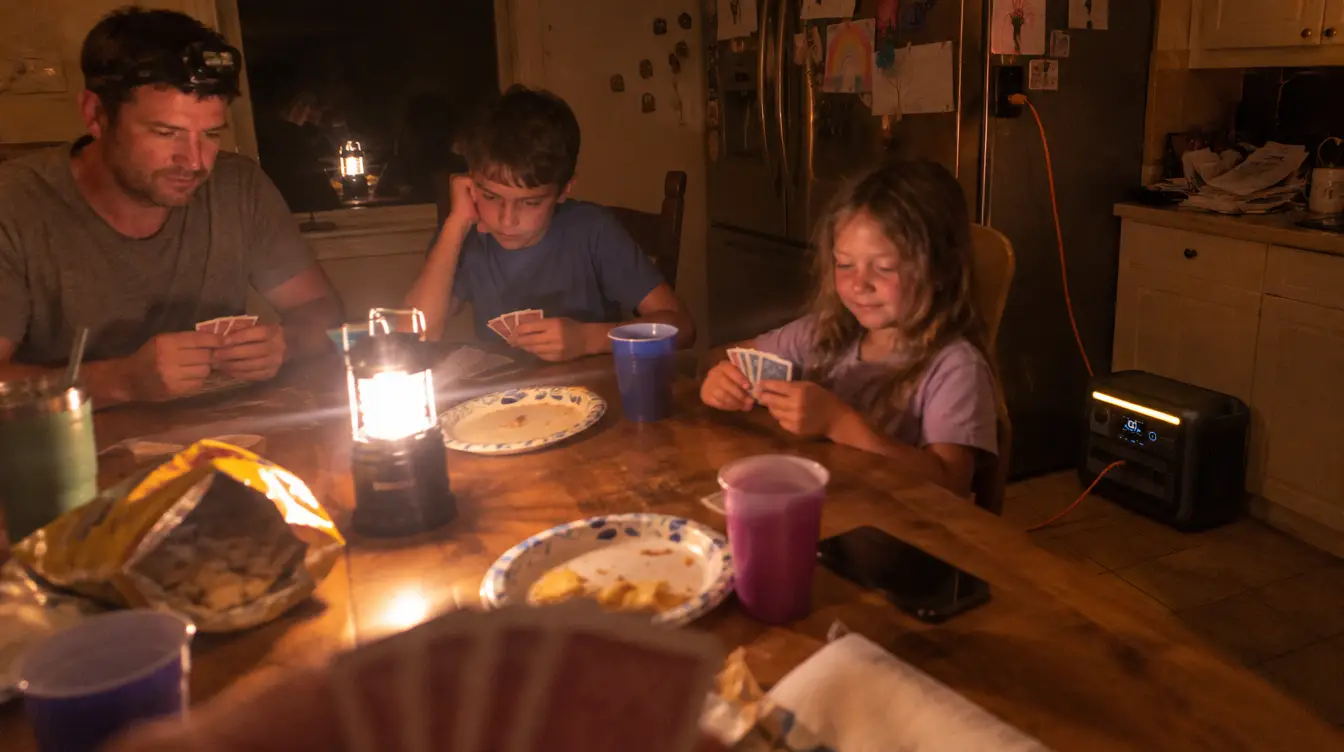

The first thing you notice when the power goes out is the quiet: the fridge stops humming and the fan winds down. Power outage survival comes down to 4 jobs: keep everyone safe, fed, cool or warm, and in touch until the lights come back.
Most outages last a few hours. The ones that last days, after an ice storm or a hurricane, are the ones worth planning for.
Here are 10 ways I’d get a family through a blackout, starting with the 3 mistakes that hurt people most: cooking indoors with fuel, running a generator too close to the house, and eating food that went warm.
At a Glance: Power Outage Survival
- Food: A closed fridge keeps food cold about 4 hours. A full freezer holds about 48 hours, a half-full one about 24.
- Fuel safety: Grills, camp stoves and generators go outside only. Keep a generator at least 20 feet from the house.
- Carbon monoxide: Put a battery CO alarm on every floor and outside sleeping areas.
- Light: Use LED lanterns and headlamps, not candles.
- Water and power: Store 1 gallon of water per person per day, and keep phones charged with a power bank.
Survival Life earns a commission if you buy through the Amazon links on this page, at no extra cost to you. As an Amazon Associate, Survival Life earns from qualifying purchases.
10 Ways to Get Through a Power Outage
1. Cook Outside, or Don’t Cook at All
Of everything on this list, this is the rule I’d never bend. A grill, camp stove or propane burner will cook a hot meal, but only outdoors. These burn fuel and give off carbon monoxide, a gas you can’t see or smell. Never use charcoal indoors or in a garage, even with the door open.
The easier plan is no-cook food. Keep canned meat and beans, peanut butter, crackers, cereal, dried fruit and nuts on hand. Eat what’s in the fridge first, then the freezer, then the pantry.
2. Keep Your Food Safe
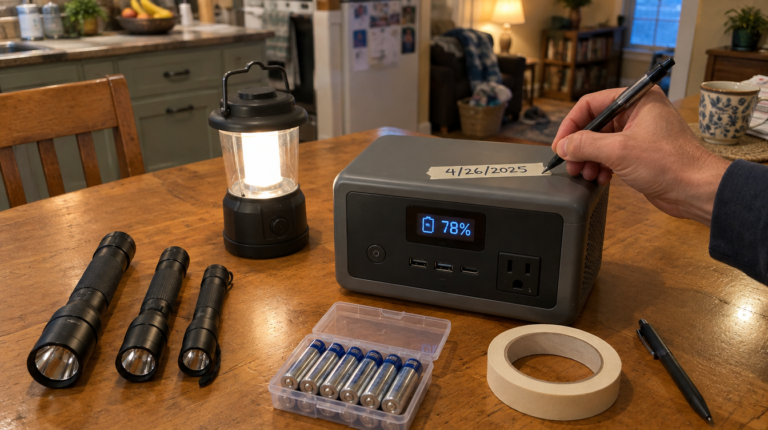
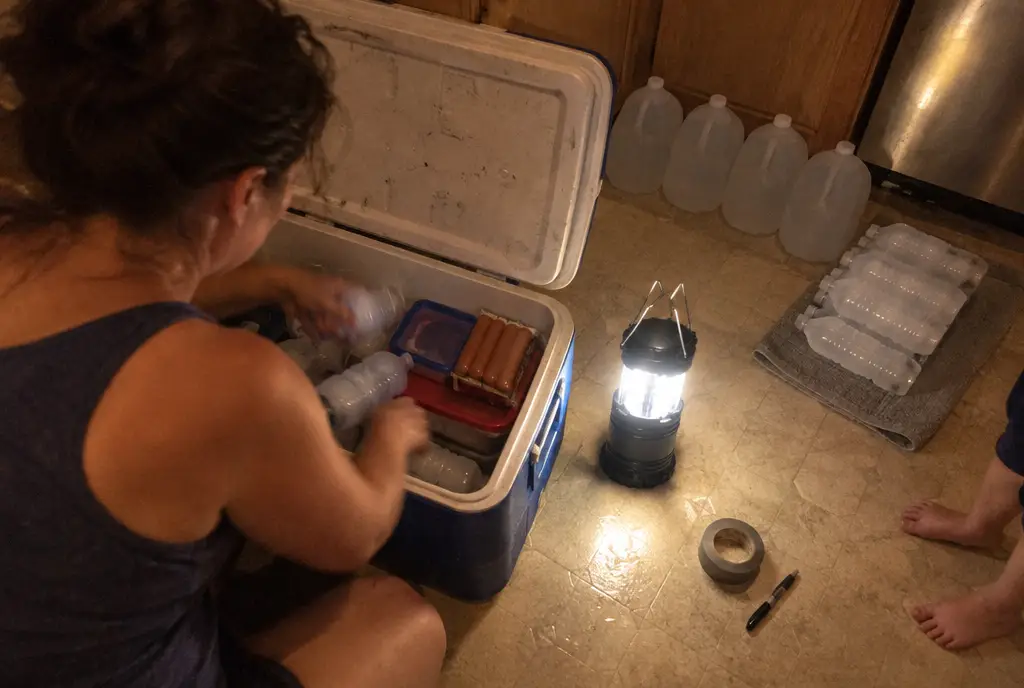
Keep the doors shut. A closed refrigerator keeps food cold for about 4 hours. A full freezer holds its temperature about 48 hours, and a half-full one about 24 hours. Tape a note on the fridge door so nobody opens it out of habit.
If the power is out longer than 4 hours, throw away refrigerated meat, poultry, fish, eggs and milk. Never taste food to decide if it’s safe. When in doubt, throw it out.
A cooler with ice buys more time. Frozen water bottles work as ice packs and become drinking water once they thaw.
3. Light the House Without Fire
Candles start house fires, often when they’re left burning unattended, and they’re the worst near kids and pets. Use battery LED lanterns and flashlights instead. Keep one in each bedroom and one in the kitchen so nobody walks around in the dark.
A 2-pack of LED lanterns that take AA batteries (paid link) covers a small house. Pick lights that use the same battery size so one stash of spares fits everything.
If I could hand you only one light, it would be a headlamp. Both hands stay free for the cooler, the breaker box or a kid who needs help. A rechargeable one like the LHKNL rechargeable headlamp (paid link) works well, but charge it before the storm. It can’t recharge once the power is gone unless you have a power bank.
4. Stay Warm or Cool Safely
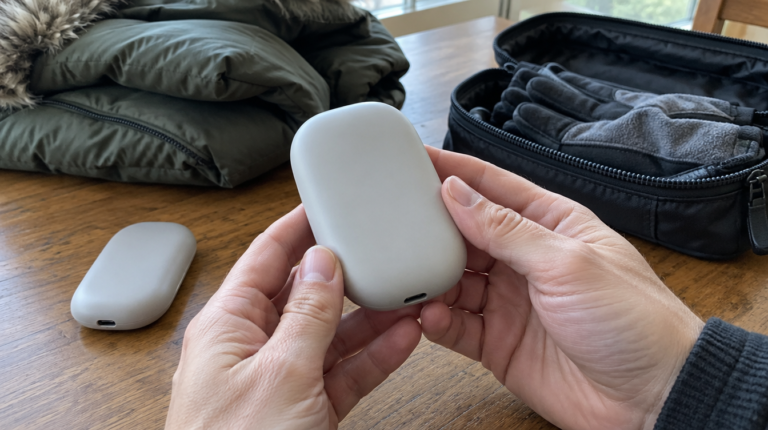
In cold weather, close off the rooms you don’t need and gather everyone in one room. Layer up, wear a hat, and pile blankets on the beds. Sleeping bags help a lot.
Only use a heater that is rated for indoor use. The Mr. Heater Little Buddy is listed as indoor-safe, with a low-oxygen shutoff and a tip-over shutoff, and heats about 95 square feet. Follow the manual, keep it away from bedding, and run a CO alarm in the same room. Never use a grill, camp stove or oven to heat your home.
Paid link.

- 3,800 BTU per hour
- For use with propane gas
Last update on 2026-11-03 / Affiliate links / Images from Amazon Product Advertising API
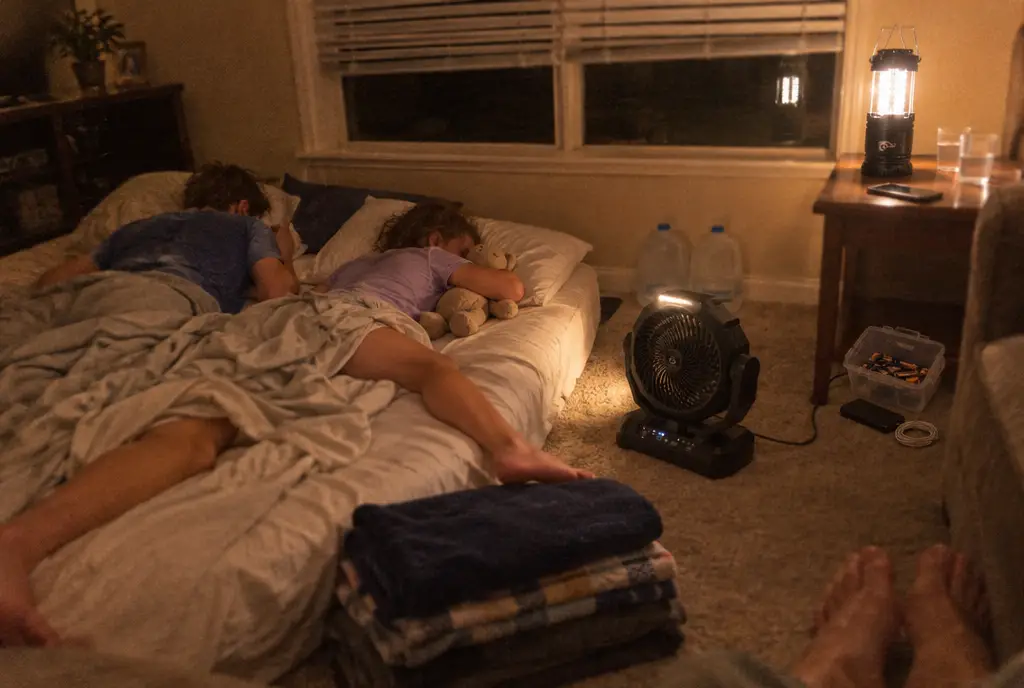
In hot weather, heat is the bigger danger, especially in the South, where the air stays humid all night. Here’s what I’d do: pick one room on the lowest floor, close the blinds on the sunny side, and have everyone sleep there. Drink water often and put a wet cloth on your neck. If someone gets confused or dizzy and their skin turns hot and red, call 911 and cool them down right away.
A battery fan is the one item I’d add for summer outages. The FRIZCOL rechargeable camping fan (paid link) runs on its own built-in battery. It won’t cool a room. It moves air across whoever is sleeping in front of it, and that’s often enough to get a hot kid back to sleep.
5. Have Water Ready
If your home uses a well pump, the water stops when the power does. City water can also be shut off or under a boil order after a storm.
Store 1 gallon of water per person per day for drinking and basic cleaning, enough for at least 3 days. Keep a water filter you know how to use for longer outages. Our guide to setting up long-term water storage covers containers and rotation.
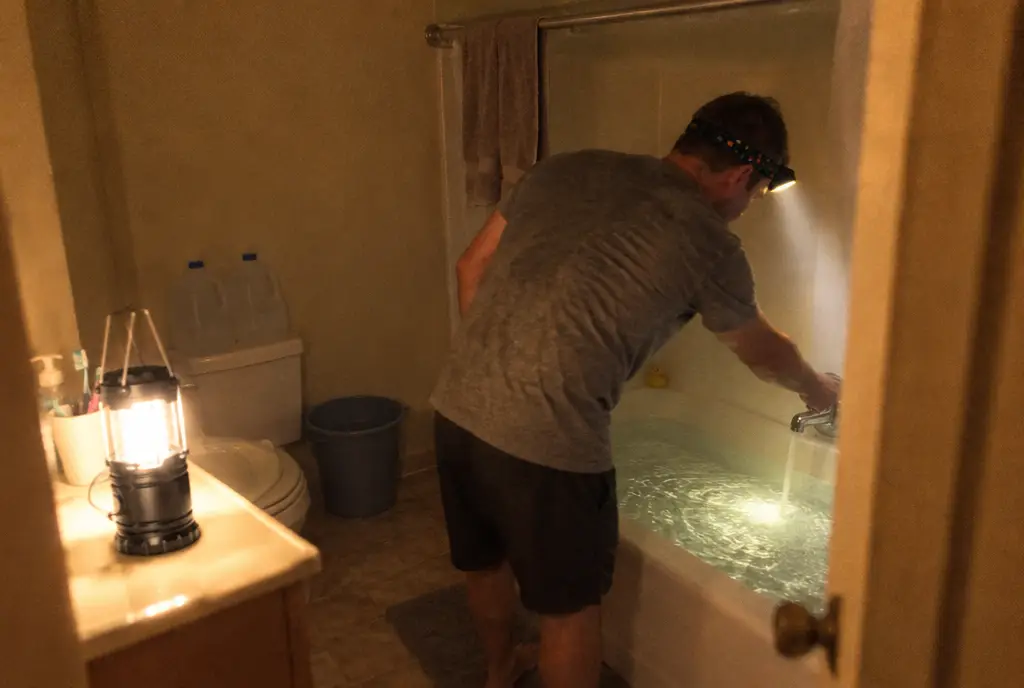
If I could only do one thing before a big storm, I’d fill the bathtub. That water is for flushing and washing, not drinking. To flush without power, pour a bucket of it quickly into the toilet bowl.
6. Keep Phones and Devices Charged
Your phone is your link to news, family and help. Keep a charged power bank and the right cable in a drawer you can find in the dark. A 10,000mAh bank like the Anker 10,000mAh power bank (paid link) fits in a pocket. It won’t run anything bigger than phones and small lights.
Turn down screen brightness and close apps you don’t need. Charge from the car only while it’s running outside, never in a closed garage.
7. Pick the Right Backup Power
For more than phones, you have 2 choices, and many people end up with both.
- A battery power station is quiet, safe to run indoors and has no fuel to store. It runs lights, a router, fans and small devices. Bigger units can keep a fridge going for a while. It runs out unless you can recharge it.
- A gas or propane generator runs larger loads for days as long as you have fuel. It’s loud, needs care, and must run outside only, at least 20 feet from the house, with the exhaust pointed away from doors and windows. Never run one in a garage, basement, shed or on a porch.
A common setup is a power station for quiet nights and a small generator to recharge it during the day. That uses much less fuel than running the generator all the time.
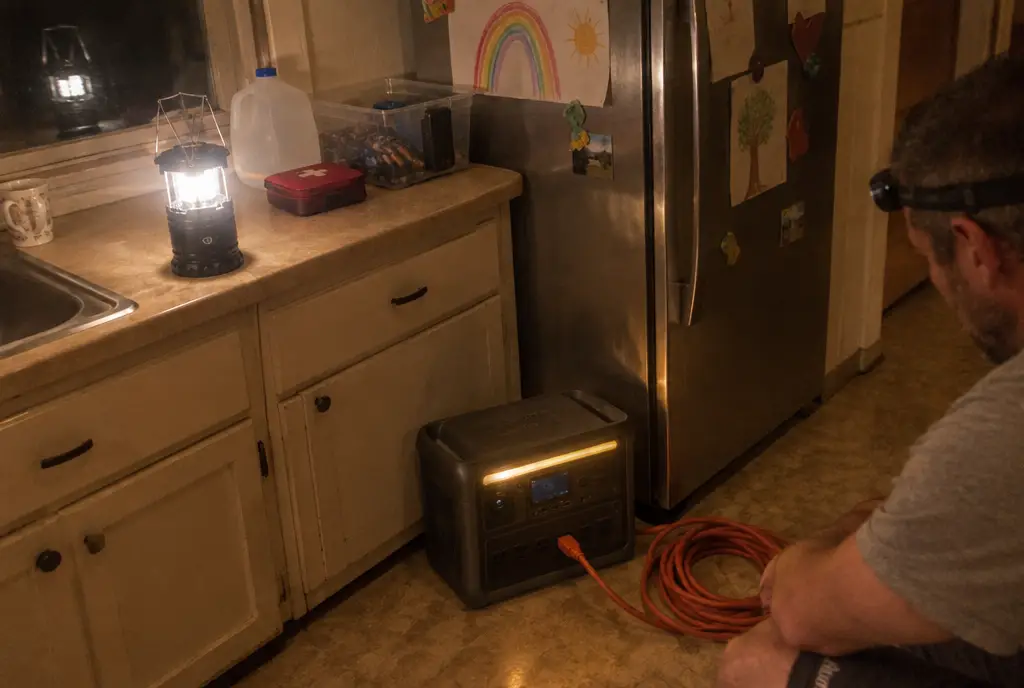
If keeping the fridge cold is your goal, I’d look at a station around 1,000Wh. The Anker SOLIX C1000 holds 1,056Wh and recharges from a wall outlet, a car or solar panels. Check the watt rating on your fridge’s label first, then plug the fridge straight into the station or use a heavy-duty extension cord.
How long it lasts depends on your fridge and how often the door opens. The tradeoff: it’s heavy, and once it’s empty you need a way to refill it.
Paid link.
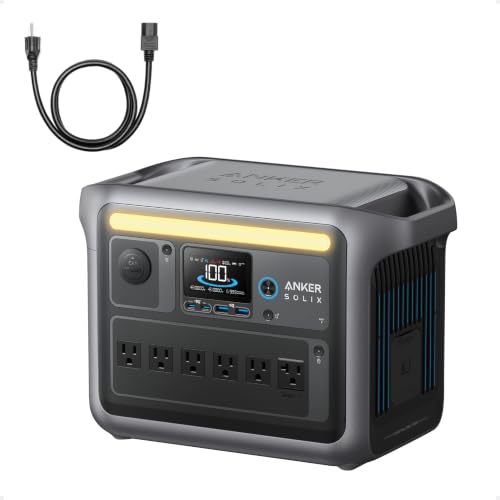
- Charge Up in a Flash: Achieve 80% battery capacity in just 43 minutes with the Anker SOLIX C1000's UltraFast recharging...
- A Decade of Power: Trust in a decade-long journey with the Anker SOLIX C1000 Portable Power Station, featuring exceptional...
Last update on 2026-11-03 / Affiliate links / Images from Amazon Product Advertising API
If you only need phones, lights, a fan and a router, the smaller Jackery Explorer 300 (paid link) is a lighter starter station with a 292Wh battery. It’s too small for a fridge. To compare sizes, see our guide to portable power stations for home backup.
8. Protect Against Carbon Monoxide
Outages are when generators, grills and fuel heaters come out, and that is when carbon monoxide becomes a real danger. Put battery-powered or battery-backup CO alarms on every floor and outside sleeping areas.
Opening a window does not make a generator safe inside. If a CO alarm goes off, or anyone gets a headache, dizziness or nausea, get everyone outside right away and call 911.
9. Plan for Medical Needs
If someone in your home uses an oxygen concentrator, CPAP, power wheelchair or medicine that must stay cold, plan for it now. Call your electric company and ask if they keep a medical needs list. Ask your equipment supplier what backup battery fits your device.
Before storm season, ask your pharmacist whether you can refill prescriptions a few days early. Know where you’d go if the outage lasts longer than your backup power, like a relative’s house or a hospital. Keep a cooler and ice packs ready for medicine that needs to stay cold.
10. Stay Informed and Pass the Time
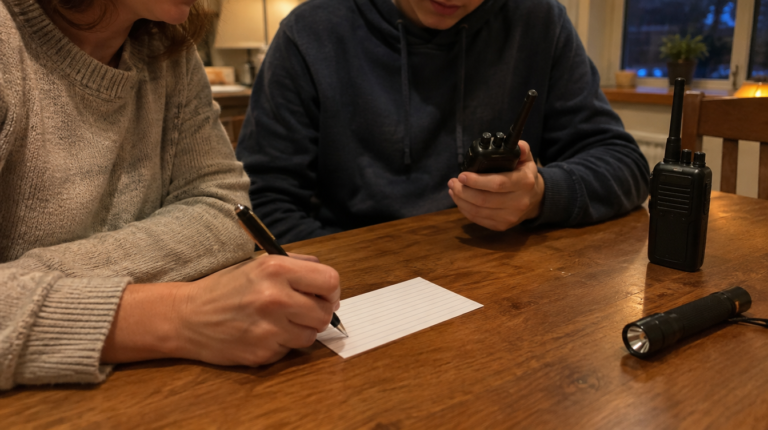
When Wi-Fi and cell service go down, a battery or hand-crank radio still gets weather and emergency news. A FosPower solar hand-crank weather radio (paid link) charges from its crank or a small solar panel, so it keeps working after the spare batteries run out. Check on older neighbors if it’s safe to go out.
Keep some cash in small bills, too. Card readers, ATMs and gas pumps all need power.
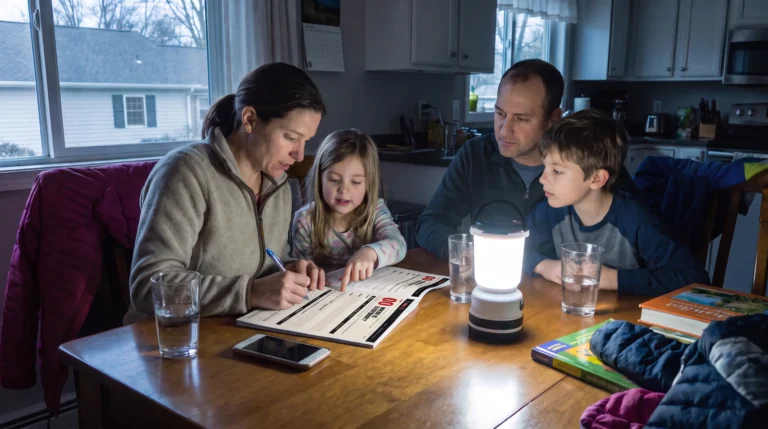
Then make the most of the quiet. Cards, board games, books and puzzles turn a dark night into family time. This is the part kids tend to remember, so keep a small box of games with your lanterns.
Power Outage Checklist
- LED lanterns and flashlights, with spare batteries
- A charged headlamp for each adult
- Battery CO alarms on every floor
- 3 days of water, 1 gallon per person per day
- A full bathtub before a big storm, for flushing
- No-cook food for 3 days
- Cooler and ice packs
- Charged power bank and cables
- Battery or hand-crank radio
- Cash in small bills
- Blankets, sleeping bags and warm layers
- A battery fan for hot weather
- Backup plan for medical equipment
- Board games, cards and books
For a full kit list, see our guide to what to stockpile, and for cold nights, our guide to emergency sleeping bags.
Common Mistakes
- Running a generator in the garage. Even with the door open, carbon monoxide builds up and seeps into the house.
- Cooking or heating with a grill indoors. Grills and camp stoves are outdoor tools only.
- Opening the fridge to check on it. Every peek lets cold out. Keep the doors closed.
- Relying on candles. They’re a fire risk, especially when everyone is tired and in one room.
- Letting phones die on day one. Save battery early, before you need it.
Do one thing today
Here’s what I’d do tonight: walk through your home and put a working flashlight in every bedroom. Then press the test button on your CO alarm. If you don’t have one, add it to this week’s shopping list.
Quick Poll: When the power goes out, what keeps your fridge running?
What was the longest outage you’ve been through, and what got you through it? Tell us in the comments.
Frequently asked questions
About 4 hours if you keep the door closed. A full freezer holds its temperature about 48 hours, and a half-full one about 24 hours. After 4 hours without power, throw away refrigerated meat, fish, eggs and milk.
Outside only, at least 20 feet from the house, with the exhaust pointed away from doors and windows. Never run it in a garage, basement, shed or on a porch, even with doors open.
Gather everyone in one small room, close off the rest, and layer up with hats, blankets and sleeping bags. Only use a heater rated for indoor use, with a CO alarm nearby. Never heat with a grill, camp stove or oven.
A power station is quiet and safe indoors but runs out without a recharge. A generator runs bigger loads for days but must stay outside. Many people use both: the station at night, the generator to recharge it.
Battery LED lanterns and flashlights are safer. If you must use candles, keep them away from anything that can burn and put them out before you leave the room or go to sleep.