
What should you stockpile for an economic collapse? Start with the things that keep a household running when money gets tight: water, food, medicine, cash, hygiene supplies, fuel, tools, home security and skills. Build up 2 weeks first, then work toward a month or more.
A real economic crisis rarely looks like a movie. For most families it looks like a lost job, prices that jump faster than paychecks, or empty shelves for a few weeks. A stockpile buys you time to deal with it.
At a Glance: What to Stockpile for Economic Collapse
- Start with water and food: 1 gallon of water per person per day, plus shelf-stable food your family already eats.
- First goal: 2 weeks of supplies. Then build toward 1 to 3 months as your budget allows.
- Cash: Keep some small bills at home, but your bank savings are insured up to $250,000 per depositor at federally insured banks.
- Medicine: Ask your doctor about a 90-day supply of regular prescriptions.
- Skills count: Cooking from scratch, gardening and basic repairs stretch every dollar.
Survival Life earns a commission if you buy through the Amazon links on this page, at no extra cost to you. As an Amazon Associate, Survival Life earns from qualifying purchases.
RELATED: Survival Economic Collapse: 16 Practical Ways to Survive an Economic Crisis
9 Things to Stockpile for Economic Collapse
1. Water
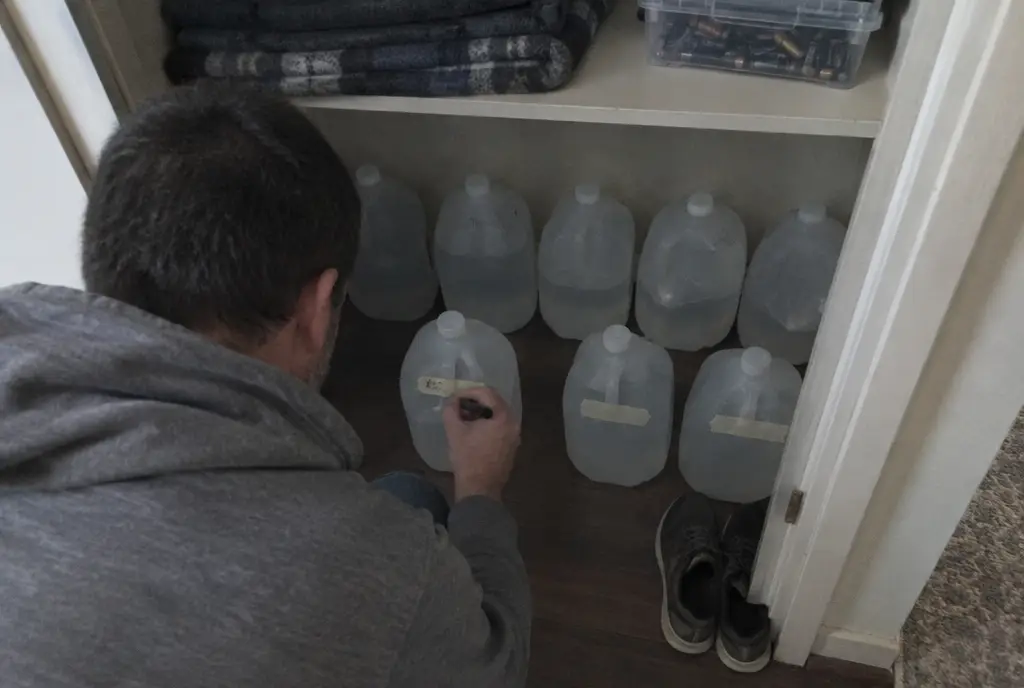
Water comes first in any emergency. Plan on 1 gallon per person per day, for drinking and basic cleaning. A family of 4 needs 56 gallons to cover 2 weeks.
Store it in food-grade containers in a cool, dark place, and write the fill date on each one. Sturdy 5-gallon water cans with a pour spout, like these 5-gallon water cans with a pour spout (paid link), hold more than a gallon jug and are still small enough to carry. You’ll need several to reach a 2-week supply.
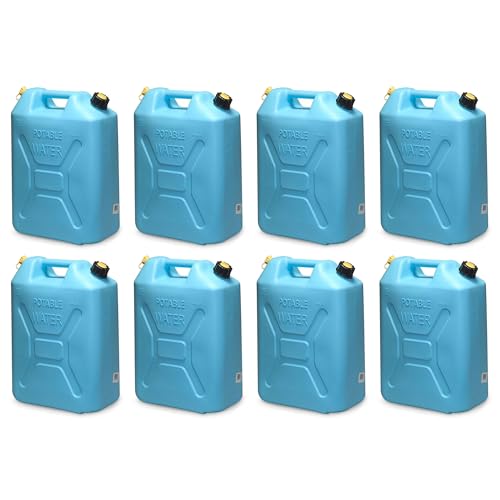
- Water Jugs: Meticulously crafted from food-grade polyethylene plastic that does not add taste, odor, or chemicals to the...
- Portable and Versatile: Camping water just is durable against puncture damage, ideal for outdoor trips to provide a portable...
Last update on 2026-11-19 / Affiliate links / Images from Amazon Product Advertising API
If you have a yard, a rain barrel or a hand-pump well adds a backup source. Filter and treat any water that doesn’t come from the tap.
2. Food
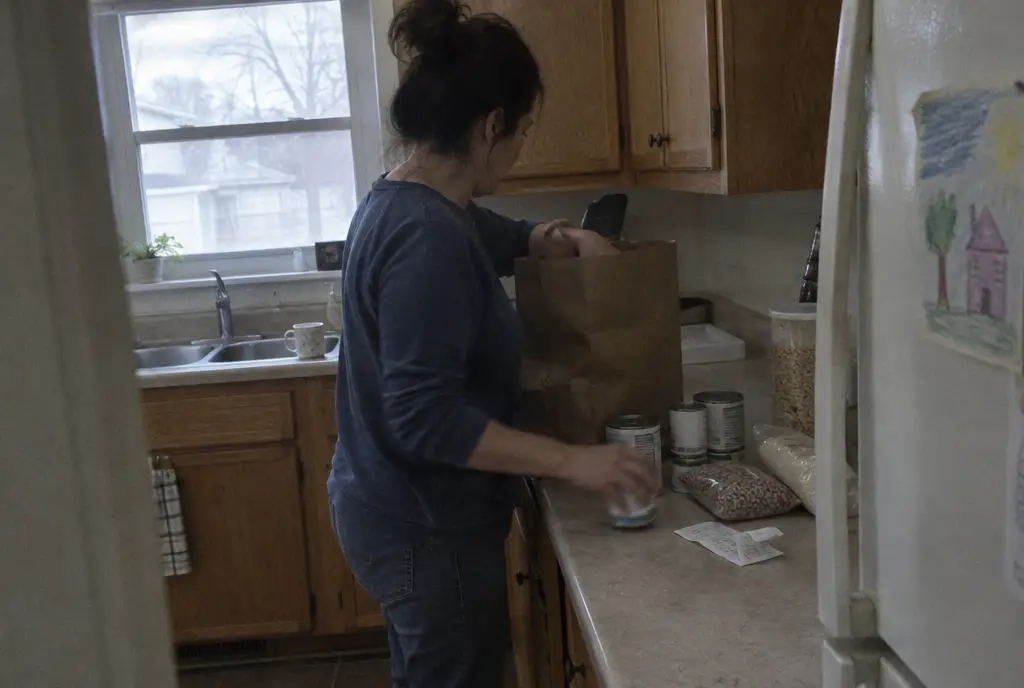
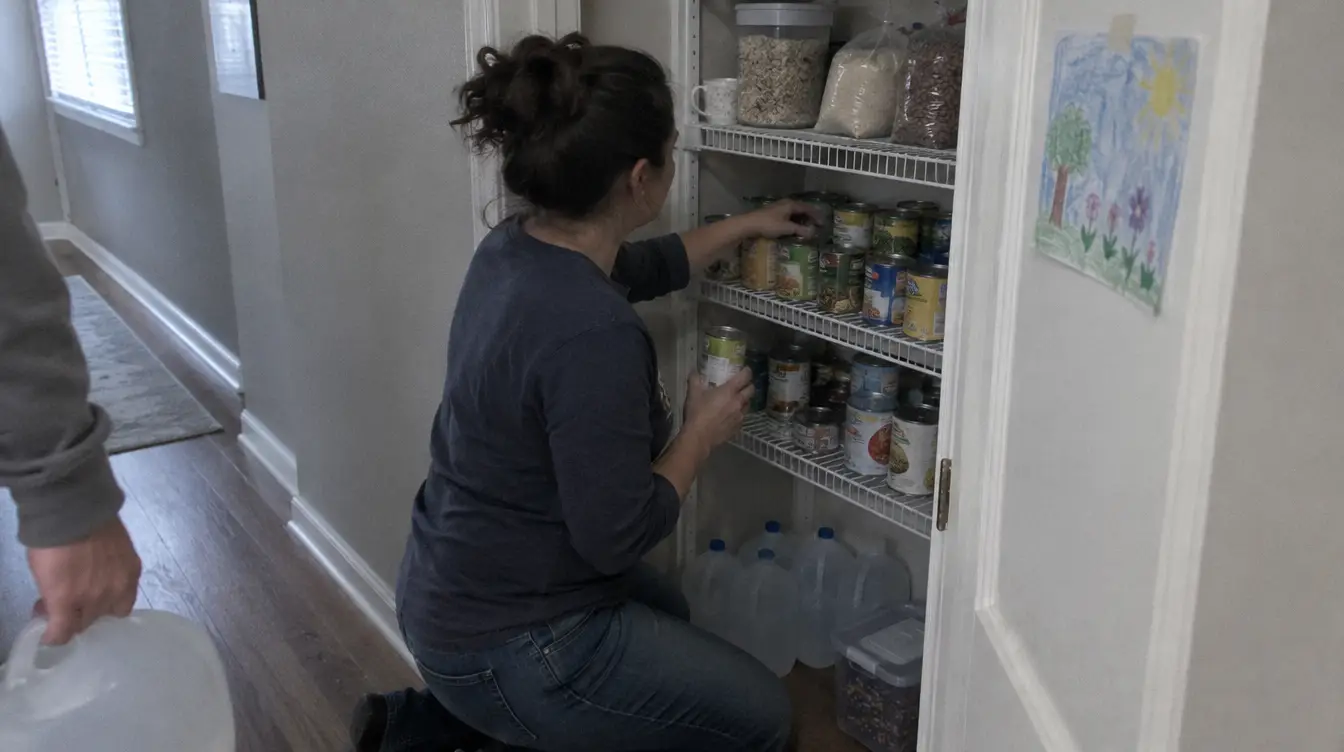
Next to water, food matters most. Pick shelf-stable foods your family already eats: rice, dried beans, oats, pasta, canned meat and vegetables, peanut butter and powdered milk. Rice and beans are cheap, filling and keep well.
Buy a few extra items every shopping trip instead of all at once. That spreads out the cost. Keep a list with expiration dates, use the oldest cans first, and replace them as you go.
Note any food allergies in the house. In a crisis, an avoidable trip to the emergency room is the last thing you need.
3. Medicine and First Aid
Pharmacies can run short when supply chains get tight. For regular prescriptions, ask your doctor or pharmacist whether a 90-day supply is an option, and refill before you run low.
Keep a basic emergency kit together in one container:
- A first aid kit
- Over-the-counter pain and fever reducers, allergy pills and stomach medicine
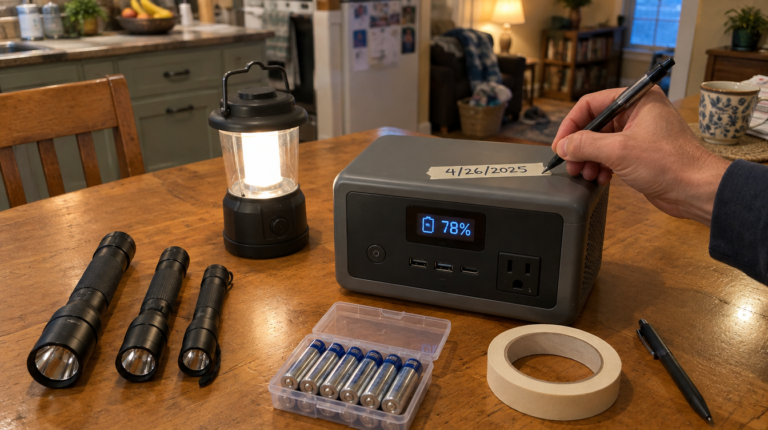
- A flashlight, spare batteries and a battery or hand-crank radio
- Insect repellent and sunscreen
- A written list of each person’s medicines and doses
4. Cash and a Budget
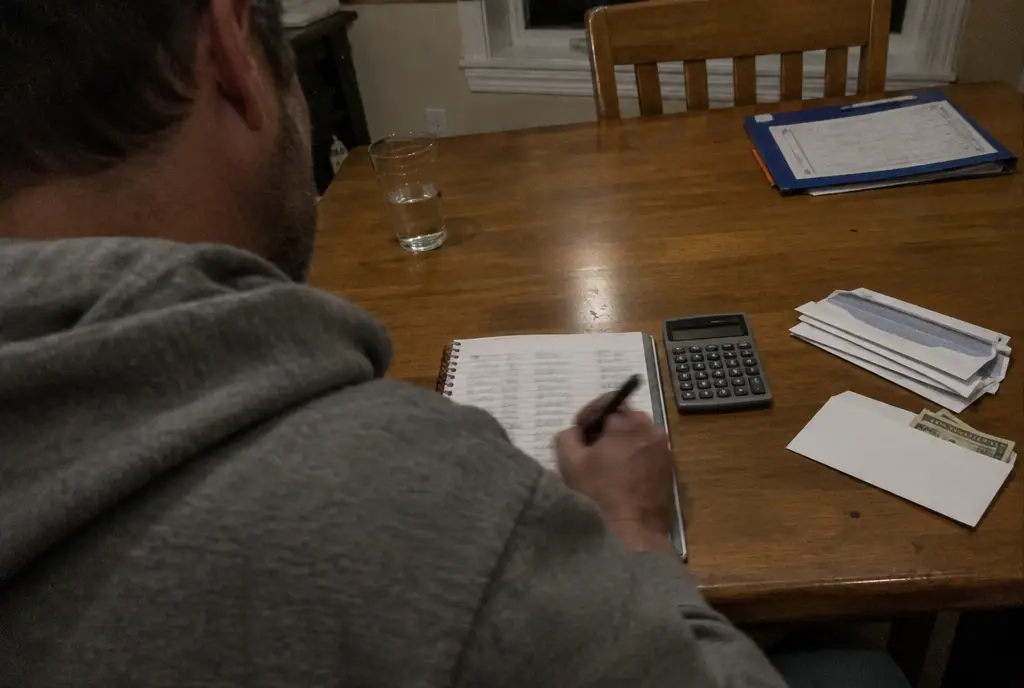
Card readers and ATMs stop working when the power or network goes down. Keep some cash at home in small bills, enough for a week or two of groceries and gas, in a safe or another hidden spot.
Don’t pull all your savings out of the bank, though. Bank deposits are insured up to $250,000 per depositor, per ownership category, at each federally insured bank. Cash at home can be lost, stolen or burned.
Then make a bare-bones budget: the bills you must pay and the bills you can pause. Knowing that number now tells you how long your savings will last if a paycheck stops.
RELATED: Protecting Your Money in an Economic Decline
5. Hygiene Items
Staying clean keeps you from getting sick, and getting sick costs money you may not have. These items are cheap now and hard to find when stores run short:
- Bar soap, shampoo and hand sanitizer
- Toothbrushes, toothpaste and floss
- Dish soap and laundry detergent
- Toilet paper and trash bags
- Feminine hygiene products and diapers, if you need them
6. Fuel
Fuel prices can climb fast in a crisis. A small supply lets you run a generator, get to work or leave if you have to.
Gasoline goes stale in storage. A stabilizer helps, and the maker of STA-BIL says it keeps gas fresh for up to 24 months. Use and replace your stored gas on a schedule, for example by pouring it into your car and refilling the can.
Store fuel only in approved containers, in a shed or detached garage, never inside your home. Check your local fire code for how much you can keep. Never run a generator indoors or in an attached garage.
7. Tools
When money is short, every repair you do yourself is money saved. Buy tools while you can afford them.
Start with a basic toolbox: hammer, screwdrivers, pliers, adjustable wrench, tape measure, utility knife, saw, duct tape, glue and an assortment of nails and screws. Add basic garden tools if you plan to grow food: a shovel, rake, hoe and hand trowel.
8. Home Security
Hard times can raise crime. The best defense is not looking like an easy target.
- Keep quiet. Don’t tell people, online or in person, how much you have stored.
- Harden the doors. Solid doors, longer strike-plate screws, good deadbolts and outdoor lights cost little.
- Add an alarm or cameras that can alert you even when you’re away.
- Make a family plan for where to go and who calls for help if someone tries to get in.
If you keep a firearm for home defense, get proper training, store it locked and away from children, and learn your state’s laws on its use.
9. Knowledge and Skills
Skills can’t be stolen, and they don’t expire. Each one you learn now saves money later.
Good ones to start with: cooking from scratch with your stored food, growing a small vegetable garden, canning, basic first aid, and simple home and car repairs. Keep a few printed how-to books for when the internet is down.
How Much Should You Stockpile?
Build it in stages so it doesn’t wreck your budget:
- 2 weeks: Water, food, medicine and hygiene supplies for everyone in the house.
- 1 month: More shelf-stable food, a cash reserve and a full tool kit.
- 3 months or more: Bulk staples like rice and beans, a garden, and an emergency savings fund.
Check your supplies twice a year. Use what’s close to expiring and replace it. For a monthly shopping plan, see 17 preparedness things to buy every month of the year.
If you’d rather watch than read, this short video from the City of Seabrook, Texas walks through putting together a home emergency kit.
Where to Keep Your Stockpile
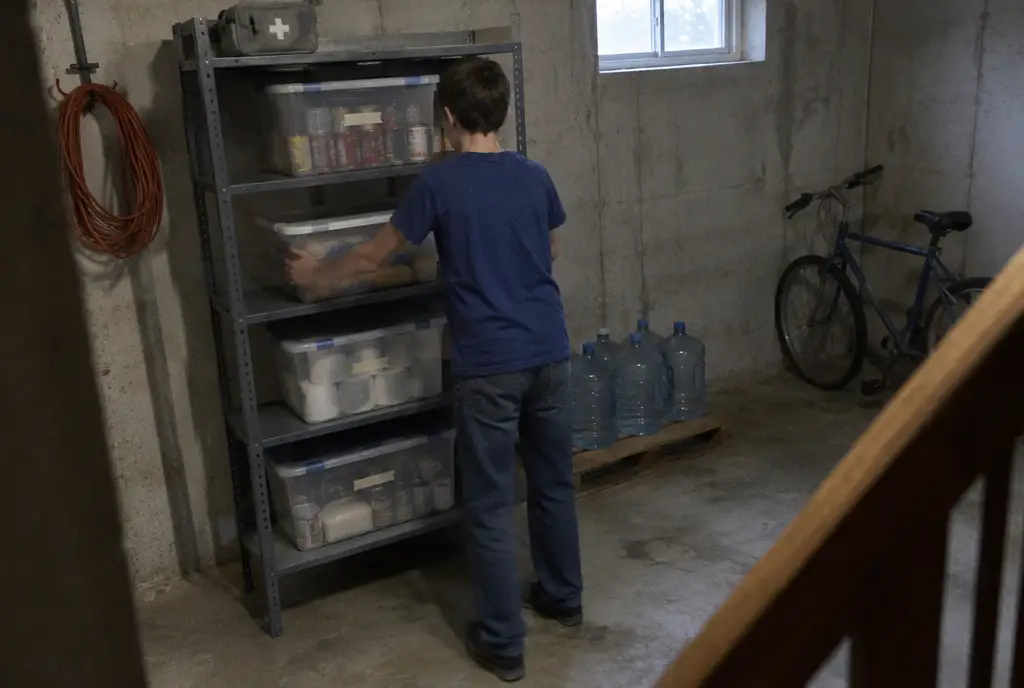
A stockpile only helps if it’s still good when you need it. Heat, light, moisture and pests ruin more supplies than anything else.
- Keep it cool and dark. A basement, an inside closet or space under a bed works better than a hot garage or attic.
- Get it off the floor. Use shelves or pallets so a small leak or flood doesn’t soak everything.
- Use sealed bins. Hard plastic tubs with tight lids keep out mice, bugs and damp.
- Label everything. Write what it is and the date you bought it on the outside of each bin.
- Split it up. Keep some supplies in a second spot, like a closet on another floor, so one problem doesn’t take out everything.
Keep a simple list of what you have and where it is. It makes rotating food easier and stops you from buying the same thing twice.
Common Mistakes
- Buying food your family won’t eat. If nobody likes it now, it will sit until it expires.
- Going into debt to stockpile. Credit card interest makes a hard time harder. Buy a little at a time.
- Pulling all your savings out of the bank. Insured deposits are safer than a large pile of cash at home.
- Storing gas and forgetting it. Old gas can damage engines. Rotate it on a schedule.
- Telling everyone about your supplies. In hard times, word gets around.
Do one thing today
Open your pantry and count how many days of meals you could make for your family right now. Write the number down. That’s your starting point.
Quick Poll: If your income stopped tomorrow, how long could your household get by?
What’s the first thing you’d cut from your budget? Tell us in the comments.
Frequently asked questions
Start with water and shelf-stable food for 2 weeks, plus any prescription medicines your family needs. Then add cash in small bills, hygiene supplies, fuel and basic tools.
Plan on 1 gallon per person per day, for drinking and basic cleaning. A family of 4 needs 56 gallons for 2 weeks. Store it in food-grade containers in a cool, dark place.
Not all of it. Deposits at federally insured banks are covered up to $250,000 per depositor, per ownership category, at each bank. Keep a week or two of spending money at home in small bills.
Dry staples like white rice, dried beans, oats and pasta keep well when stored cool and dry in sealed containers. Canned foods are easy, but check the dates and use the oldest first.
Add a few extra items every time you shop instead of buying everything at once. Focus on cheap staples like rice, beans and oats, and never use credit cards to build a stockpile.
Up Next: