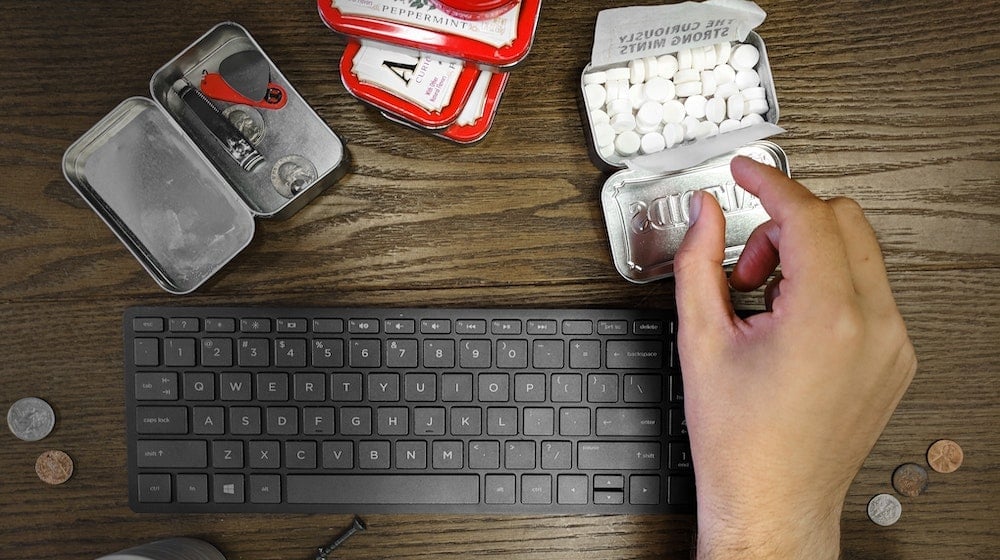

Fill your Altoid tin with these tiny survival tools to stay prepared no matter how little space you have!
Follow this DIY for easy assembly of this compact kit full of small but mighty survival gear.
Use this list to get together the essentials for your tin.
From a list of phone numbers and a sentimental item to matches and safety pins, this DIY provides the ultimate list for an Altoid Tin Survival Kit.
Check the video at the bottom of this post for the models of all the items used in the kit and extra tip and tricks!
14 Ingredients in an Altoids Tin Survival Kit:
An Altoids tin survival kit is a compact and portable collection of essential items useful in emergencies. While the contents may vary depending on individual needs and preferences, here are some common ingredients you can consider including:
1. Will to Survive

Keep an image or token with you that will keep you going when things get rough. Cut your photo small enough to fit flat in the tin. A wallet-size picture will work nicely for this!
The “will survive” is an innate human instinct that drives individuals to endure and persevere through challenging and life-threatening situations. It is a fundamental drive to stay alive and overcome adversity, even when faced with overwhelming obstacles.
2. Emergency Numbers

Glue a list of emergency numbers that you would need to have in a survival situation. A spreadsheet or simple handwritten list would work well for this. Cut the list small enough to fit inside the lid, then glue or tape it in place.
Including emergency contact information in your survival kit is an essential and responsible step to ensure you have an emergency lifeline. One critical emergency number to have in your survival kit.
The universal emergency number in many countries is “911.” This number connects you to police, fire, and medical services. However, the emergency number may vary depending on your location. For example, “112” is commonly used as an emergency number in the European Union.
3. Tweezers
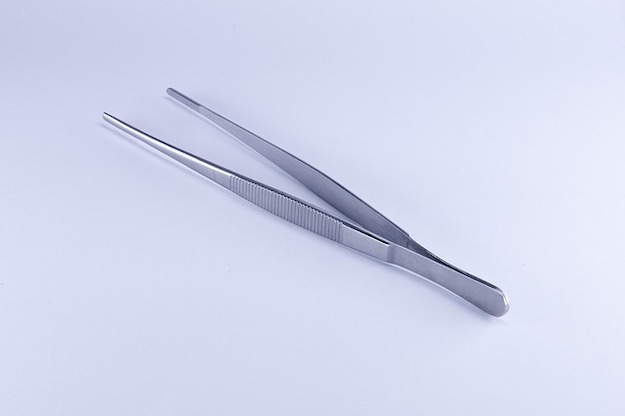
A small pair of tweezers is a very useful tool to have in your kit. The kind pictured keeps themselves pinched closed while being stored, a handy, space-saving feature.
Tweezers are a versatile and handy tool used for a variety of purposes. They typically consist of two narrow, pointed arms that meet at one end and can be squeezed together to grasp and pluck small objects or hairs.
Tweezers come in various shapes and sizes, each designed for specific tasks. They are commonly used for personal grooming, such as shaping eyebrows or removing unwanted facial hair. Healthcare professionals employ medical tweezers with precision tips for delicate procedures like splinter removal or suturing wounds.
4. Change

A couple of quarters might come in handy. Tape them together to keep your kit organized.
When including coins in your survival kit, it’s essential to select coins of various denominations and consider their material. For instance, coins made of copper or silver can have additional utility due to their conductive properties and potential antibacterial effects.
Additionally, secure the coins in a small, waterproof container within the kit to prevent loss or damage. While coins might not be the most critical component of a survival kit, their versatility, and potential usefulness can make them a valuable addition.
5. Duct Tape
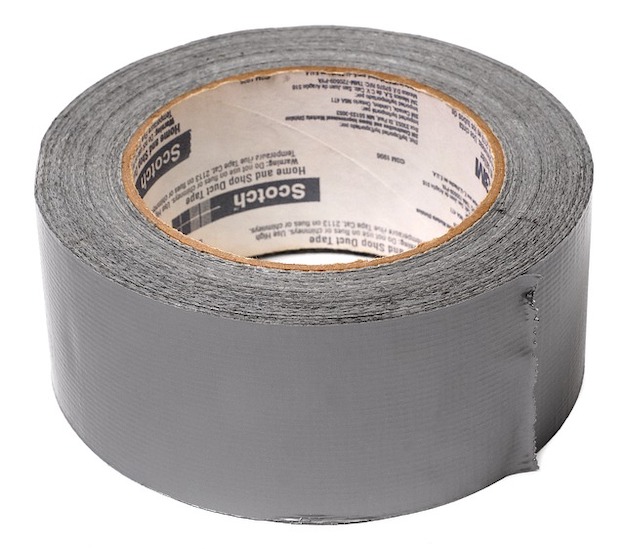
A little duct tape can go a long way in a survival situation. Wrap a foot’s worth around a piece of a credit card for easy storage. Duct tape is a versatile adhesive tape known for its strength, durability, and wide range of applications.
Originally designed for sealing and repairing ductwork in heating, ventilation, and air conditioning (HVAC) systems, duct tape has since become a staple in various fields due to its remarkable properties.
6. Nail Clippers
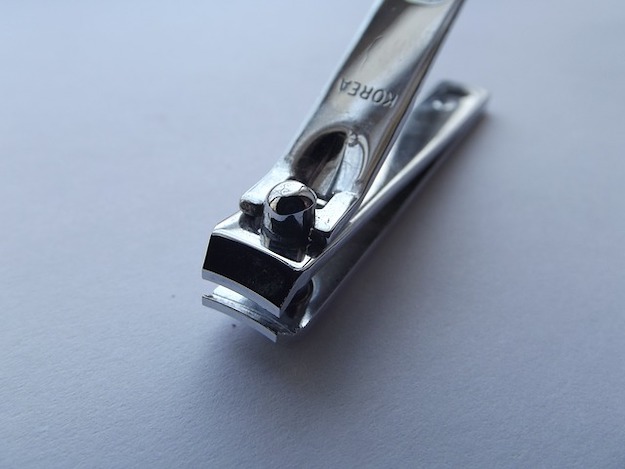
This super slim pair fits perfectly in an Altoid tin survival kit. Nail clippers are essential grooming tools designed to trim and shape fingernails and toenails. They come in various sizes and styles, catering to different preferences and nail types.
7. Pen

This model is a telescopic, ultra-compact pen. Small and very helpful to have around. A collapsable, high-quality pen is a great addition to your kit.
Including a pen in a survival kit can be valuable for various reasons. A pen lets you write down important information, such as coordinates, directions, or emergency contact numbers. It can be crucial for navigation, communication, and documentation.
8. Thumb Drive
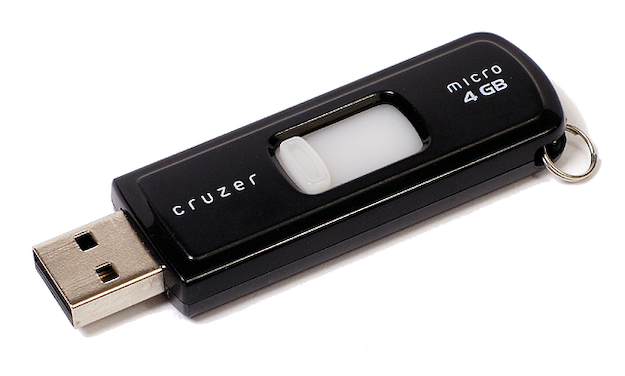
A thumb drive, a USB flash drive, or a memory stick is a portable data storage device that has become an essential tool in today’s digital age.
Another compact tool, this USB thumb drive takes up very little space in your tin.
9. Lighter
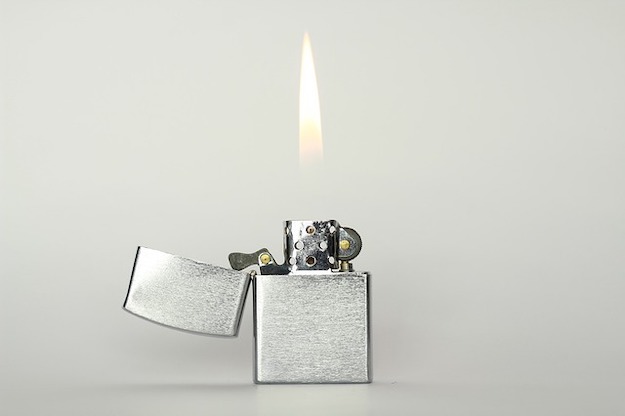
This lighter may be tiny, but in an emergency, it will definitely come in handy.
Opt for a reliable and wind-resistant model when including a lighter in your survival kit. Additionally, consider carrying waterproof matches or other fire-starting methods as backups, as lighters can run out of fuel or fail under certain conditions.
Use a lighter responsibly and safely, as fire can be dangerous in certain environments. Practice fire safety and ensure you have the knowledge and skills to handle fire appropriately in a survival situation.
10. Whistle
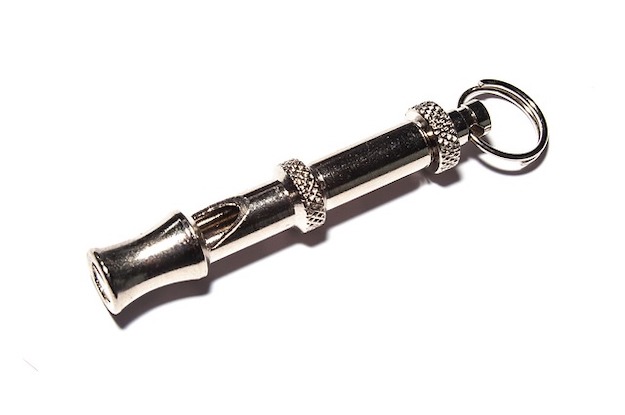
When selecting a survival whistle for your kit, choose a sturdy, high-quality model that is loud and easy to blow. A pealess whistle is often preferred for survival situations because it is less likely to freeze or clog with debris.
Keep your whistle easily accessible in your survival kit and practice using it to familiarize yourself with its sound and effectiveness. A whistle is a simple yet invaluable tool that can significantly improve your chances of being found and rescued in a survival or emergency.
This loud whistle isn’t something you want to blow unless necessary, but it could definitely get someone’s attention if needed.
11. Multi-tool
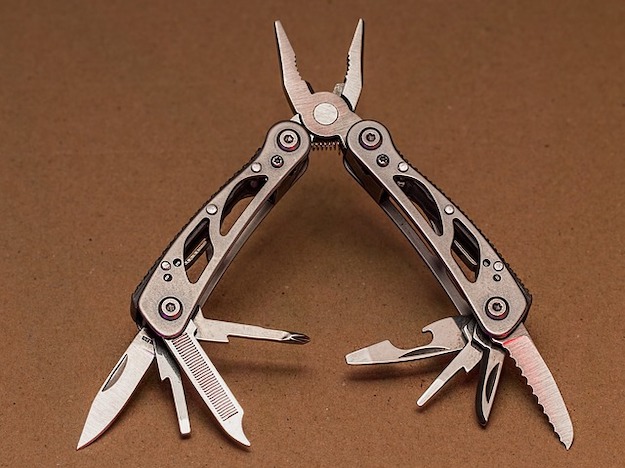 The best multi-tool for a survival kit is one that combines versatility, durability, and essential functionalities.
This kit features a scissor multi-tool, specifically chosen for an urban environment. Pick a multi-tool that works best for you. They come with all different types of tools, so the choice is yours!
12. Pills and Tools

Two tiny compartments full of pills and tools of your choosing. Whether, pain relievers, matches, Q-Tips, or safety pins, whatever little things you think you’d want with you, add them to these compartments.
13. First Aid
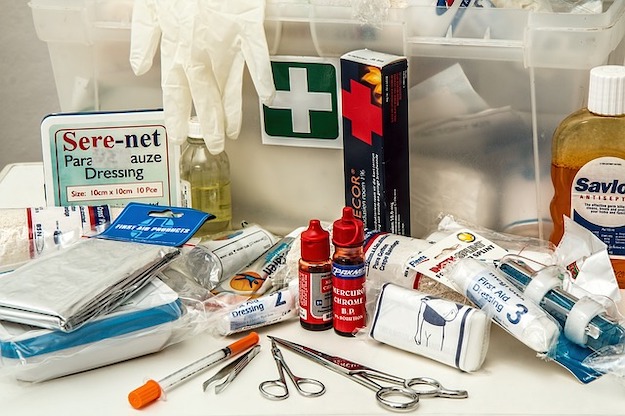
A bandaid or mini-first aid kit would be a great addition to your kit. Finding a type of bandage with ointment already on it would increase the benefits of it even more!
A first aid kit for survival is a crucial component of any emergency preparedness plan. When assembling a survival first aid kit, it’s essential to include items that can address various potential injuries and medical situations.
Some necessary things to have are adhesive bandages of different sizes to treat cuts and scrapes, sterile gauze pads for wound dressing, adhesive tape for securing dressings, antiseptic wipes to clean wounds, antibiotic ointment to prevent infection, pain relievers for pain management, antihistamines for allergic reactions.
14. Cash

Having a little bit of money on hand is definitely a great idea. Fold it small enough to fit flat in the bottom of the tin.
Assembly:
Putting your tin together is a little tricky. The best thing to do is start with the flat items in the bottom of the tin, then work on the arrangement of all the others on top. You might have to play with it for a bit, but with small enough components, it should all fit! Here’s a photo of the inside of the kit featured in this DIY:
Here’s another variation of the kit showing a more detailed assembly: