
Editors note: A few weeks ago Mykel wrote an article about the “Need To Know” Rules When Picking Edible & Medicinal Plants.
We received quite a few questions regarding this post and Mykel wanted share a few pictures and identifiers for some of the plants found locally here in Texas:
When it comes to identifying plants, it is good to start with what is around you.
This way, you can not only get more practice and see and learn all the subtle variations even in a well know species, but you also get a chance to learn what t he plant looks like in different SEASONS.
This is especially important for edible and medicinal plant identification for the survivor.
Often, photos or drawings of plants show them in their IDEAL state with flowers, fruits, and leaves in full bloom. But many plants only flower and fruit for a brief time.
This is when it is important to know the leaf patterns and when those are gone, to maybe even know the bark type.
These photos were taken from a simple walk around few parks in central Texas.
These plants are all VERY common, VERY prevalent and VERY easy to identify.
The best part is, even in the dead of winter, ALL these plants can be a food source.
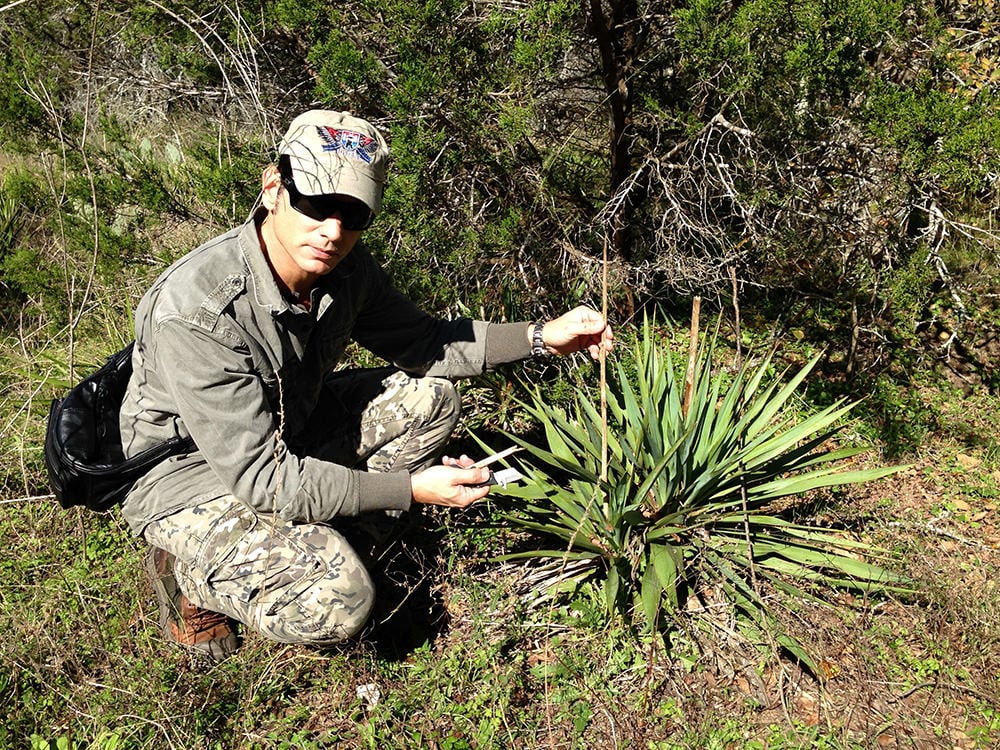
YUCCA or SOTOL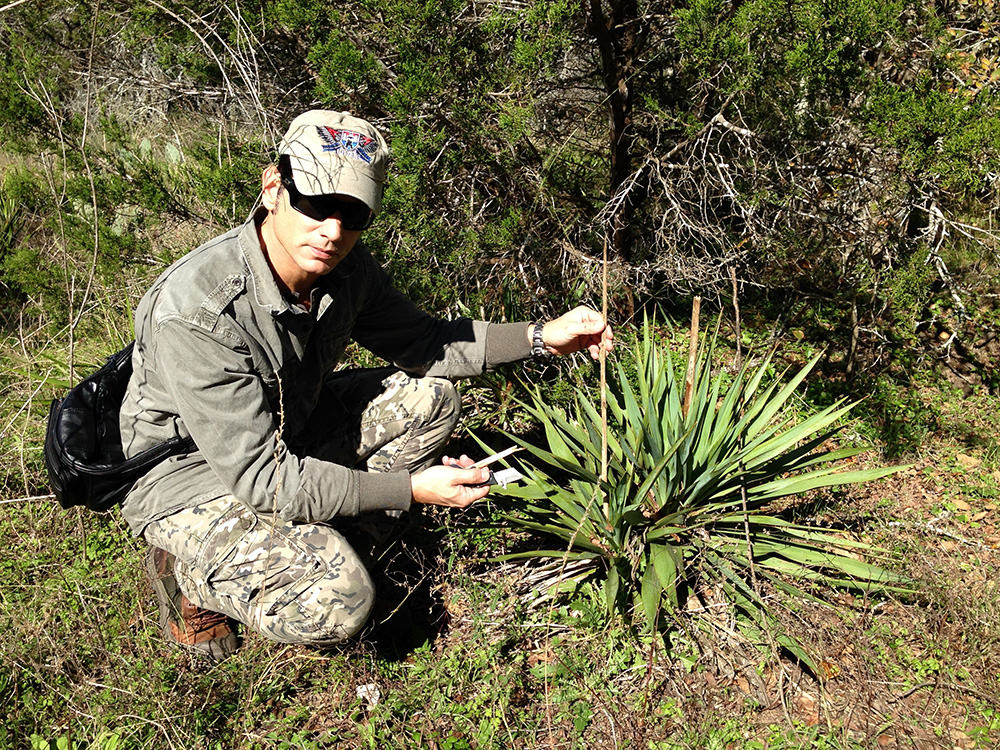
Identification:
SOTOL is easy to identify on the land scape as it has a perennial rosette of long, fleshy, spiked leaves and usually has a stem remnant well into the winter after the flowers have bloomed.
Processing:
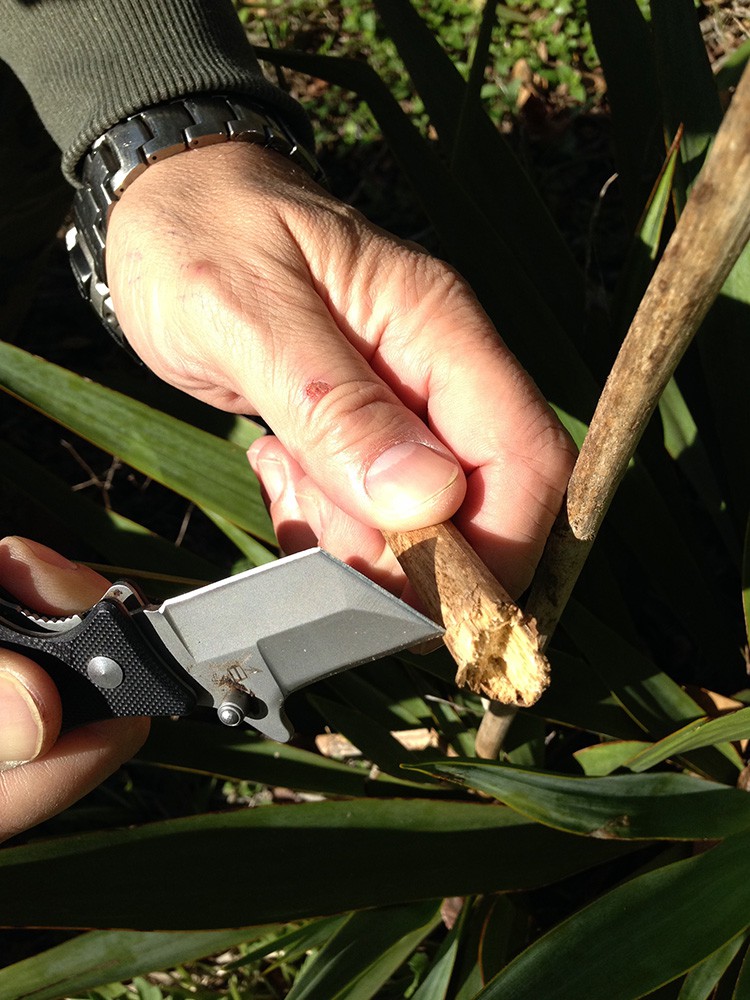
The plant must be dug up and killed to eat the heart of the bulb root. BUT it must be cooked, baked for a LONG time, for a full day (24hrs) to break down the saponins (like soap, same found in yucca root). It takes a lot of work but these were staples for the Indians for 10,000 years. These stems make great hand drills for starting fires, too.
CACTUS
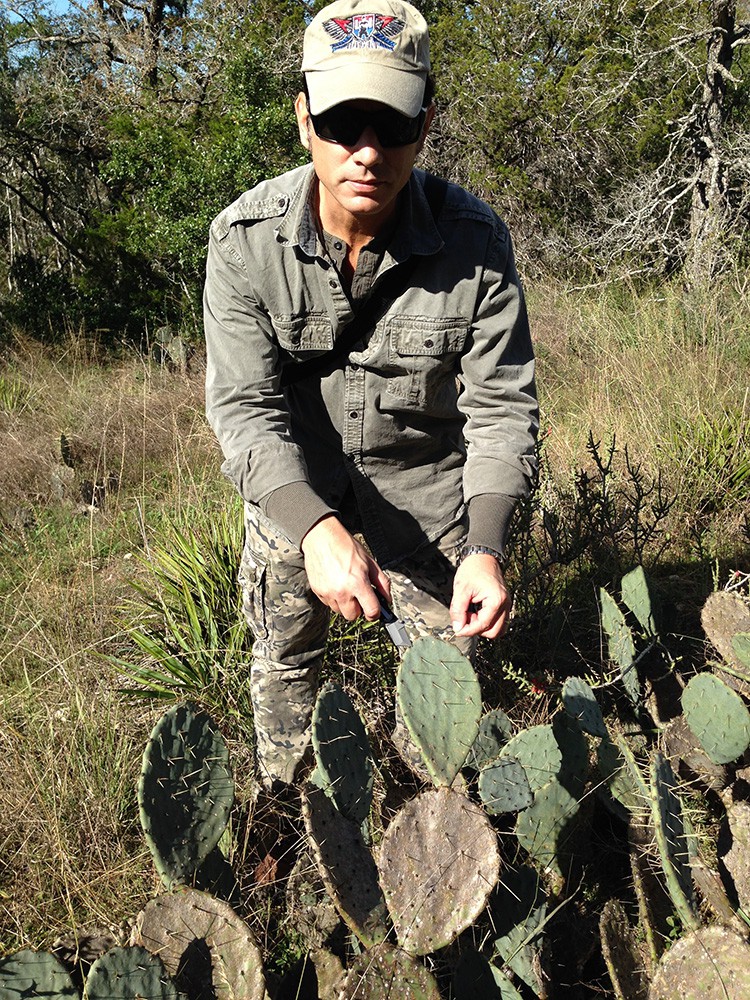
Identification:
Cacti grow all over the world and are pretty easy to identify. Most are edible. Some more so than others. Many folks know about eating the prickly pear fruit that grows on these flat NOPALES cacti and some even know about eating the flowers. But these flat pads remain year round, easy to find, easy to identify but not so easy to eat.
Processing:
These cacti are tricky to prepare as they need to have the thorns removed. The big thorns are easy to pluck out, the small, hair like fibers- not so much. Some folks screp them, but I find they get all over me that way. Some folks cut them out and I have done this tedious task when I did not have a fire. But the best way is to burn them off in the fire. These can be eaten, raw and taste good that way. Boiling turns them quite slimy and baking makes their skin quite tough but satisfies more as a real meal.
DANDELION
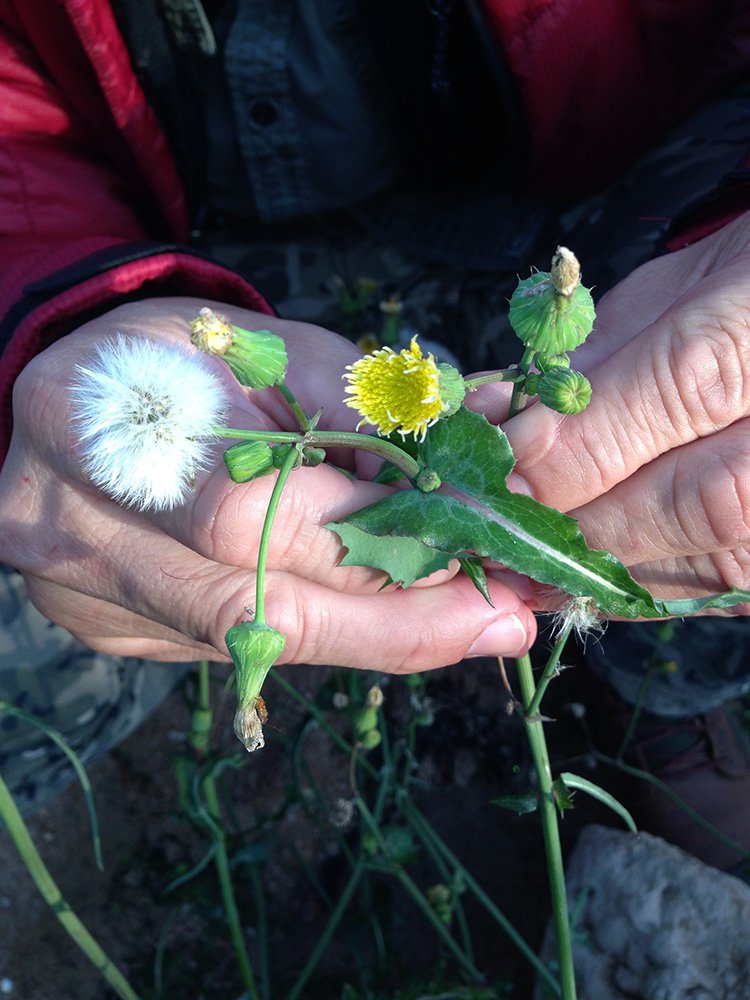
Identification:
Dandelion is another plant, easy to find, lots of it and easy to eat. It may be a bit trickier for some folks to identify in winter without the yellow flower or white fluffy seed head.
Processing:
They great news is you can eat the leaves and roots, year round, raw, cooked, boiled or any other way you like. It doesn’t taste great but is very healthy for people with chemicals like inulin (a fructan which stores energy), levulin (a dextran which also gives energy) and taraxacin (which has tonic and diuretic properties) All that is just a scientific way to say dandelions are really healthy!
ONION and/or CHIVES
Identification:
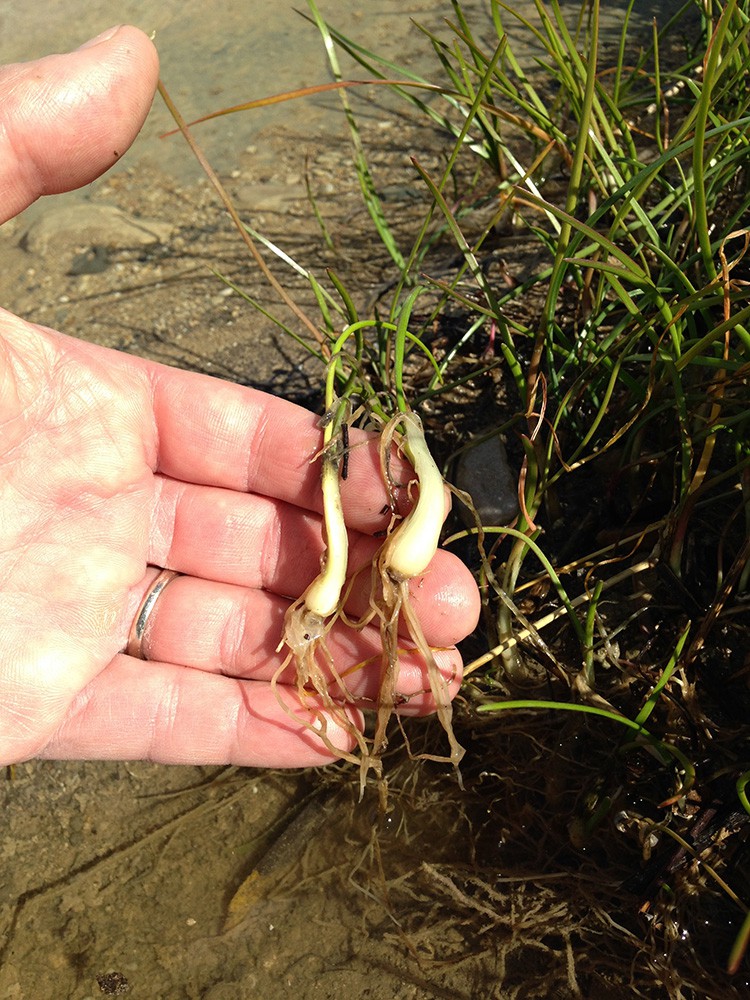
The onion (or it’s smaller cousin, the Chive) is a common household food source. While it’s not recommended to eat raw in large quantities, sometimes, you just get hungry and when found in the wild, onions are often plentiful. There is a dangerous look-alike called a Lily. Onions are not only a food, but they are a great, mild systemic anti-infective, think like an antibiotic. For those scientifically minded, Onions have chemical compounds like phenolics and flavonoids that are said to have anti-inflammatory, anti-cholesterol, antioxidant and even anti-cancer properties. So that is some seriously good stuff!
Processing:
The key to 100% correct identification is easy. The onion green, grassy stalks are HOLLOW and the Lily’s are flat and not hollow. But the real test is smell. If it doesn’t smell like an onion, it isn’t and don’t eat it!
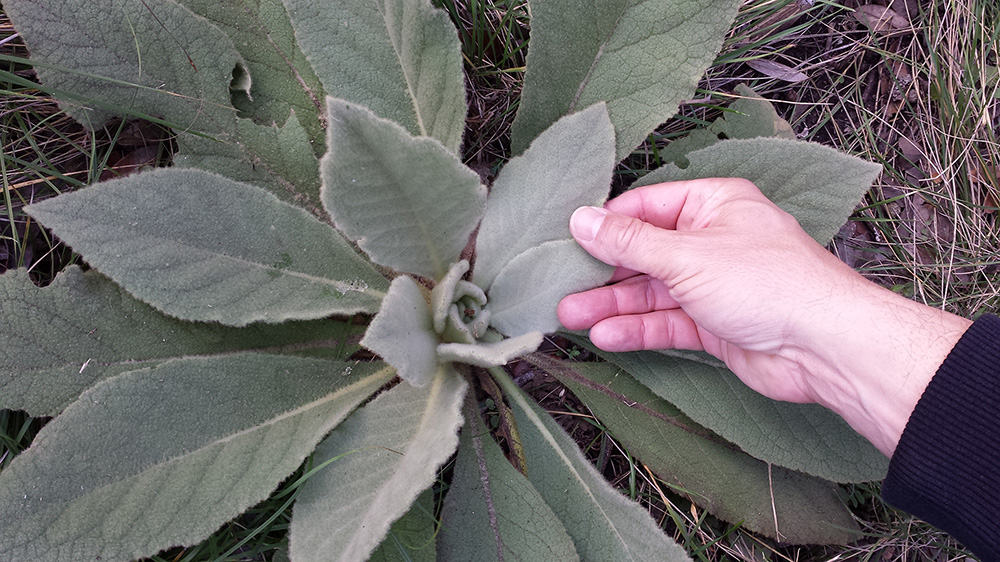
MULLEIN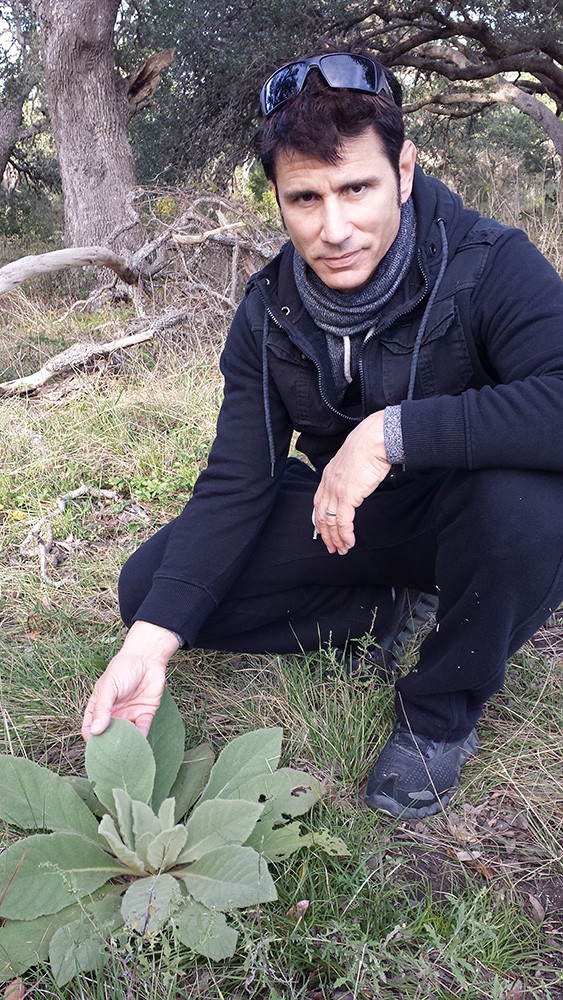
Identification:
Mullein is a neat plant as it is found all over the place and is super easy to identify, when it doesn’t have the big stalk with distinct yellow flowers running up it, the leaves remain year round as some velvety soft pedals that make people naturally want to call it the “toilet paper” plant. Now the leaves can be used for that and they can be consumed, but only as a tea really, as they are not pleasant to taste and suck up water like a wash cloth. But as a tea, they can not only replenish your water supply, they are said to be full of health value. Much of which has not yet been studied and verified by the FDA but the plant has been used for thousands of years by humans.
Processing:
I write about them here mainly as I found these on my walk about for winter, desert type plants that are almost universally dispersed, in vast quantities and easily recognizable by most folks. Here are some things that mullein is said to be of benefit for and I leave it to the reader to do further research if they find this amazing plant to be of interest. The plant is reported to have the following properties: expectorant (help to cough up phlegm and clear airway), demulcent (creates a light mucous coating that soothes irritations), anti-viral, mild diuretic, mild laxative, mild sedative, vulnerary (to heal wounds) and emollient (moisturizer). These stems also make great hand drills for starting fires.
Editors note: These plants are readily available in Central Texas, and your plant varieties may vary.
What edible and medicinal plants do you know of in your area?
P.S. Don’t forget to watch “Lost Survivors” tomorrow night (12.17.13) on the Travel Channel. Tomorrow is the season finale and you won’t want to miss it! You may even find a few more edible and medicinal plants on that episode…